The question of whether to buy an older Brompton electric bike has become increasingly common since the launch of the new e-Motiq system for 2025. We’ve noticed that prices for the older front-motor models have dropped sharply across Canada, while the new rear-drive e-Motiq platform is reshaping expectations of what an electric folding bike can be. Riders are comparing both generations and trying to understand where the real value lies. So which generation should you put your money toward?
Generational (Re)Framing
This is not simply a story about discounts or technology updates. It is a story about how we define different generations in the Brompton lineage. In 2025, Brompton celebrated their 50th anniversary and made enough changes that we can reasonably use the language pre-anniversary and post-anniversary. Allow us to explain.
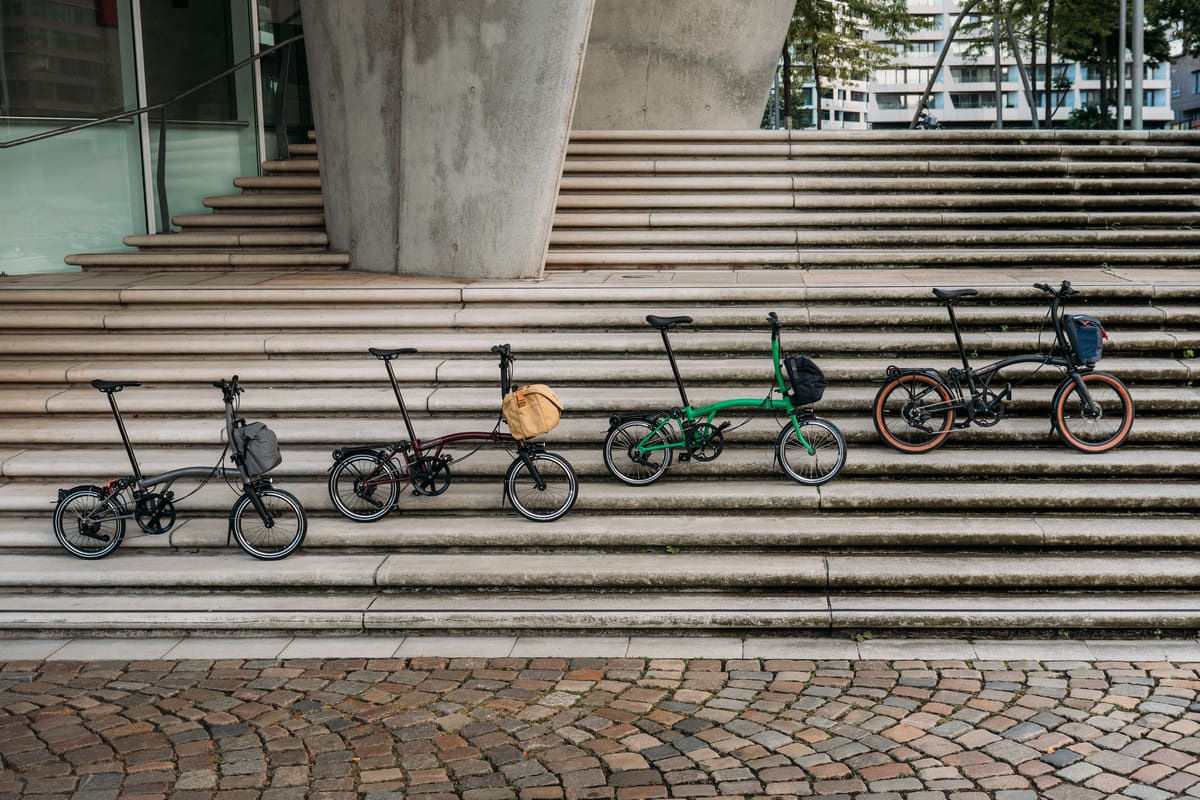
For fifty years, Brompton’s engineering philosophy has been framed by a single idea. This has quite literally has to do with the frame. Or, perhaps better: an idea of how the bike should be framed. We like to say that a Brompton is something akin to the Platonic Idea for a folding bike. And, that’s because it resolves a paradox. How do you build a bike that folds really tiny yet unfolds to a super long and super stable wheelbase? And, if you’ve done this, how do you make the transition from folding or unfolding easy? If you’ve figured that out – which no competitor has – now imagine that the parts for this bike are cross-compatible across generations. That takes some serious engineering. But, it’s on this latter point that the idea needed some more engineering. The original idea remained, but it needed to be re-framed. Again, quite literally.

The Fold Meets the Force
The issue with the frame was two-fold, both having to do with propulsion. First, despite decades of development, the Brompton’s two and six speed gearing was still a work in progress. Second, if there was a perduring problem with the two and six speed gearing, there was a far bigger problem with the front wheeled motor. Why? Well, consider that each wheel has a responsibility. The front is for handling, the rear is for acceleration. A rear-wheel motor places power where acceleration naturally occurs. The separation of these forces matters.

Front-drive systems were always a compromise, and Brompton understood this. But, to accomplish this, Brompton needed a gearing system that would compliment a rear wheel motor. Even if both problems ran like uncrossed parallel lines in Brompton’s history, they were both travelling in the same direction. To connect the lines meant widening the rear frame. That’s the re-frame. This occurred in 2025, the year of Brompton’s 50th anniversary, and if it re-framed the bike it also re-framed the engineering playbook, marking a generational shift between every bike produced pre- and post-2025. Yeah, it’s that big.
Engineering From the Front
If all of this sounds like we’re dissing the front wheeled motor, we’re not. The front-wheeled electric system brought Brompton into the electric era, and it deserves enormous credit for that achievement. It represents a great truth about Brompton’s engineering playbook. That’s because a great deal of Brompton’s history is the awareness that folding bikes require their own parts, and that if these parts don’t exist, they will have to make them. This is especially true for the motor. After all, a folding bike e-assist is not a smaller version of a standard e-bike motor; it is an entirely different engineering problem.
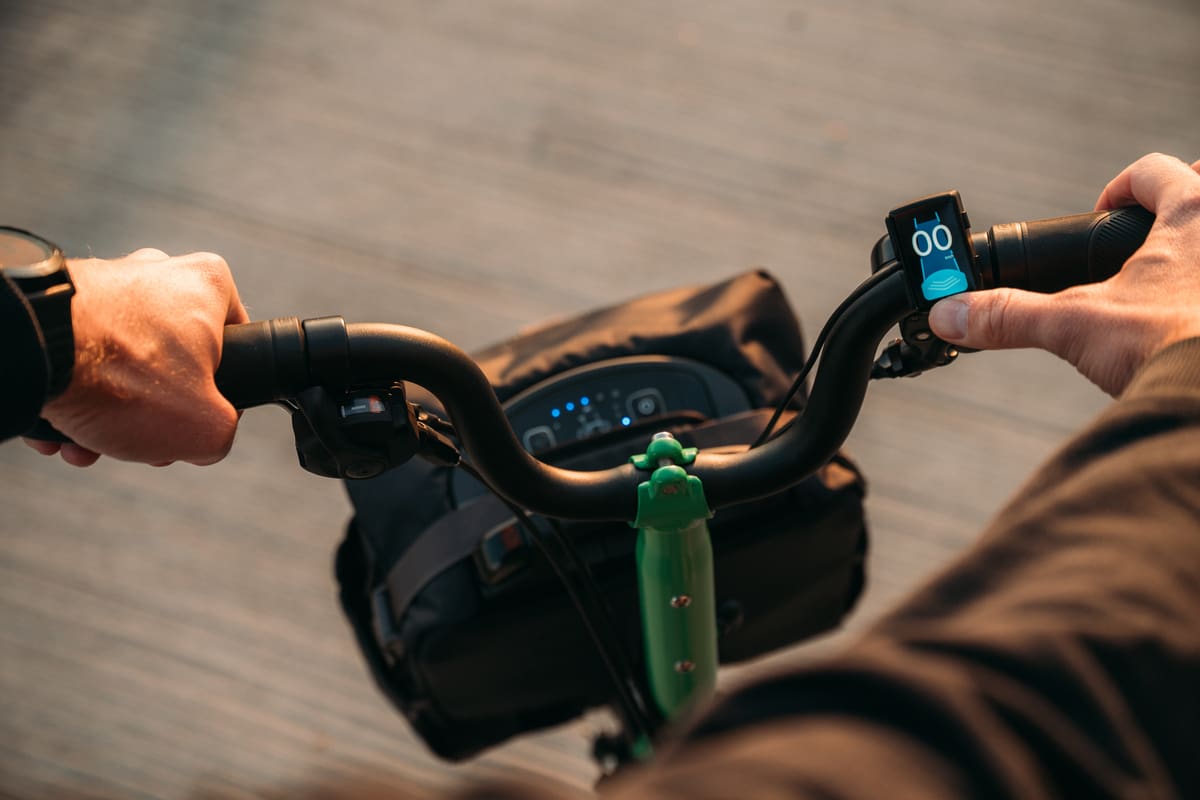
As Brompton CEO Will Butler-Adams states: Making things smaller often creates new problems — the materials may not be strong enough at the reduced size, or the tolerance may not scale down… and in an electric motor, the closer things are, the more likely it is that they will have electromagnetic interactions with each other; or that heat will build up where it’s not wanted. All the same, the e-assist motor that now assists Brompton’s future is not the front-wheeled motor.
Parallel Lines – Crossing
So, the original front-wheel Brompton motor proved that a folding bike could carry a motor and still lift and ride like a Brompton. It also showed that electrification belonged in the company’s future. Yet that same system reflected the longstanding frustrations Brompton had with its frame and its gearing.

These two issues, gearing and electric assist, travelled like parallel lines that never crossed until 2025. When they finally did cross, the result was pure fireworks. It takes a lot of work to pull the Platonic form out of the sky, but with the new e-Motiq motor Brompton has built a small, hard-won miracle.
The Bottleneck in the System
To summarize a long history, the front-motor layout was first built around the older MK5 frame. This is the frame that carried the two- and six-speed gearing systems, which were never quite perfect (but were still bloody genius). Brompton understood early on that folding bikes needed their own gearing. They partnered with Sturmey Archer to create a lightweight, wider-range hub tailored specifically to the Brompton’s constraints. That’s pretty typical Brompton: if it doesn’t exist, they’ll make it. Sometimes a collaboration, most of the time in-house. Always some sort of creation ex nihilo.

But, like creation itself, the result was clever but perfection was still out of sight. The six speed gearing relied on two shifters, one for the hub and one for a derailleur, and riders often needed to juggle both to find the right gear. The gaps in the range were noticeable, the sequence was irregular, and the overall spread still could have been wider. Most importantly for our topic, the system was not suited to a rear-wheel motor. A rear motor would have displaced the internal gear hub and left only the two-speed derailleur, which on its own did not provide enough range or refinement.
Generational (Gear) Shifts
Both issues pointed to the same bottleneck. The gearing problem had to be solved before the electric problem could be solved. In 2022 Brompton introduced the wider MK6 frame and with it the modern four-speed derailleur. This was the breakthrough. The four-speed did what the old two-speed never could: it stood on its own. Combined with the Brompton-specific wide-range hub, it created a twelve-speed system with far more range and a cleaner, more intuitive sequence. Riders now had more gears but less hunting for them.
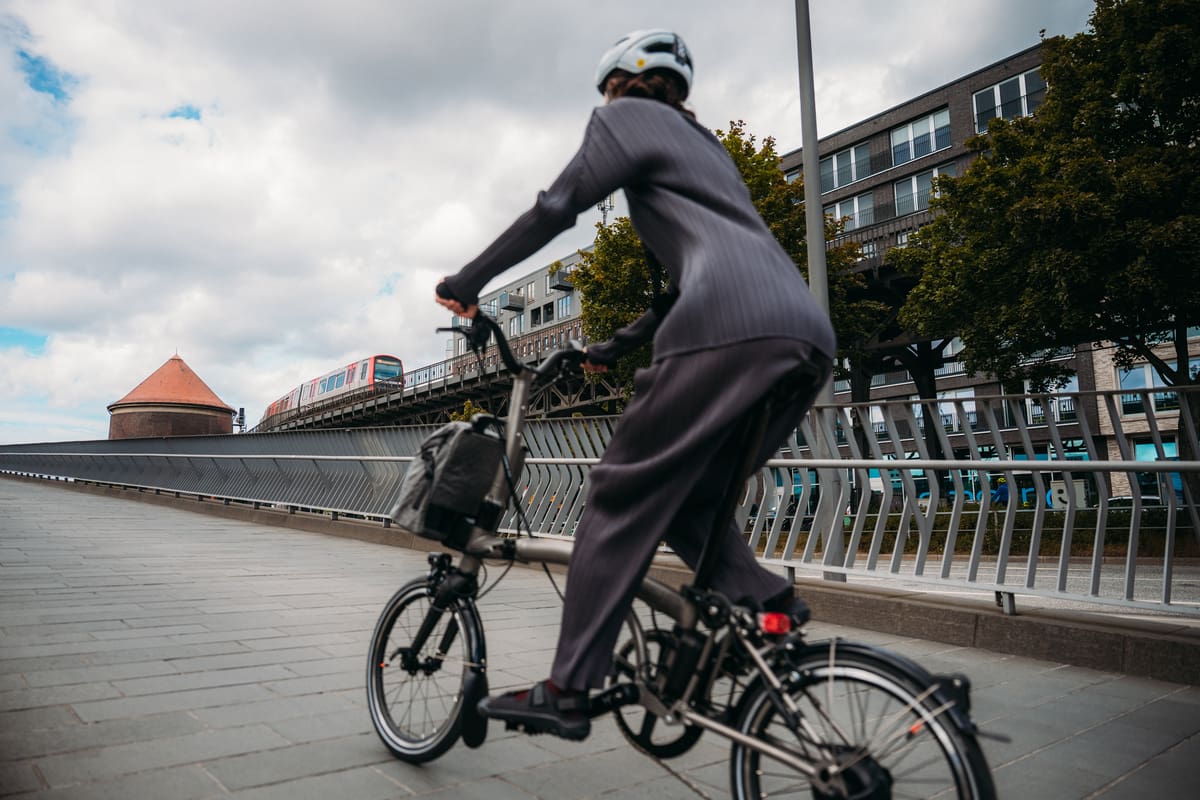
This new architecture allowed Brompton to design around the two use-cases that define its customer base. The city cyclist who wants a lightweight, precise tool for the last mile gets the four-speed. The traveller who wants to ride further, whether on a European rail tour or a weekend escape, gets the twelve-speed. This drivetrain required a wider rear frame, and the MK6 supplied it. The wider MK6 frame created space for a rear motor that complements the rider’s gearing instead of piling power onto the dense ladder of the twelve-speed. Together, the four speed and e-Motiq are a match pulled out from the heavens.
Re-Framing the Problem
But this new harmony between frame, gearing and motor also marks a decisive generational break. For almost forty years, Bromptons behaved like a single intergenerational family tree. Frames changed slowly, parts moved freely across eras, and the company’s obsession with compatibility meant that even a 1988 bike could borrow components from a 2024 model. The MK6 frame and the e-Motiq system change that equation. They don’t abandon Brompton’s philosophy, but they introduce a structural reality that also, unfortunately, introduce some new incompatibilities. Well… kind of. Let us explain.

With the new MK6 frame, Brompton kept their commitment to backwards and forwards compatibility across generations. But, the question is – at what cost? While an MK6 frame can technically fit onto a pre-50th-anniversary Brompton, doing so would require a new rear frame, a new fork, a new front wheel and the entire rear-drive motor system—and that assumes Brompton ever chooses to release those parts as aftermarket kits. In other words, compatibility still exists in theory, but the practical cost places it well into new-bike territory.
Electric House
As we’ve seen, designing a folding bike means designing parts that belong on folding bikes. They need to be smaller, lighter, and stronger, which creates an entirely different engineering problem. Brompton has few real competitors because it does what other bicycle companies will not. Most brands design a frame and outsource production to a contractor in Taiwan. Brompton designs the frame, the drivetrain, the hinges, the levers—and then manufactures many of them in its own London factory.
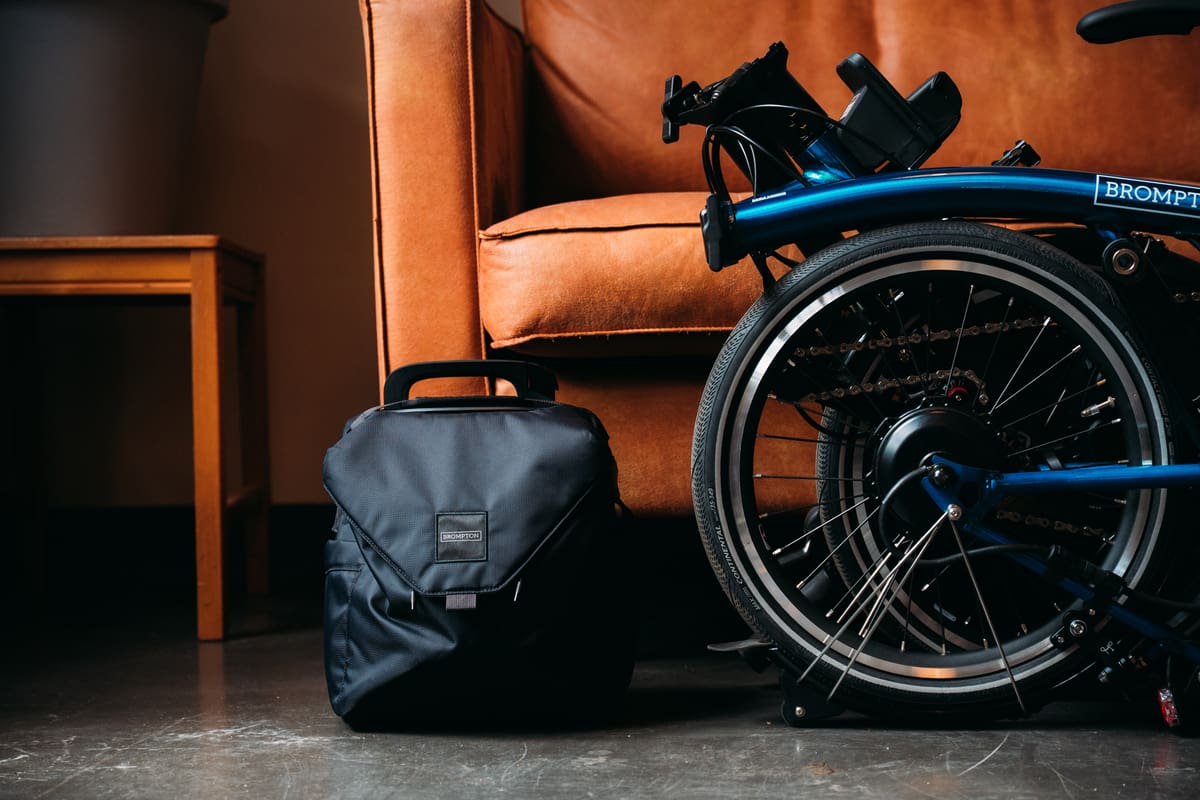
If Brompton has spent decades proving it can design and build its own frames and components, it has now shown it can master e-assist software and hardware as well—a quantum leap from its traditional story. Yet it all fits perfectly within that story. Will Butler-Adams has often described Brompton as “an engineering business… our job is solving problems, and the bike is the outcome.” The e-Motiq embodies that idea. Brompton’s mission has never been just to make a folding bike, but to engineer a form of urban transport that genuinely changes how we move through cities. The e-Motiq brings that vision one step closer, but you get the feeling they’re nowhere near done.

The Future of the Front-Motor Brompton
For owners of earlier front-motor Bromptons, this transition can feel confusing. In theory, it’s possible to bring an older bike forward into the new platform, but only by replacing several structural elements—and only if Brompton chooses to make those parts available. A conversion would likely require a new fork, a new front wheel, and the entire e-Motiq system. Even if these components were offered as aftermarket kits, the cost would be prohibitive, edging very close to the price of a new bike.

Now, Brompton has not published any commitment to continue producing the front-motor system beyond standard warranty service. Replacement parts remain available today, but long-term production and aftermarket conversions are unconfirmed. In our view at Pedaal, the most likely outcome is a limited warranty run of the original Williams Advanced Engineering (WAE) components rather than a full aftermarket supply chain. There is always the possibility—however remote—that Brompton could release an A-Line model using the older WAE system to scale the expense of maintaining parts for warranty service, but so far there’s no sign of this. If they do, you read it here first!
The Meaning Behind the Discounts
This context helps explain the sudden wave of discounted front-motor electric Bromptons across Canada. Some retailers are now selling units at prices that appear to fall below wholesale. Brompton bikes are almost never cleared out in this way. When they are, it reflects a shared conclusion across the industry. The front-motor platform no longer aligns with Brompton’s structural direction, and carrying that inventory no longer makes sense in a market that has already shifted toward e-Motiq.
These bikes may look tempting. A Brompton remains a Brompton in many respects, even with older technology. But structurally and electrically, a front-motor Brompton now occupies the same position that a MK5 six-speed did just before the MK6 era. It will continue working, possibly for years, but it belongs to a generation that Brompton itself has moved past.
In Conclusion
There is also the matter of safety. A rear-wheel motor belongs where acceleration naturally occurs. A front-wheel motor places power where steering happens. Again, the separation of those forces matters. With the e-Motiq, Brompton is looking ahead. The question for the consumer is whether they follow the same forward march, or get a bike which didn’t quite unfold the complete concept; a bike that belongs to Brompton’s past.
The new C-Line, P-Line and T-Line Electric bikes are expected before March 2026, and we already have a demo G-Line which you’re welcome to test ride anytime.
Next Steps
Got a question? We’d love to help! For quick questions, click the chat button during opening hours or shoot us an email at info@pedaal.com. Want to really drill down with some questions? Book an in-store or remote sales appointment by clicking here. Of course, we’re also a phone call away too! Just dial 416-972-1422, ask for Eric or Timm and we’d love to help!