Canadians are famous for lining up in the cold, skating on frozen ponds, and insisting that winter is “not that bad.” It turns out we bike the same way. Toronto’s winter cycling numbers show a city that keeps riding long after the novelty wears off, with corridors like Bloor Street carrying thousands of riders even in February. What’s emerging isn’t bravado, but a practical, deeply Canadian approach to getting around when conditions are imperfect but manageable. Let’s explore!
Toronto’s Winter Cycling Numbers, in Context
There is little doubt that city cycling in Toronto drops in the colder months. So what? This is true in all places. Holland sees a minor 15% reduction, Copenhagen a 20% reduction and Germany about a 38% reduction. In Toronto the numbers are still being worked out. Between city-installed counters and a detailed winter count on Bloor Street West, it appears that winter cycling typically ranges anywhere from 40 to 75% of summer volumes.
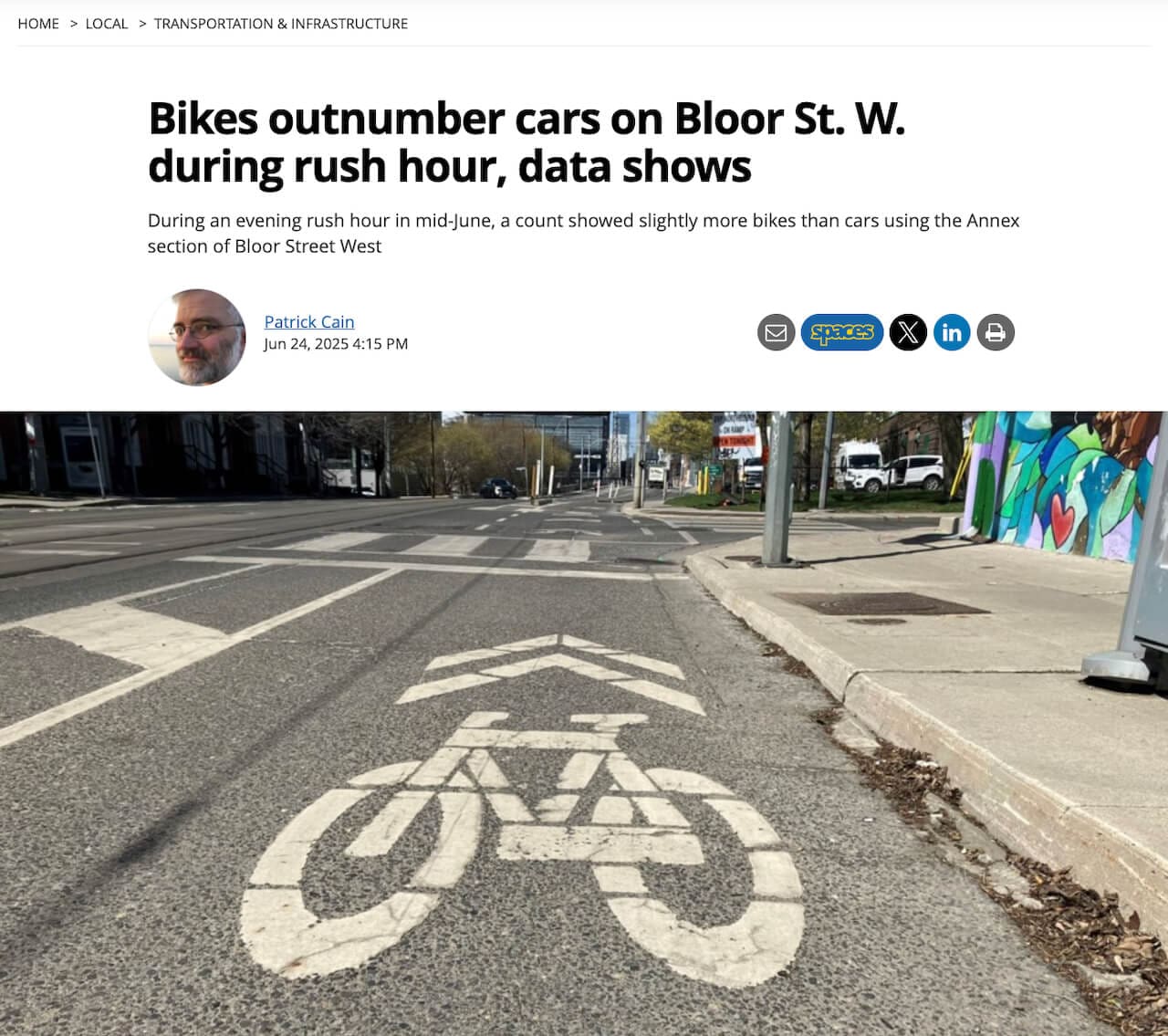
All-in-all that’s striking growth for a city whose first truly connective bike lane – Bloor Street – only arrived in 2016. Indeed, while Richmond Street sees a serious drop in winter, the always contentious Bloor Street counted roughly 3400 cyclists a day in a particularly snowy February, 2025. That’s very close number to the 2016 summertime levels that justified installation of the Bloor lanes in the first place. Sometimes there will be more cars, sometimes there will be more bikes. In the summer of 2025, Bloor had more bikes than cars. That’s the sign of a seasonal transportation toolbox maturing over time.
The Habit Beneath the Numbers
But, the fact is that these winter cycling counts continue to grow, and that growth tracks the rise of city cycling itself in Toronto. Survey data from Transportation Tomorrow show a 160% increase from 2006 to 2016, followed by a further 24% increase from 2016 to 2022. That represents a major swell in cycling activity, much of it predating the city’s first bike lanes, and continued strong adoption since. Comprehensive survey data beyond 2022 hasn’t been released yet, but the growth is hard to miss. Over the past four years, Toronto’s Bike Share system has grown by 138%, and its winter ridership has more than tripled.
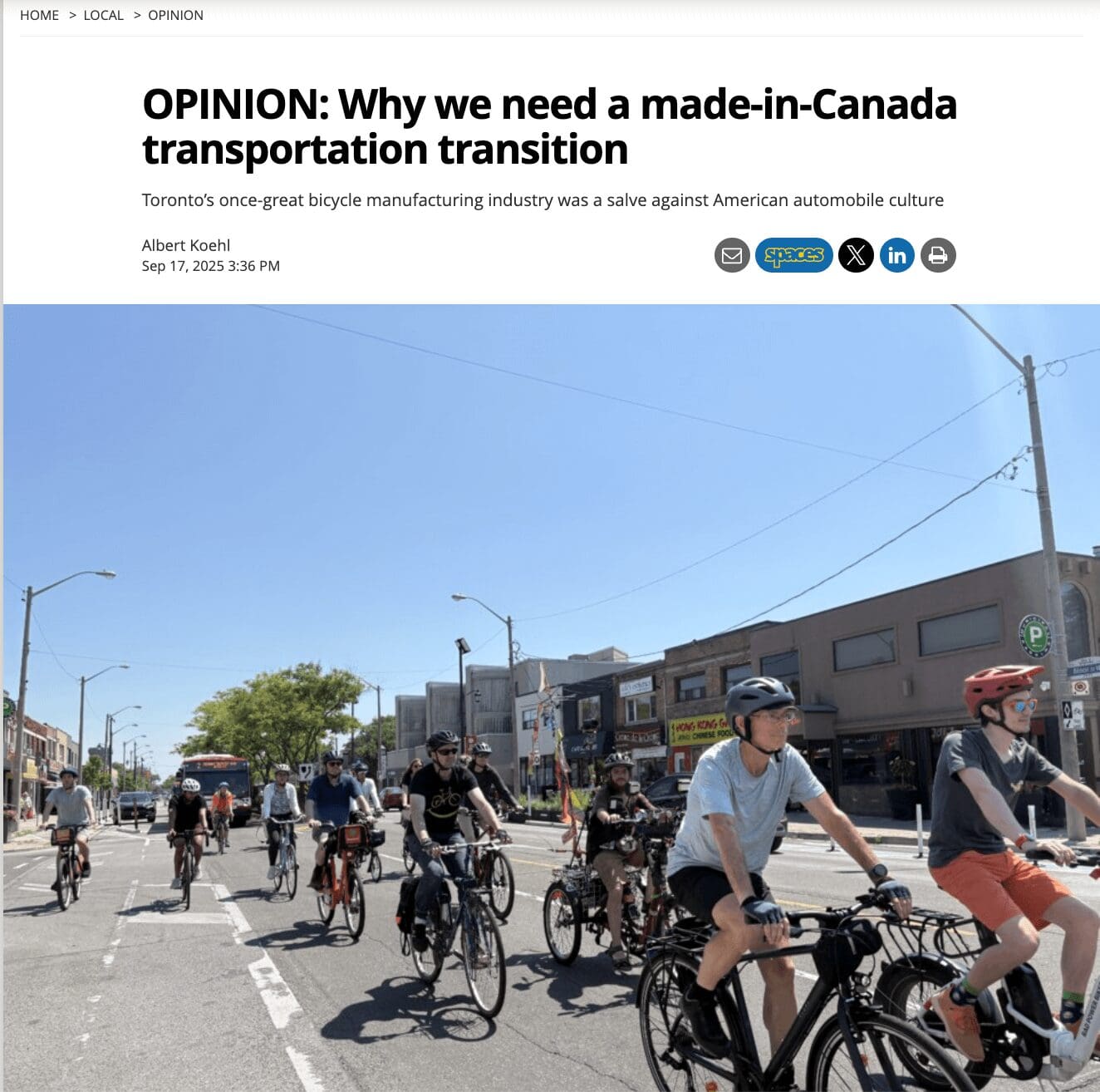
Beneath all these numbers sits a more revealing story, one about values rather than infrastructure. If Canada’s car-centric lifestyle arrived as an import from the United States, it never fully took over cities like Vancouver, Toronto, and Montreal. While many American downtowns emptied at five o’clock and freeways filled in response, Canadian city centres kept adding residents, building real estate value through density, proximity, and everyday mobility that didn’t depend on the car. Canadian cities, in other words, were walkable and rideable long before walk scores existed. That habit, more than any single piece of infrastructure, continues to steer the ship.

The Behavioural Side of Winter Cycling
Toronto’s winter cycling growth fits that same pattern. Infrastructure matters, especially in winter, when snow and ice narrow your choices and a small number of bad days can end up defining the whole season. For a long time, that friction pushed people out altogether. What’s changing is that more riders keep choosing to ride anyway, learning which days work and which don’t. Toronto is still a young cycling city, and winter adoption is arriving the way habits usually do here, gradually, through repeated choices that add up over time. Infrastructure, alas, is not keeping pace.
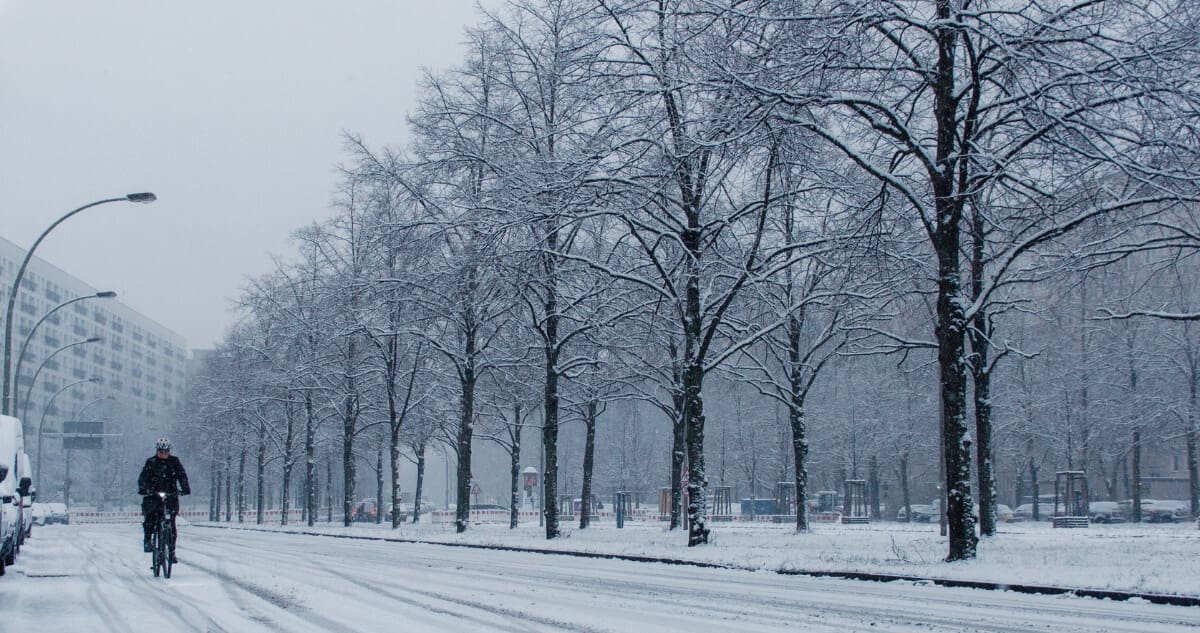
What’s happening behind those habits is the question worth asking. Even with inconsistent bike-lane clearance, cyclists often ride in spite of the infrastructure rather than because of it. That points to another kind of infrastructure, less visible but arguably more powerful, and it’s behavioural. We were members of the Toronto Cycling Think and Do Tank, an interdisciplinary University of Toronto research initiative that explored what it called normative infrastructure. Let us explain.
What Normative Infrastructure Means
Normative infrastructure refers to the social and behavioural supports that make everyday cycling feel normal. In Toronto, research showed that participation clusters where destinations are close, services exist, and people can imagine themselves as cyclists without any special identity work. (In the Netherlands, no one identifies as a cyclist). Thus, cycling behaves less like a calculated response to infrastructure and more like a learned, habitual practice. But this habit still comes from a place. What place?
Germany, the Netherlands, and the Winter Gap
One way to examine this “place” is to look at how different cycling cultures handle winter. In a study pointedly titled It’s the Mobility Culture, Stupid!, Ansgar Hudde analyzed roughly 335,000 trips from German and Dutch travel surveys alongside climate data. He found that German winter cycling drops by about 40 per cent, while the Netherlands sees closer to a 15 per cent reduction. The difference, Hudde argues, isn’t weather but cultural response. He calls this mobility culture.
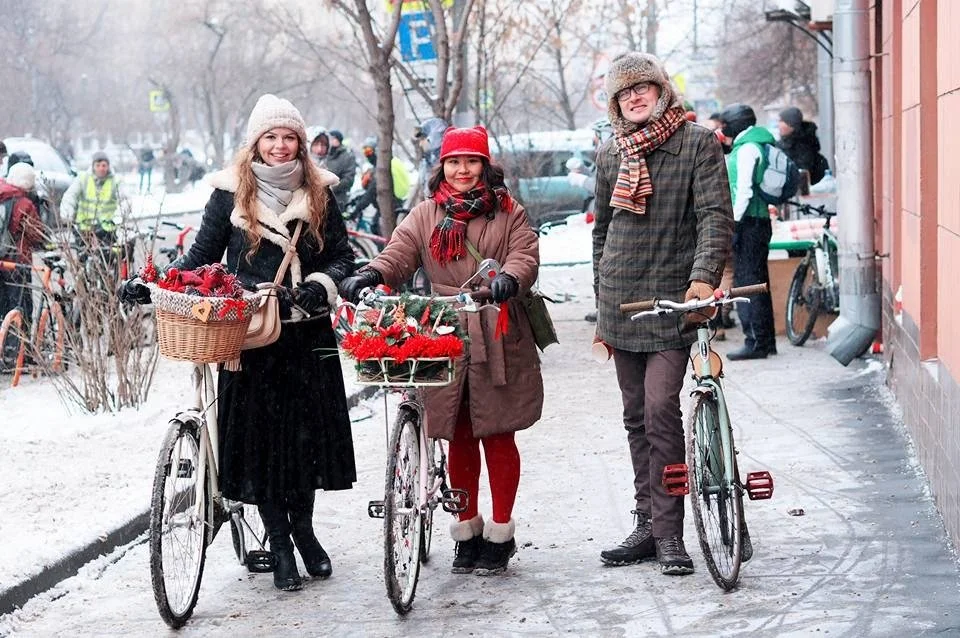
Seen this way, normative infrastructure operates at a national scale. In Toronto, it helps explain why the Spadina Expressway was stopped and why bike lanes exist at all. In the United States, it helps explain why myths of life, liberty, and happiness so often find their material expression in the automobile. The framework is imperfect and necessarily broad, but it’s a useful way to understand how something as ordinary as winter cycling can reveal deeper differences in how cities and cultures move.
Mobility Culture, Part I: The Freedom to Choose
How can Hudde’s mobility culture help us understand our own? Here we’re going to find some more help. In the 1970s, Dutch social psychologist Geert Hofstede developed a framework for comparing national cultures along six dimensions. Hofstede’s dimensions include things like comfort with hierarchy, tolerance for uncertainty, emphasis on quality of life versus competition, and the degree to which people allow themselves enjoyment. When applied to city cycling, and especially winter cycling, the framework reveals patterns that help us understand why Torontonians grab their mitts and hit the bike lanes.
According to Hofstede, Canada scores low on power distance, much like the Netherlands and Denmark. This means Canadians do not generally wait for authority to permit their choices. They act independently and expect institutions to adapt. Bloor Street is an example of this. Cyclists created a de facto transport corridor long before the city formalized it.
Mobility Culture, Part II: The Freedom to Be Contrarian
Canada also scores high on individualism, higher than the United States; which may seem strange. What people often hear in “individualism” is something closer to what Hofstede calls “motivation toward achievement and success.” That dimension carries a distinctly competitive, even narcissistic edge, privileging power over others rather than power with them, and the United States ranks very high on it. Canada does not.
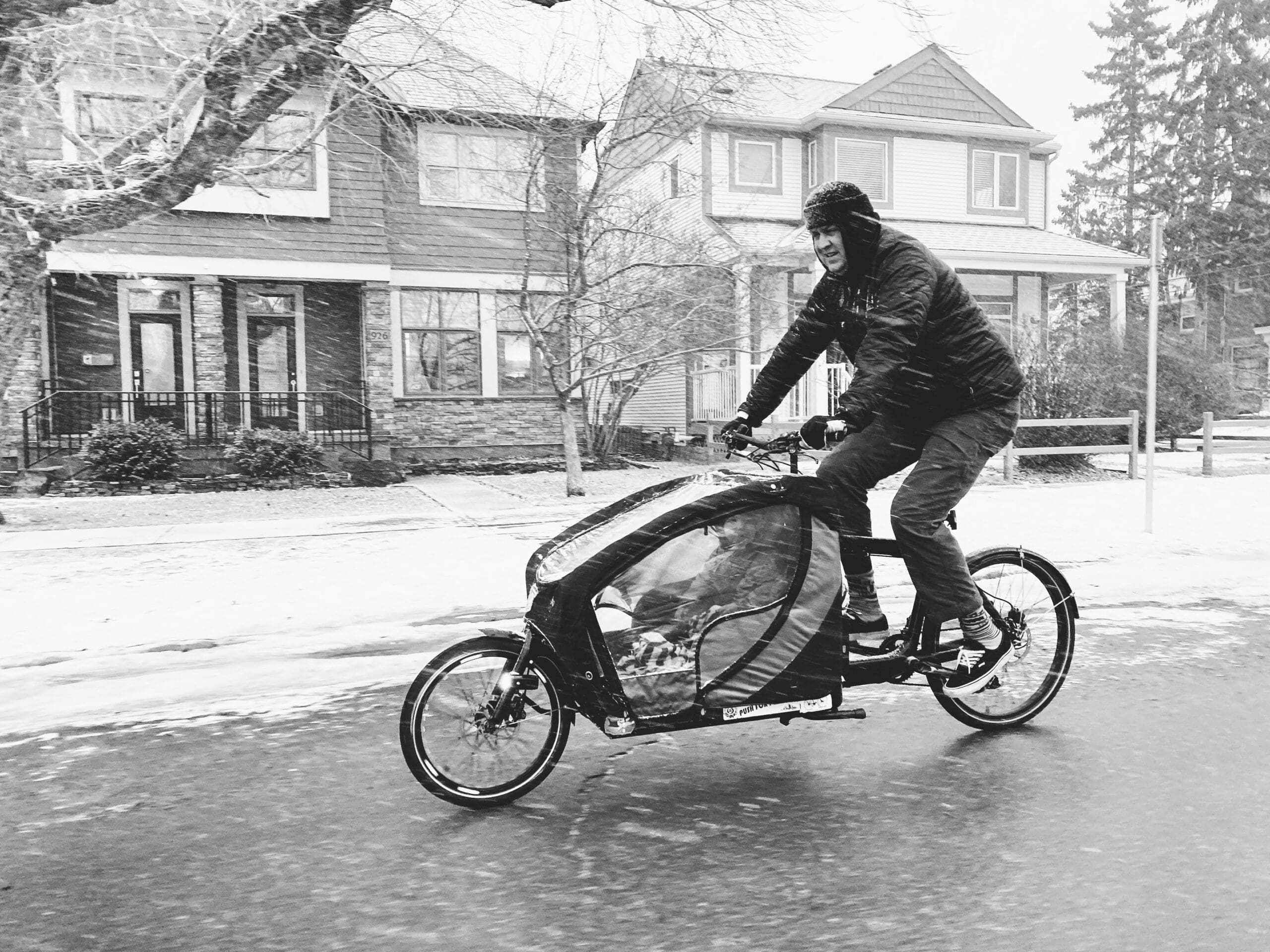
So, what is individualism? It’s something like Canada’s cultural mosiac, where the parts are bigger than the whole. Canadians are less inclined to see themselves as a single, unified whole – like the American melting-pot – and more inclined to make their own individual choices, no matter how contrarian. In that respect, Canada looks closer to places like Denmark and the Netherlands, where individual choice is closely tied to everyday autonomy, especially the easy, libertarian freedom (in the classic non-ideological sense) a bicycle represents. With apologies to the USA, collectivists drive cars.

Mobility Culture, Part III: Protection Follows Participation
Recall that Hudde found that German winter cycling drops off much steeper than Holland. Hofstede helps explain why. Like the USA, Germany scores low on individualism, that means that if the whole ain’t riding, the parts aren’t going to either. Something else needs to nudge them forwards. This helps explain why cycling mode-share in the USA – like Paris – tends to be so completely top-down. The populace are given bike lanes and Bike Share and the logic tends to be less authentic development and more if-you-build-it-they-will-come. That’s not the Canadian way.
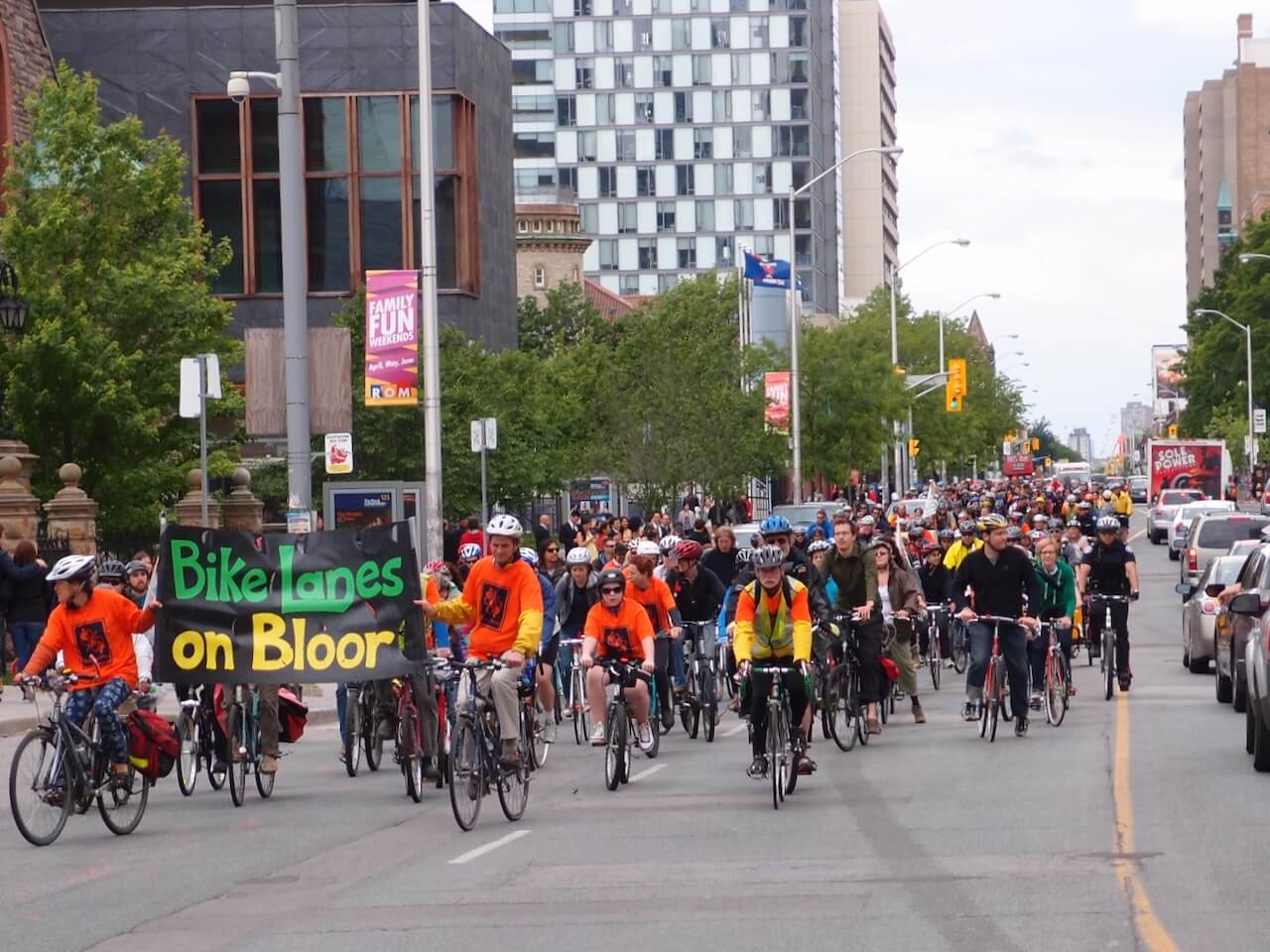
Behaviourally, Toronto has more in common with places like Amsterdam, Copenhagen, and Montreal, all of which saw city cycling emerge first as a citizens’ movement. Citizen movements in Toronto like Bells on Bloor took to the streets to make it plain that cyclists were already here, already riding in volume, and already in need of protection. Of course, there are benefits to top-down interventions. Unlike New York, bike lanes in Toronto have historically been installed less to create new cycling mode-share than to protect existing cyclists. Of course, this protection helped cycling grow, which then created the conditions for programs like Bike Share to succeed. It’s painful, but it works.

Mobility Culture, Part IV: Adapting to Imperfect Conditions
So, what makes Canadians push through the winter? Hofstede has a dimension called uncertainty avoidance, and Canadians score very low here – as do the Dutch and Danes. We’re adaptable – so long as things are still cozy (Danish: hygge) and not dangerous. True to stereotypes, Germany scores very high on uncertainty avoidance, meaning they have a preference for predictability and proper conditions. In other words, for Canadians, cold, rain, and darkness register are not registered as disruptions. Canadians adapt. That’s what makes us tick!
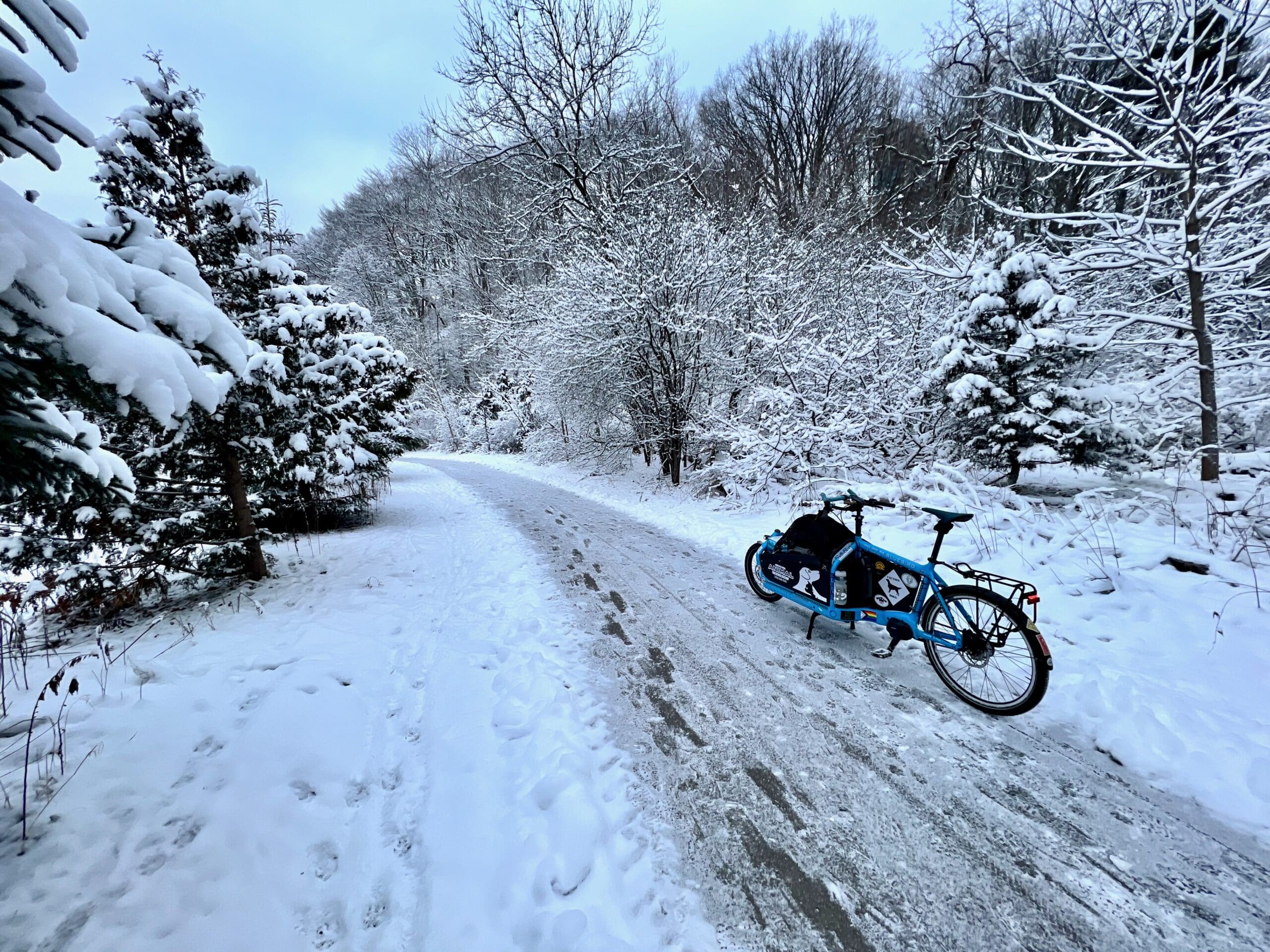
If Toronto is to reach Danish levels of winter cycling, habit formation will take time. And sometimes, physical infrastructure doesn’t help. Research shows that Toronto condo dwellers own about 50% fewer bikes than people in houses, even though Bike Share usage is highest in these same high-density areas. Low ownership, in other words, doesn’t mean low use. What holds condo residents back is infrastructure of a different kind: bikes often aren’t allowed in units, and underground bike rooms are magnets for theft.

Activation Energy and the Winter Ride
Bike Share comes with what researchers call higher activation energy. Activation energy is the effort required to get started, the friction between intention and action that determines whether something happens now or gets deferred. In everyday terms, hauling a bike out of an underground garage already adds friction. In winter, walking to a Bike Share station adds even more. This is one reason we sell Brompton folding bikes. They stay in your unit, eliminate the walk to a dock, and reduce activation energy to a ten-second unfold.
But the real issue with activation energy is not knowing if the streets are clear. Typically in Toronto you can ride snow-free to late December. After that, the average snow coverage spans about 55 days. Snow coverage isn’t a big deal if bike lanes are properly cleared – but they’re not. Toronto’s PlowTO site is there to tell users that their lanes have been cleared. This should help inform the activation energy. But, it doesn’t.

Why? The snow plowing in Toronto is awful, even dangerous. Some might think proper plowing is impossible, but look to Oulu Finland, above the Arctic Circle where snow covers the ground 160-175 days a year. Winter cycling drops here as well, but remains roughly 60% of typical levels. Why? Priority snow clearing. Snow clearing is the difference between a cozy or hygge ride and a downright scary ride.
Hygge, Not Heroics
Sure, there are cyclists who brave the shoddily plowed streets anyways, and bless them for their enormous activation energy. But the rest of us are mere mortals. At the same time, putting the bike away when the first snow falls makes little sense. Sooner rather than later the lanes do clear up (or the snow clears up) and you can be right back at it.
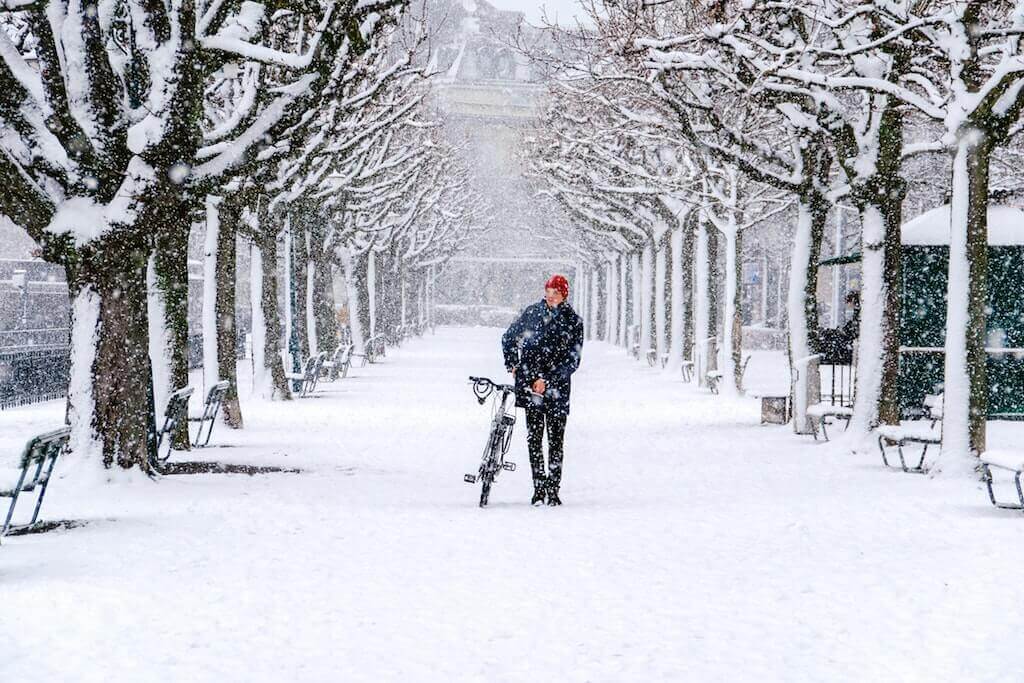
The beautiful thing about living in a city like Toronto is that you can have a wide breadth of transportation tools at your disposal – much like the Dutch. In Holland, bikes are used for distances that are too far to walk and too close to drive. They peg this distance at around 7.5km. Winter doesn’t change this – but clear bike lanes make the difference. That short distance is why people continue to ride all year, and, like doing other red-cheeked activities us Canadians are famous for – skating, skiing, snowshoing – we ride because winter is beautiful.