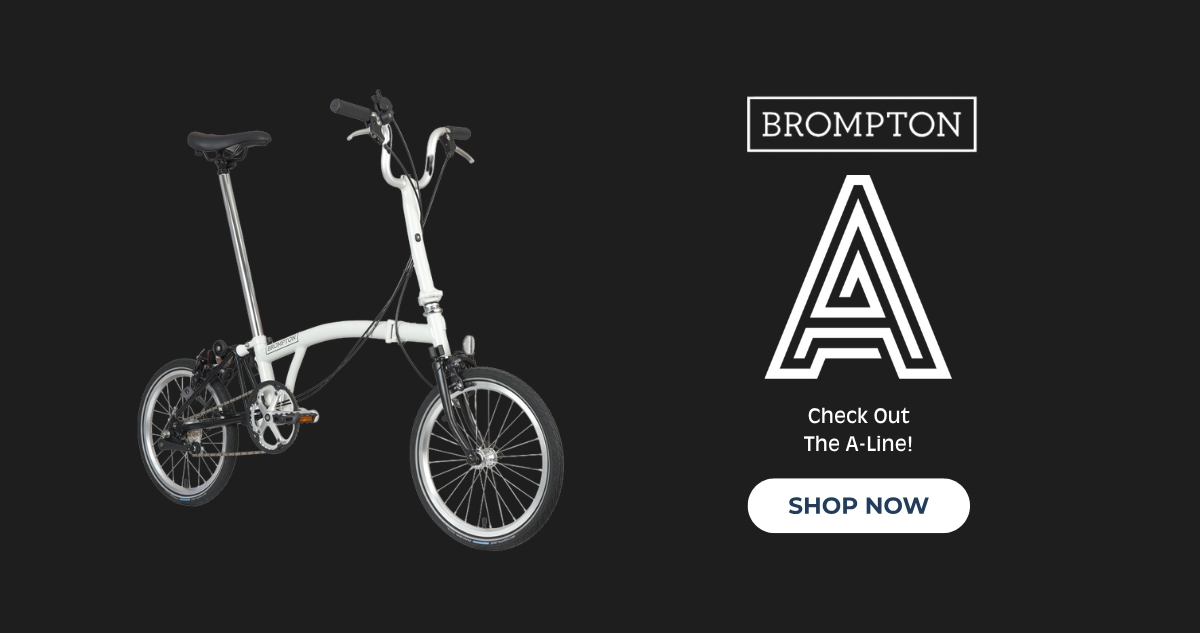
At first glance, the Brompton A-Line might look like a budget take on the world’s most famous folding bike – and in some ways, it is. But, if you dig a little deeper you’ll discover something more interesting: the A-Line isn’t just about price, it’s about preserving legacy, keeping the city moving, and staying true to the original spirit of the Brompton.
Old Soul: The A-Line’s Place in Brompton History
The A-Line began its life as the B75, a name that still mystifies most of us (internally it may have referred to a stripped-back spec or a test-market model). Brompton rebranded it as the A-Line to better fit their new naming convention and to draw a clearer line between their entry-level, classic, and electric offerings. But underneath the new name, the bike still reflects Brompton’s pre-2017 design language.
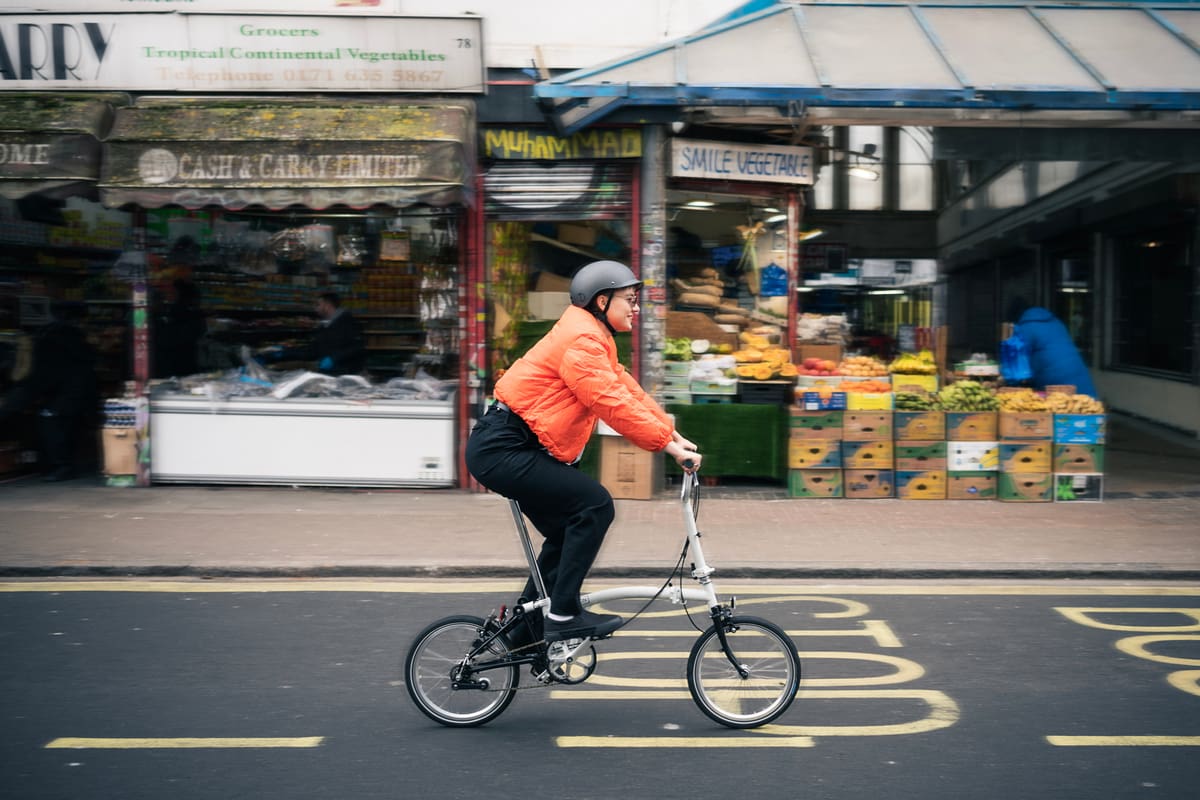
In many ways the A-Line pays homage to the original Brompton design which was designed strictly for commuting. Brompton has always stressed the affordability of cycling over driving or transit, and the A-Line takes the affordability of city cycling seriously. It’s the same core frame, same folding magic, and many of the same components. In fact, that’s the point.
Backwards Compatible, Forward Thinking
The A-Line exists, in part, so Brompton can keep older tooling and component lines alive, not just for this model, but to ensure they can continue to support riders with older bikes – some of which are still going strong after 10 or 20 years. As one rider put it perfectly:
“The A-Line is a way for Brompton to keep the manufacturing line for pre-2017 Bromptons open so that they can maintain the spares for people like me who beat our 2013 (or earlier) Brompton’s daily.”
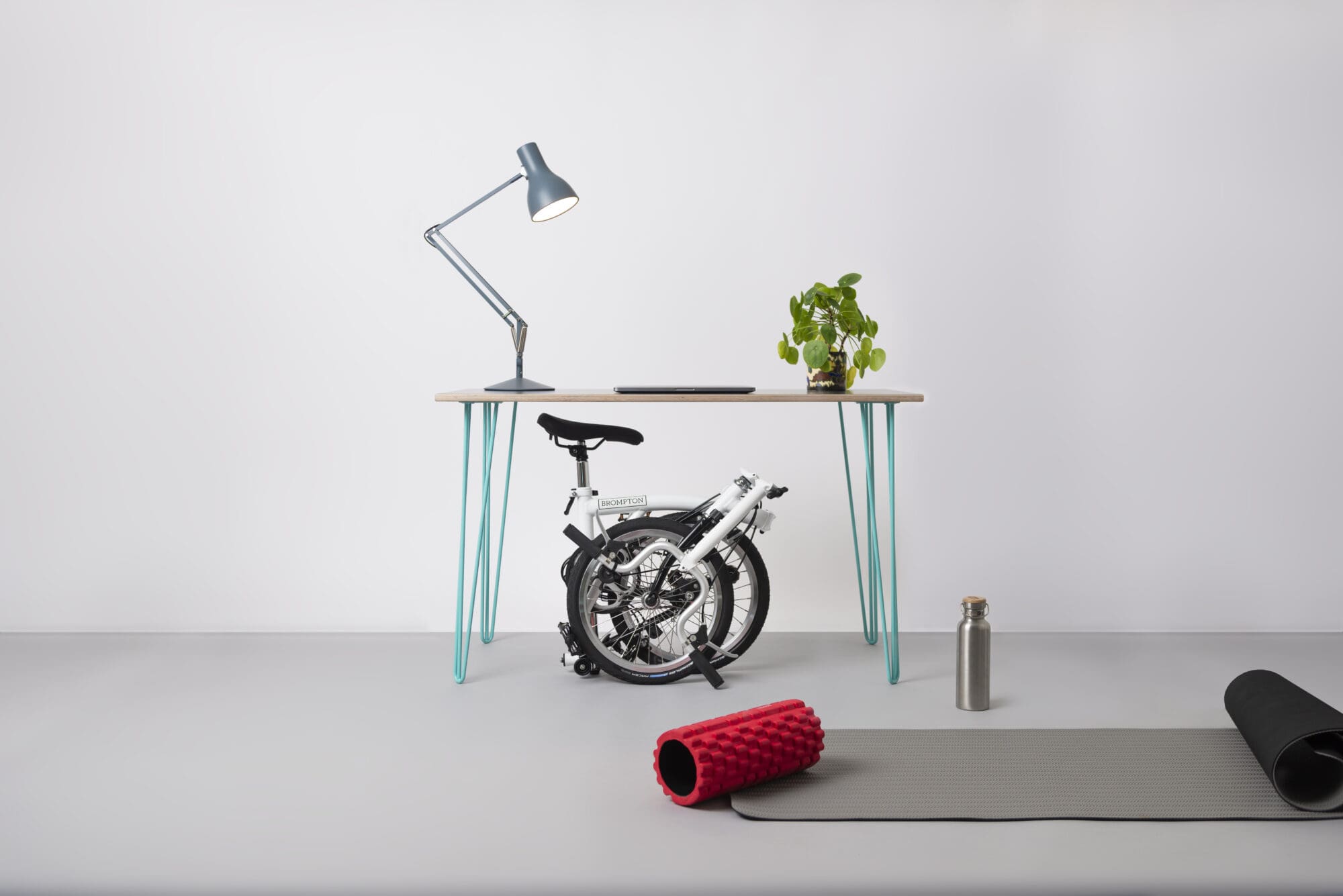
That kind of long-term thinking is rare in cycling. In other words, a Brompton A-Line pays tribute to Brompton’s commitment that each model has a lifetime of forward and backwards compatibility.

A-Line Spec: Sometimes Simple, Sometimes a Surprise
Because of its role in managing inventory and tooling, the A-Line’s spec can vary slightly from year to year. One batch might include the older “yellow label “Brompton-branded tires; another (like the current one at time of writing) features Schwalbe Kojaks, a speedy, supple, city-ready tire you won’t find on any other Brompton. That means you’re sometimes getting upgraded components simply because that’s what was in stock.
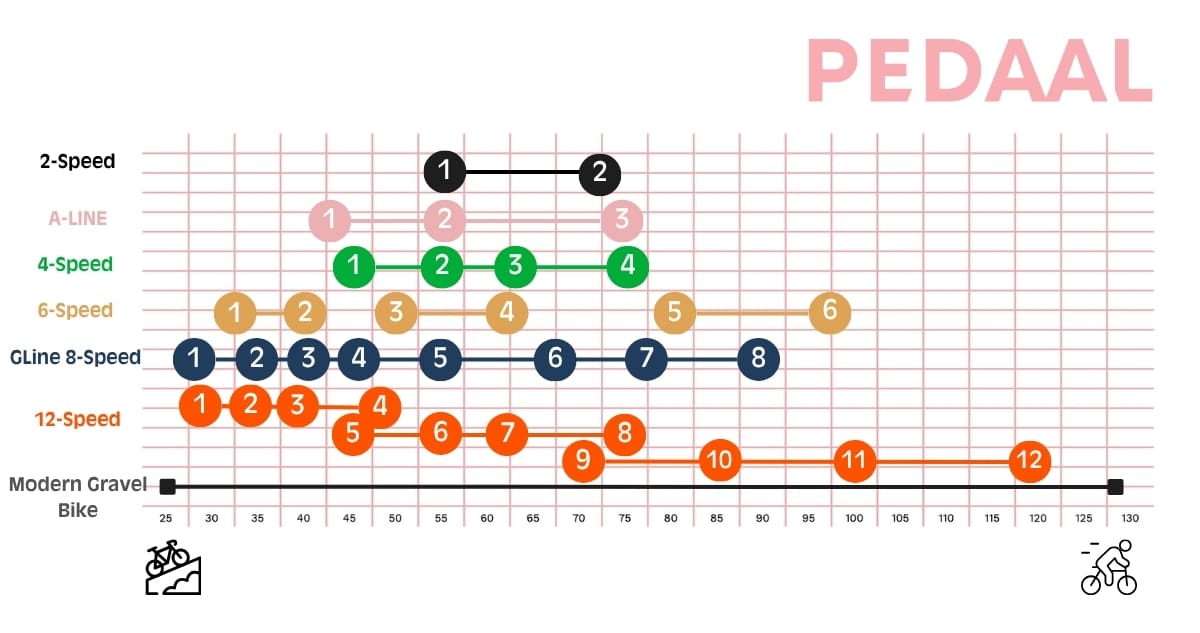
The drivetrain, however, has stayed consistent: the BSR 3-speed hub, a classic Brompton unit with a simple, low-maintenance design. Although heavier, it offers about the same gearing range as Brompton’s newer 4-speed derailleur system, but not the broader range (see above) found on 6-speed or 12-speed models with the BWR wide-range hub. And that’s totally intentional.
What You Get—and Don’t—with the A-Line
The A-Line is designed for the original Brompton use-case: a compact, durable bike for urban commutes and short, daily rides – what some call the “last mile.” In that sense, it has more in common with the lightweight 4-speed models than with the longer-distance 6- or 12-speed options built for hills, travel, and adventure. But, unlike the 4-Speed C-Line, P-Line or T-Line models, the A-Line will be heavier and missing some key Brompton upgrades.
To hit its lower price point, the A-Line leaves off a few key features:
📌 No front carrier block (but you can add one)
📌 Doesn’t come with fenders (also addable, if you ride rain or shine)
📌 No folding pedal (though a kit is easily installed)
📌 Plastic brake levers and over-bar shifter instead of the newer, ergonomic setups
Still, adding those items costs less than $350, and even with those upgrades, the A-Line comes in under the C-Line 4-speed’s $2750 price tag. That’s a real savings – especially for riders who don’t need fenders or prefer a lighter, simpler setup. Despite its internal hub and steel frame, the A-Line weighs in at just 24.9 lb, compared to the 25.4 lb of the C-Line 4-speed. For commuters who need to carry their bike into apartments or up subway stairs, it still sits squarely in the sweet spot for daily use.
Choose Wisely: Where the A-Line and C-Line Split
The C-Line 4-speed might feel a touch stiffer thanks to its lower-rise bars and newer brake levers, but the riding experience isn’t drastically different. Where the two really diverge is in accessories and long-term upgrade potential. The C-Line 4-speed is a polished, modern build; the A-Line is a minimalist toolkit. Like any Brompton, the A-Line encourages you to think carefully about your use-case – not just chase the lowest price. That’s part of how it stays affordable: by giving you only what you need, nothing more.
Bromptons are designed to last a lifetime, but that also means choosing the right model matters. If you’re a committed commuter and can’t justify the cost of a P-Line, T-Line, or even a C-Line 4-speed, the A-Line delivers. But if you’re planning to ride beyond the daily commute – longer trips, steeper climbs, or varied terrain – you’ll want to start with a 12-speed. While the A-Line shares DNA with today’s Bromptons, upgrading it to full 12-speed spec later is prohibitively expensive.

Built for the Daily Ride
The Brompton A-Line is more than just “the cheap one.” It’s a clever, practical, and historically grounded bike that stays true to what made Brompton iconic: compact folding, high durability, and the kind of joy that comes from riding a smartly engineered machine. Yes, it cuts corners to save you money. But, it also cuts around a corner better than driving or transit. At the end of the day, none of those corners compromise the soul of the ride.

If you’re a commuter with a flat route and a sense of pragmatism, the A-Line might be the most sensible Brompton in the lineup. And if you ever feel the need to upgrade small bits like fenders or pedals? You’ve already got the frame and the folding system that makes all Bromptons great. Everything else is just optional.

Next Steps