
The T-Line is the lightest Brompton ever made and the purest realization of the folding bike that Brompton founder Andrew Ritchie imagined fifty years ago. Everything on the T-Line exists to reduce friction and increase movement. After all, cities aren’t linear journeys. They stack vertically. A bike designed for the city must circulate through buildings, elevators, and stairways as easily as it rolls down a street. The T-Line follows the rider in every direction. That’s why the T-Line lifts without hesitation and moves without negotiation. The T-Line is Brompton engineering taken to its logical limit.

The T-Line Manifesto
The Last Mile
With its titanium frame and carbon fiber components, the T-Line fulfills Brompton’s mission to engineer change. Many of our customers buy the T-Line for sport. Even so, the T-Line was designed for transport. Modern cities have shrunk the distance between destinations while multiplying the friction between them.
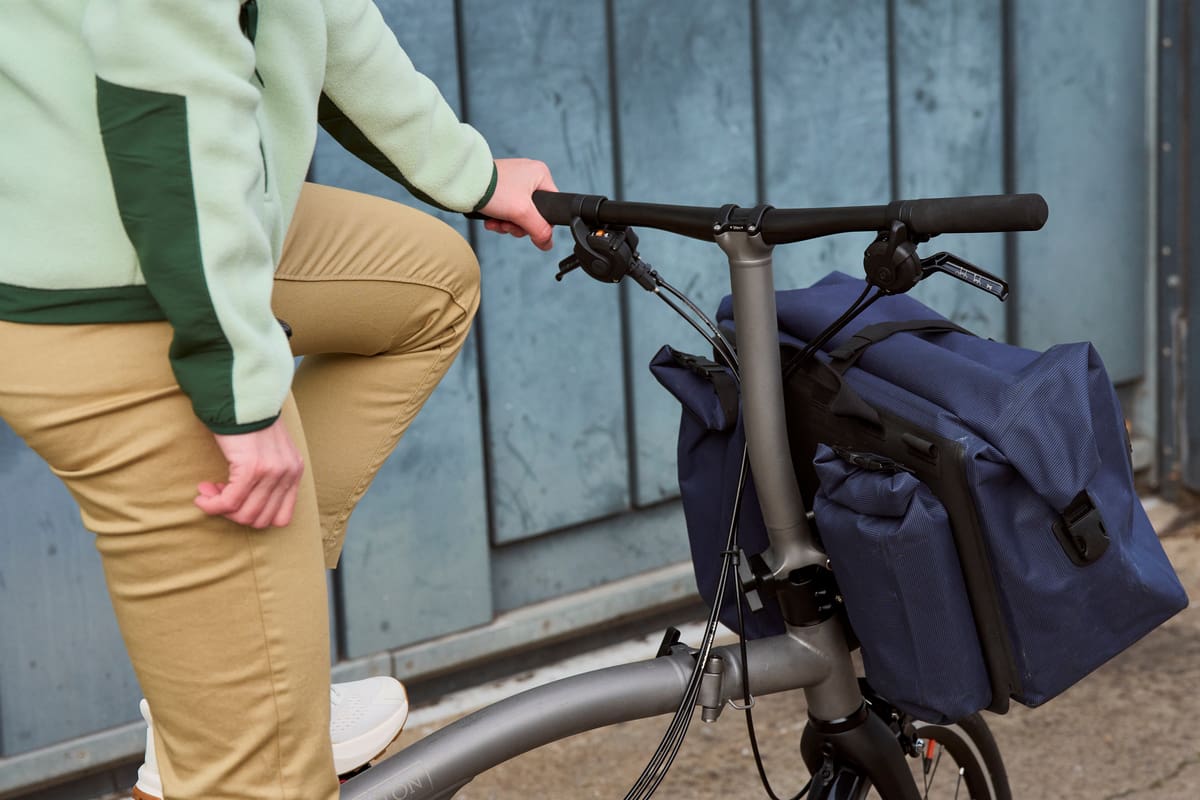
Most urban trips are too long to walk and too short to drive. Neither can efficiently glue the city together. But, the T-Line closes that gap. When a bike stays with the rider – both inside and outside – movement becomes uninterrupted flow.
The Extra Mile
At the same time, the surplus value of designing for transport is that the performance comes along for the ride. The lightest bike indoors becomes the fastest and most comfortable bike outdoors. That’s why the T-Line isn’t just made for the last mile, it’s made for the extra mile too.
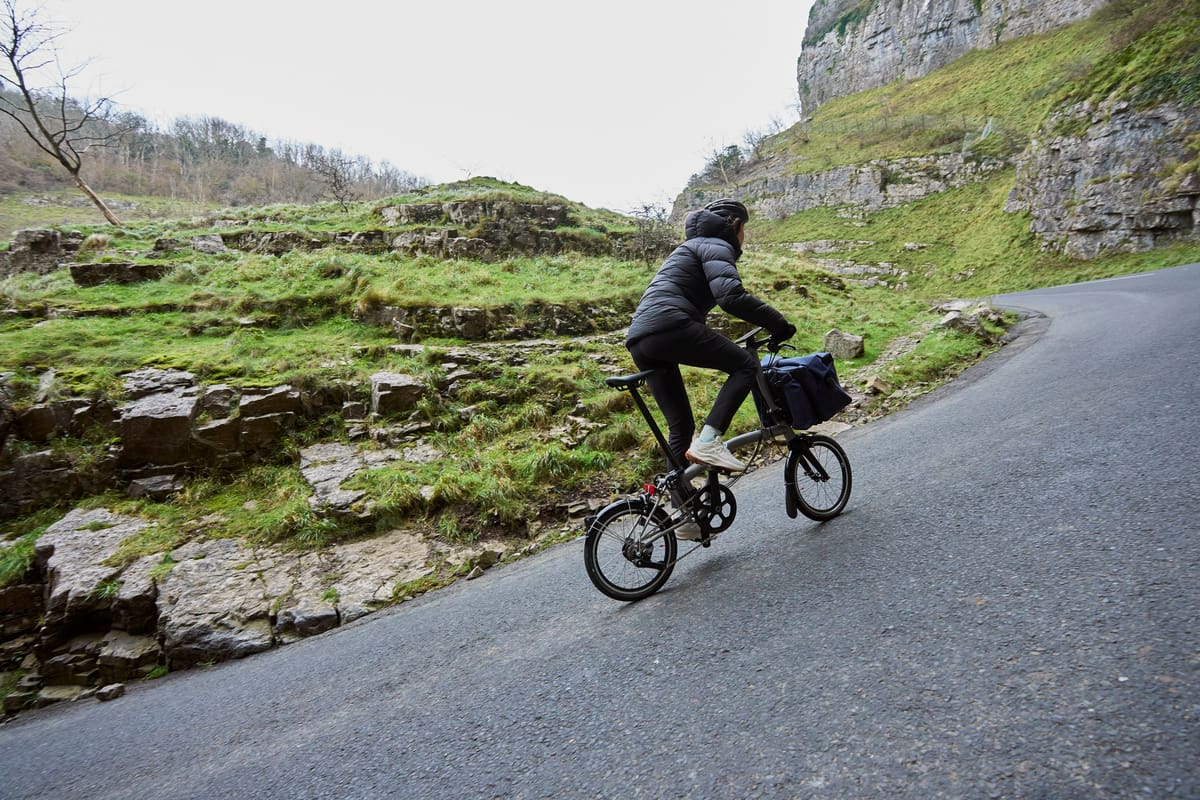
The cycling press has gone made over the T-Line, comparing it to a road bike. But, you’d never want to use your road bike in the last mile. With a T-Line, you can. And, if you want it to go the extra-mile, it’s ready.
Precision Tooling
We said Brompton’s mission is to engineer change. But, that literally means engineering. The T-Line is the most engineered bike Brompton makes, possibly one of the most engineered bikes ever made.
As CEO Will Butler-Adams states: Good quality bikes are built to wheel-alignment tolerances of around ± 2 mm. But if we stuck to that we would have a pretty terrible bike … we make our bike to tolerances of ± 0.2 mm, around ten times the tolerance of a normal bike. We’ll see soon that it’s not easy achieving those tolerances using titanium.

Precision Tools
But, titanium is worth it. Titanium offers extraordinary strength with very little weight and naturally absorbs vibration, so the ride feels smooth and fast. Meanwhile, carbon allows stiffness to be tuned precisely. The carbon crankset transfers power immediately. The carbon fork and cockpit quiet rough pavement. These materials usually appear on high-performance road bikes in pursuit of marginal gains. But high end performance bikes are ridden, not carried. The T-Line is ridden and carried. As a lightweight urban tool, the T-Line touches perfection.
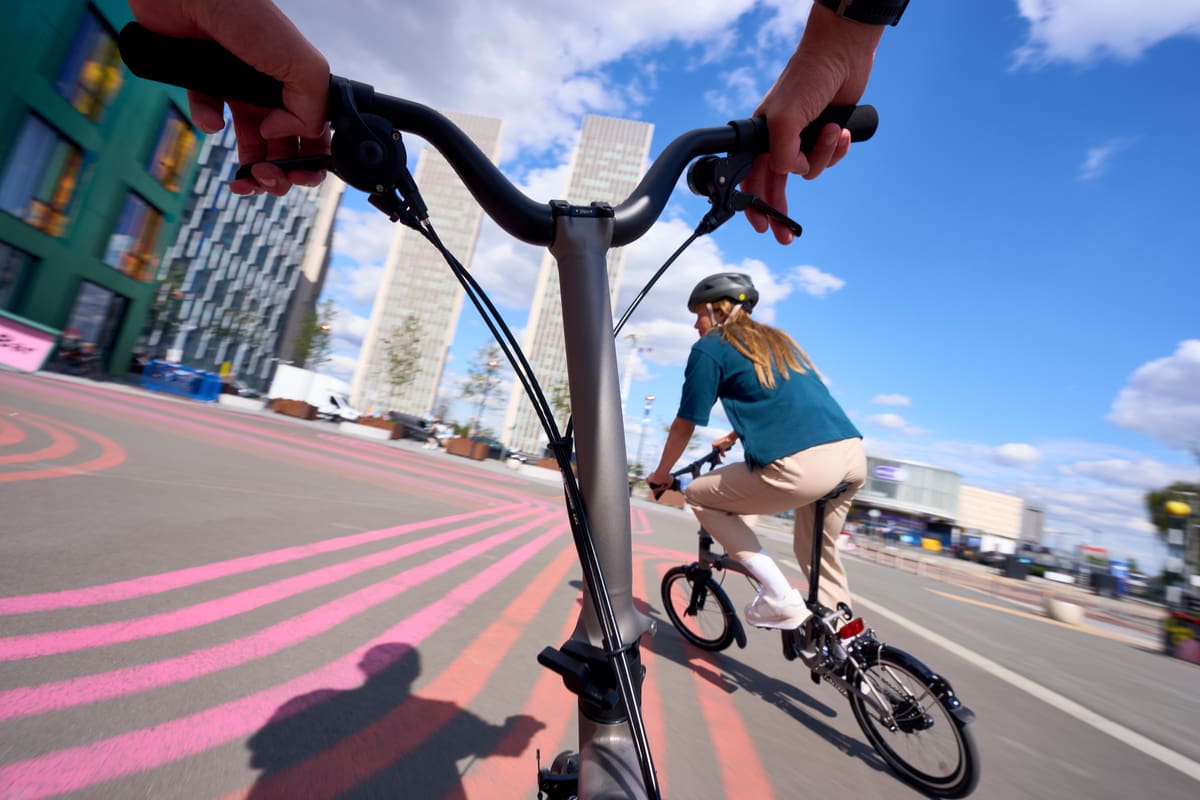
The T-Line represents the summit of Brompton’s mission to engineer change. Before Brompton even existed, founder Andrew Ritchie perfected the geometry, tolerances and fold on paper. This form existed first as pure potential. When the first prototype appeared, it felt as if Ritchie had pulled a Platonic Form down from the sky and given it material shape. The original steel Bromptons proved the form yet revealed only possibility, like shadows on the wall of Plato’s cave. The T-Line completes the actualization. It shows how far the idea can go once materials exceed the form. Aristotle would be proud.
What’s New?
Colours
Brompton discovered Cerakote finishes about the same time we did, and since then, both our companies have been like kids in a candy shop. Except, our candy shop has far more flavours. Whereas Brompton offers one or two Cerakote options, we can offer an almost infinite amount of Cerakote options. Want the rear frame one colour and the main frame another? Want each part of the frame to be a different colour? Prefer a mid-90’s splatter paint? We can do this!
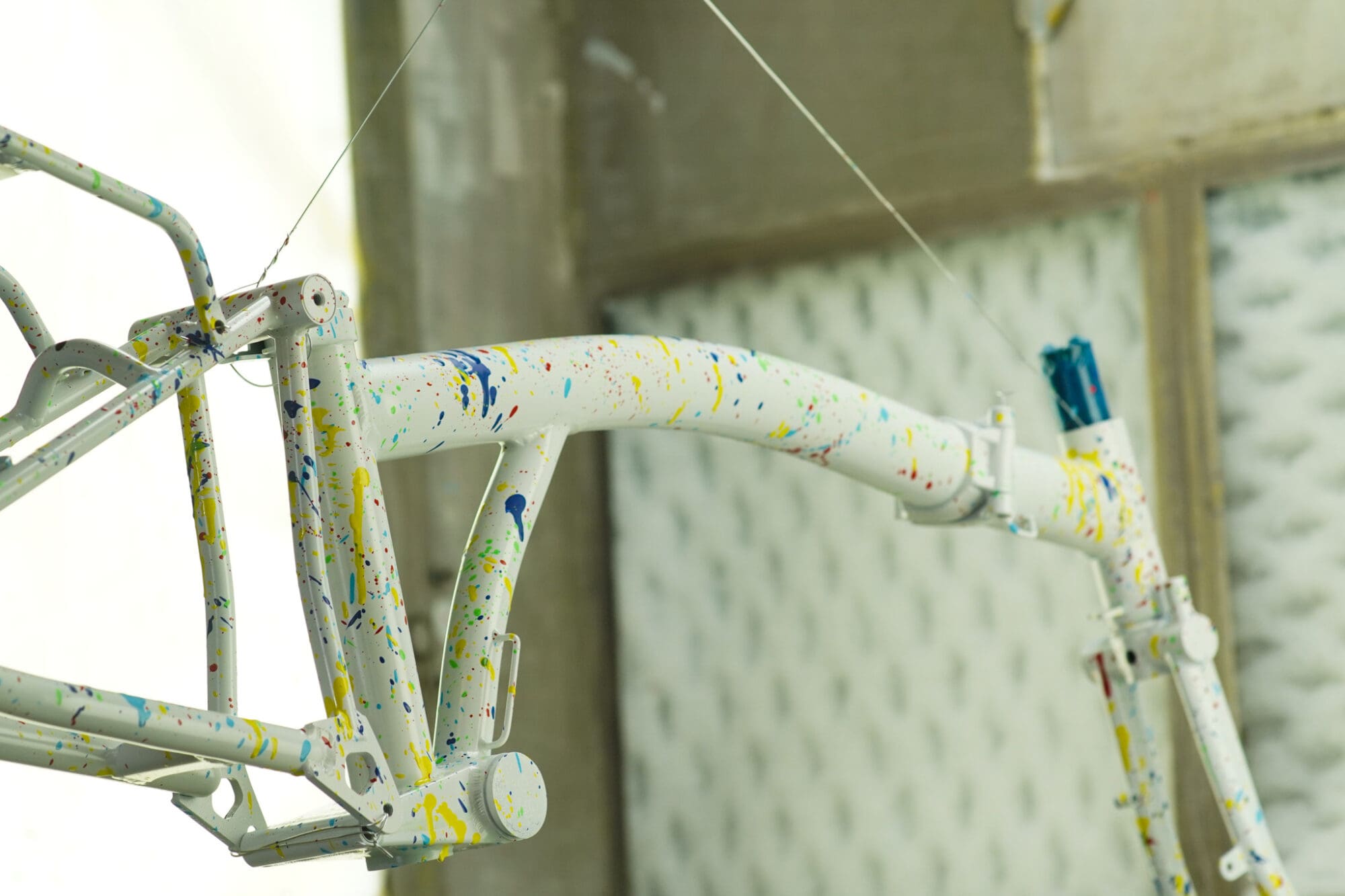
And, we can do this for the same surcharge Brompton charges for their Cerakote, about $1000. Cerakotes are ultra-thin ceramic finishes that are stronger than powder-coats, very lights, and incredibly chip and rust-resistant. You can learn more about our Cerakote collaboration here.

The e-Motiq
The T-Line was already the lightest expression of Brompton’s idea. The new e-Motiq makes it the fullest expression. If a bicycle glues the last mile together better than any other mode of transport, and a folding bike outcompetes all other bikes because it answers the problem of indoors versus outdoors, then an electric version collapses the remaining friction to zero. Movement becomes continuous and unwanted effort becomes optional.
The new e-Motiq is Brompton’s own electric system, built from the ground up. Like the T-Line, the Brompton Electric also sits at the summit of Brompton’s mission to engineer change. CEO Will Butler-Adams has said that the potential impact of the Brompton ebike to the smartphone, arguing that it will reshape daily life and draw in the ninety five percent of people who are able to ride a bike but do not. The T-Line Electric is where Brompton’s two missions finally meet: build the lightest bike to carry, and build the ultimate tool for the last mile. Titanium removes weight. e-Motiq removes unwanted effort. Save your sweat for the gym, not the ride there.

Who is this Bike For?
The T-Line is for people who have done the math. In dense cities, most trips are short. Three blocks to the office. Seven minutes to the train. Six floors to a meeting. The cost of movement is not measured in kilometres. It is measured by interruption. Elevators, stairs, lobbies, turnstiles, doorways — all of them break momentum.
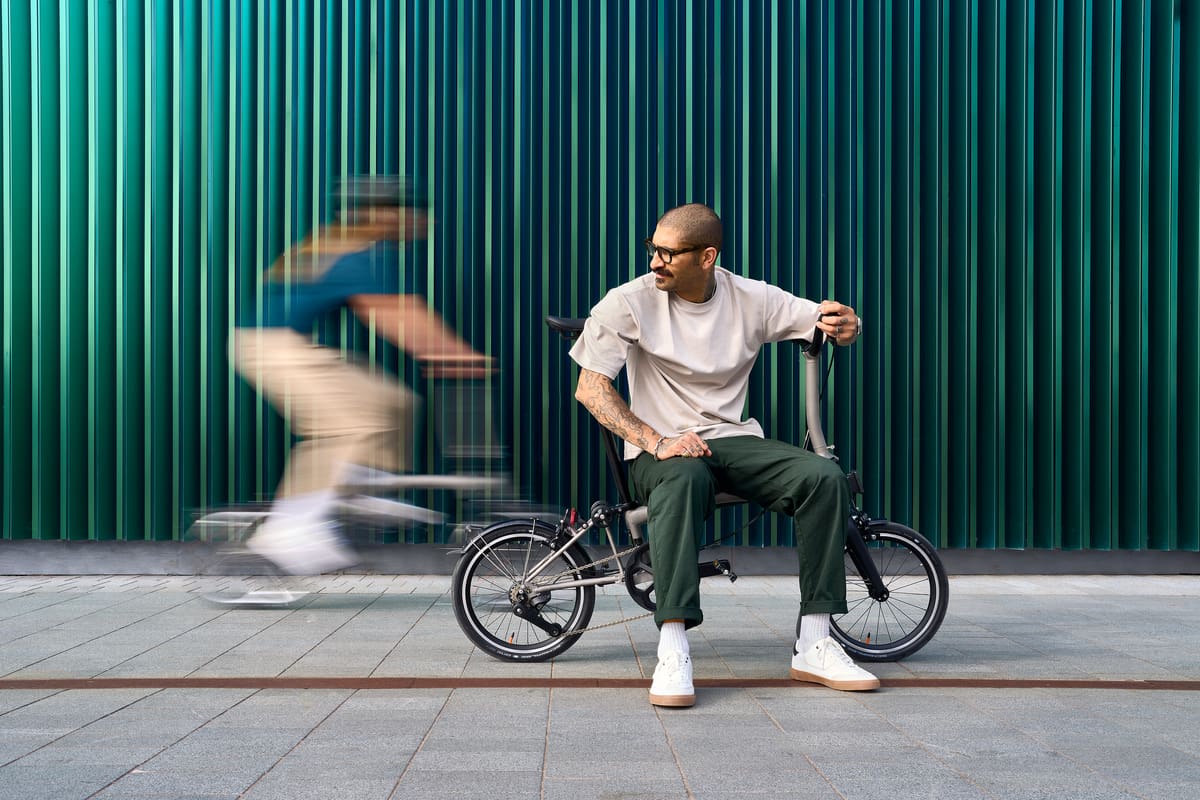
The T-Line keeps motion flowing. It follows you through buildings as easily as it moves through the street, so the stops between spaces stop feeling like stops at all. Because of this, Brompton has also done the math. The T-Line comes in three different weight: light, lighter and lightest. This all lines up with your use-case. If most of your movement happens in the last mile, the lighter versions give you more freedom. If you want to go the extra mile, you’ll want more gears. No matter what, each version of the T-Line is obscenely light.
T-Lines For the Last Mile
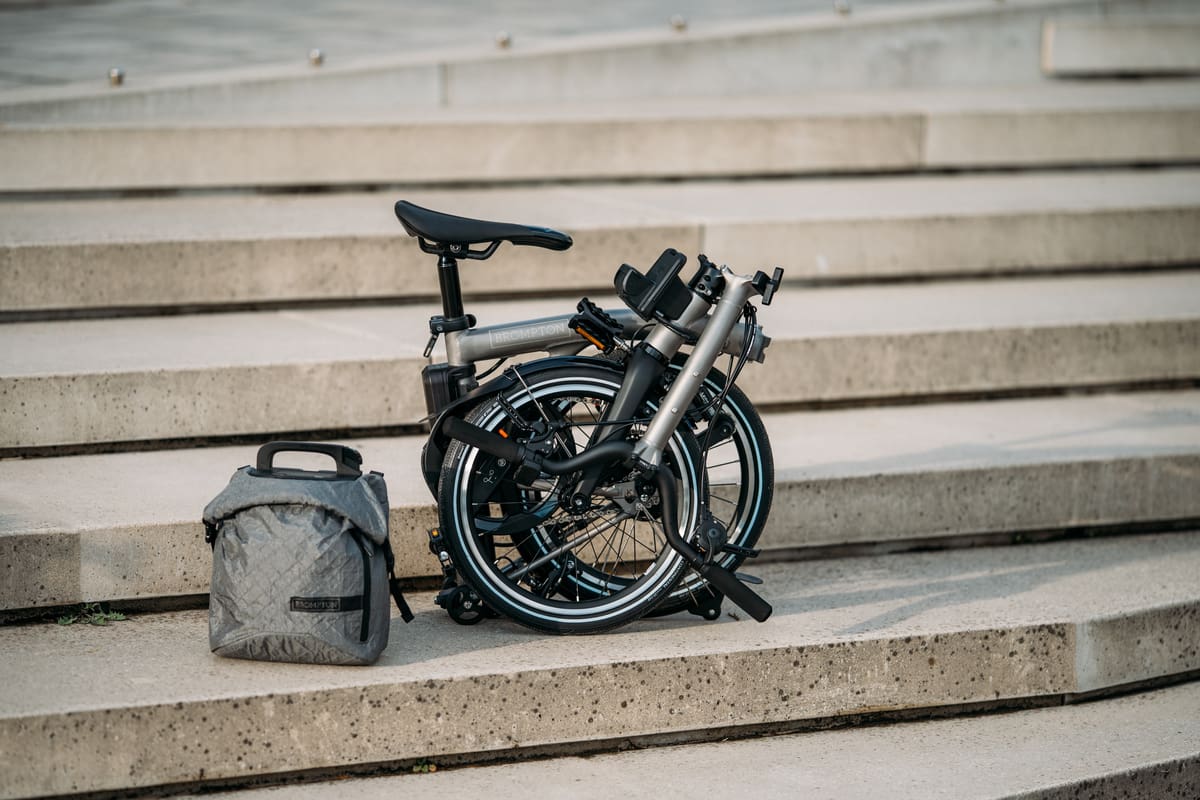
For riders who want the purest expression of this idea, the T-Line 4 Speed is the precision tool. At roughly 7.45 kg (16.4 lb) it is the lightest and simplest realization of the form. It accelerates between stoplights, slips through gaps in traffic, and disappears on a staircase. It provides exactly the gear range a city demands without the burden of choices. And then there is the T-Line 1-Speed.
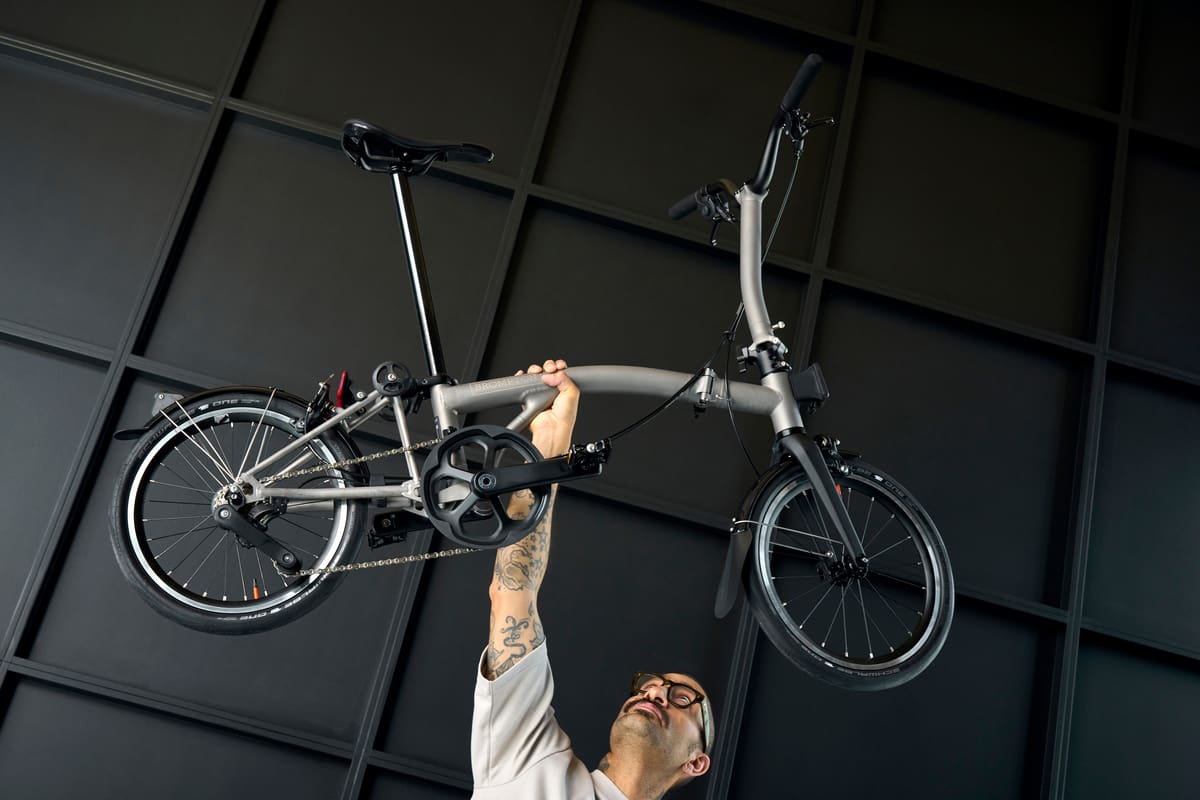
At 6.95 kg (15.3 lb), the T-Line 1-speed is the lightest Brompton ever built. This T-Line is definitely not for convenience-seekers. It is for the rider who believes that removing complexity sharpens the experience. They trade a little effort for absolute lightness. They would rather carry less bike up six flights of stairs than have one extra gear to shift. This is minimalism as conviction, and it’s certainly not for everybody!
T-Lines for the Extra Mile
For others, the T-Line isn’t transport that behaves like sport. It is transport, and it is sport. That is the surplus value. When a bike is engineered to be this light and this stiff, with titanium absorbing vibration and carbon directing power efficiently, it naturally becomes optimized for the last mile and fully capable of the extra mile.
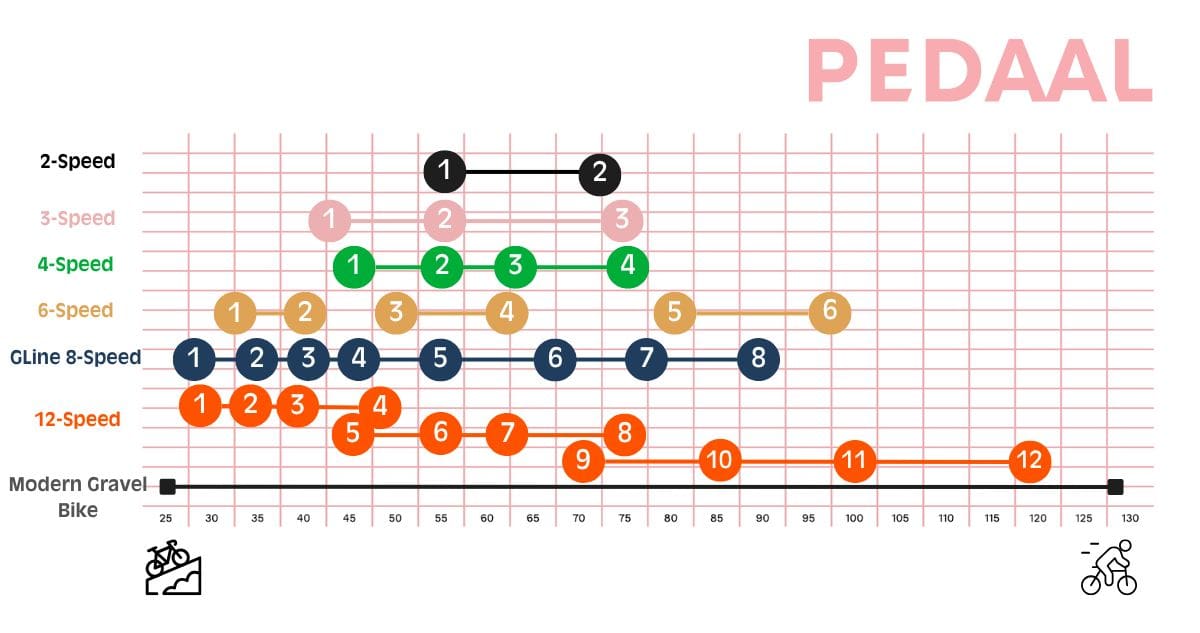
Riders buy it to shorten commutes and find themselves riding farther simply because the bike never fights back. Coastlines, rail trails, countryside — the bike invites distance. And when the ride stretches beyond the last mile into the extra mile, the T-Line 12-Speed adds the gearing range to climb anything and carry speed on long stretches, while still weighing only 8.3 kg (18.3 lb). But, a small weight increase gets you a massive gear increase!
T-Lines Miles Ahead
The T-Line Electric with e-Motiq removes unwanted effort from the daily commute. Unlike most electric bikes, which assume the bike will live outdoors and never be carried, the T-Line Electric keeps the essential Brompton quality: it remains light enough to lift, carry, and bring inside. It weighs roughly 12.7 kg (28.0 lb) with the battery attached, and about 10.5 kg (23.2 lb) without it. That is lighter than many non-electric commuter bikes.
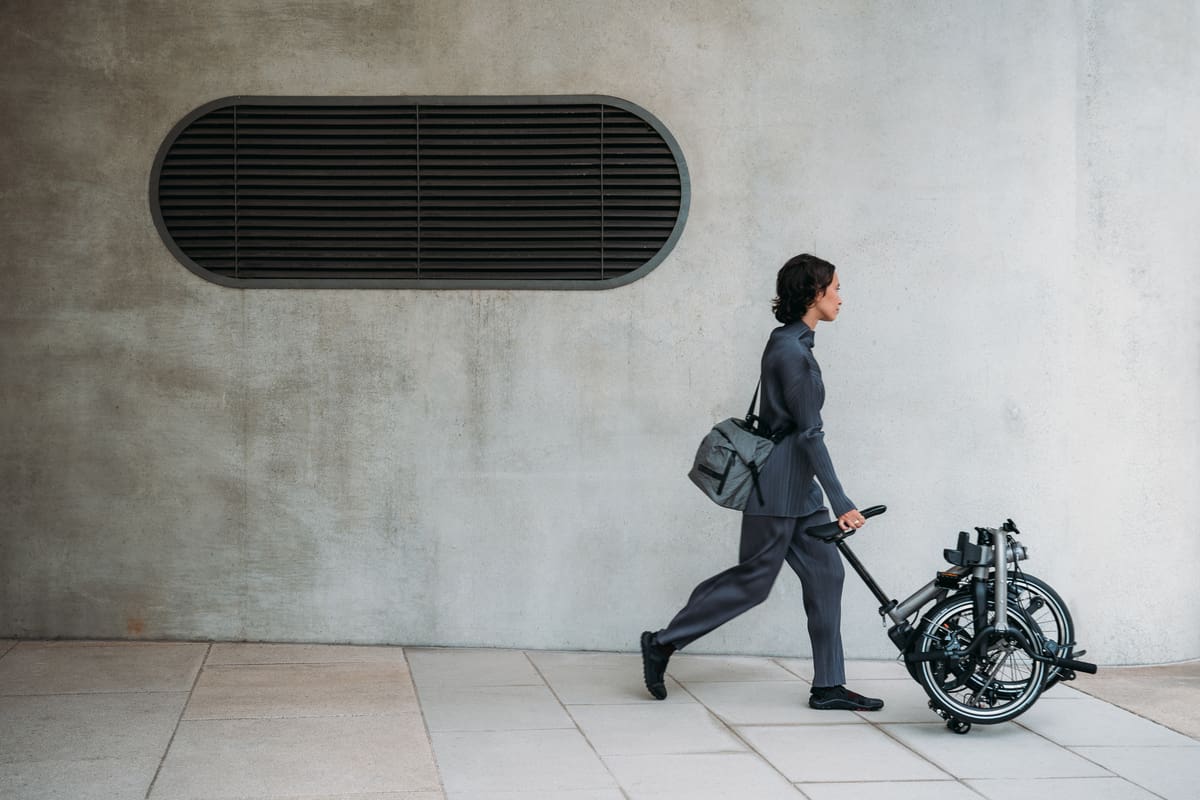
Yet, unlike any other electric bike, the T-Line e-Motiq fits into elevators, moves through office lobbies, and climbs stairs without changing the rider’s rhythm. The T-Line Electric still behaves like a Brompton. It just adds power.

How it Rides
The T-Line is built for transport and tuned for sport. It lifts without hesitation, moves quickly through the city, and smooths out the bumps that normally punish small wheels. Beyond the last mile it becomes something different: a fast, distance-capable bike that climbs eagerly and keeps pace with full-size road and gravel bikes. CyclingNews called it “noticeably responsive,” adding that from the first pedal stroke “the T-Line just takes off.” They noted that the titanium frame “bounces less over bumps” and gives more control. Titanium absorbs vibration. Carbon channels stiffness. The result is control without harshness. In a city of potholes and streetcar tracks, comfort becomes speed.
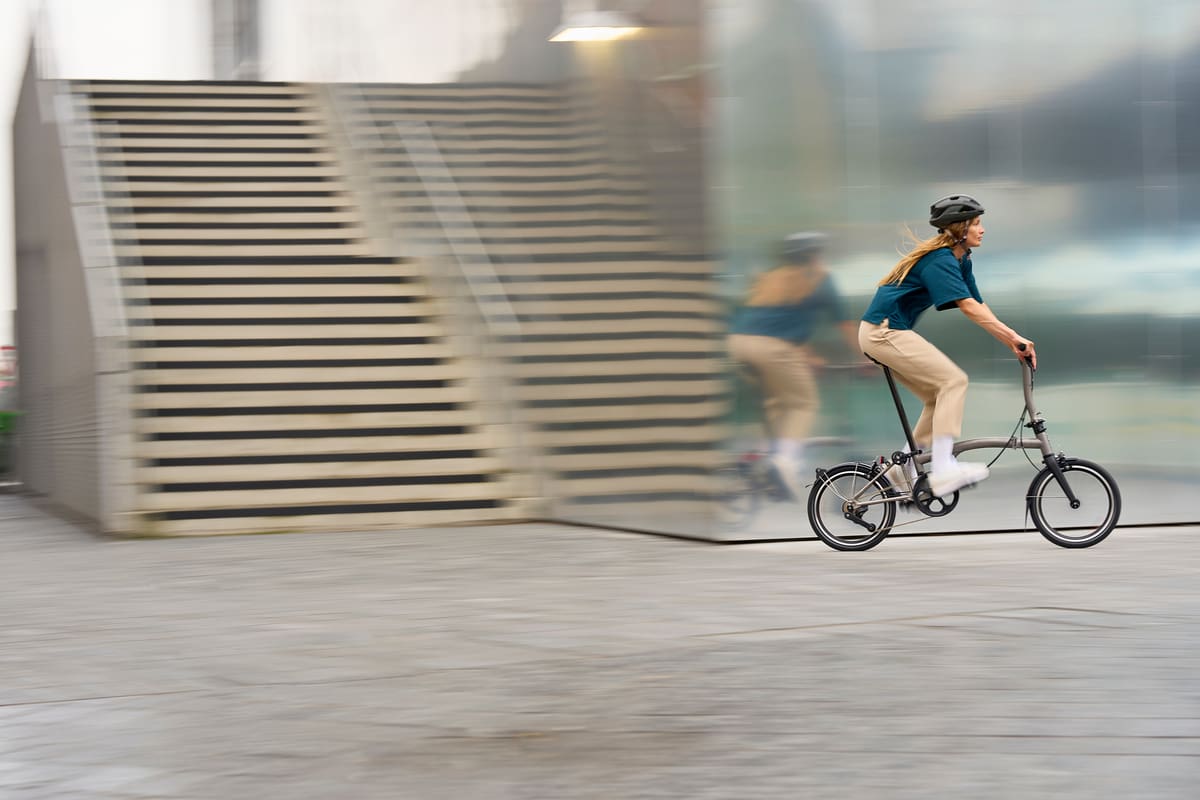
Portability is part of the performance. Cycle Magazine highlighted the weight, noting that at roughly 7.5 kilograms “this makes a palpable difference when you pick it up.” The bike moves naturally through buildings and stations. With the 12 Speed, the gear range expands into real climbing potential. Reviewers noted that it rides like a road bike that happens to fold. That’s right! Try taking your road bike into work!

As for the electric version, reviews are still in progress, but early reactions from dealers and Brompton internal previews describe e-Motiq as power that “feels invisible.” Start Assist provides the initial push from a stop and Adaptive Learning tunes support to the rider’s pattern. If the T-Line removes physical weight, e-Motiq let’s you save your sweat for the gym.
What you Gain/What you Give Up
In product design there is a well-known truth: if something is light and strong, it will not be cheap. Making the T-Line meant choosing materials that refuse compromise. Titanium is not easy to work with. It cannot be welded casually. It reacts to oxygen during fabrication and demands purging, inert gas shielding, and tolerances more commonly associated with aerospace than bicycle manufacturing.
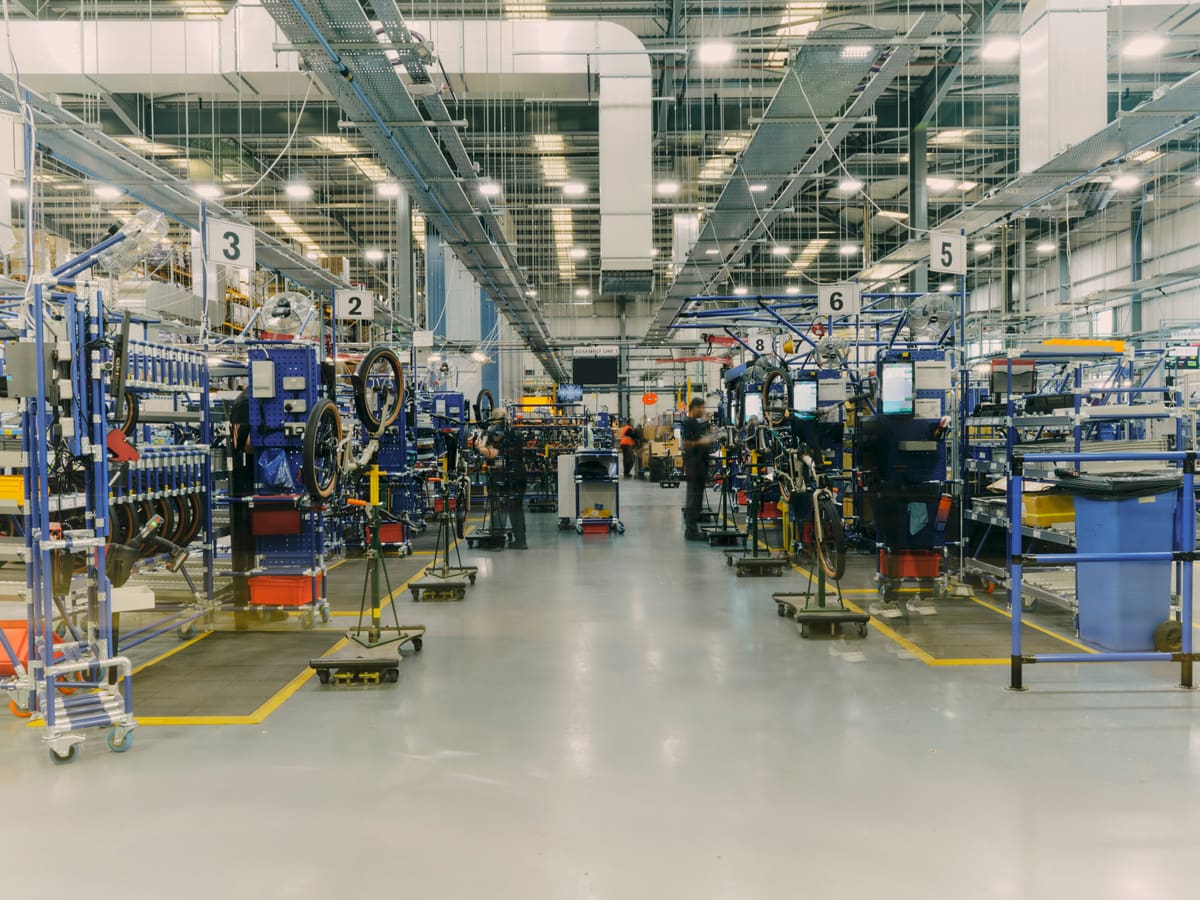
Early attempts on the P-Line using Russian titanium had promise (read about that here), but the supply chain was unstable, and Brompton lacked full control of the welding quality. That changed in 2015 when Brompton partnered with CW Fletcher in Sheffield, a company that fabricates titanium components for the aerospace industry. The result is a bicycle that is lighter and stronger than anything Brompton has ever produced. Titanium resists fatigue better than aluminum and absorbs the vibration that usually punishes small wheels. Carbon components allow stiffness to be directed exactly where power transfers, without unnecessary mass. What we’re trying to say is: you gain it all and give up nothing. Except, perhaps: price. But, even that requires context.
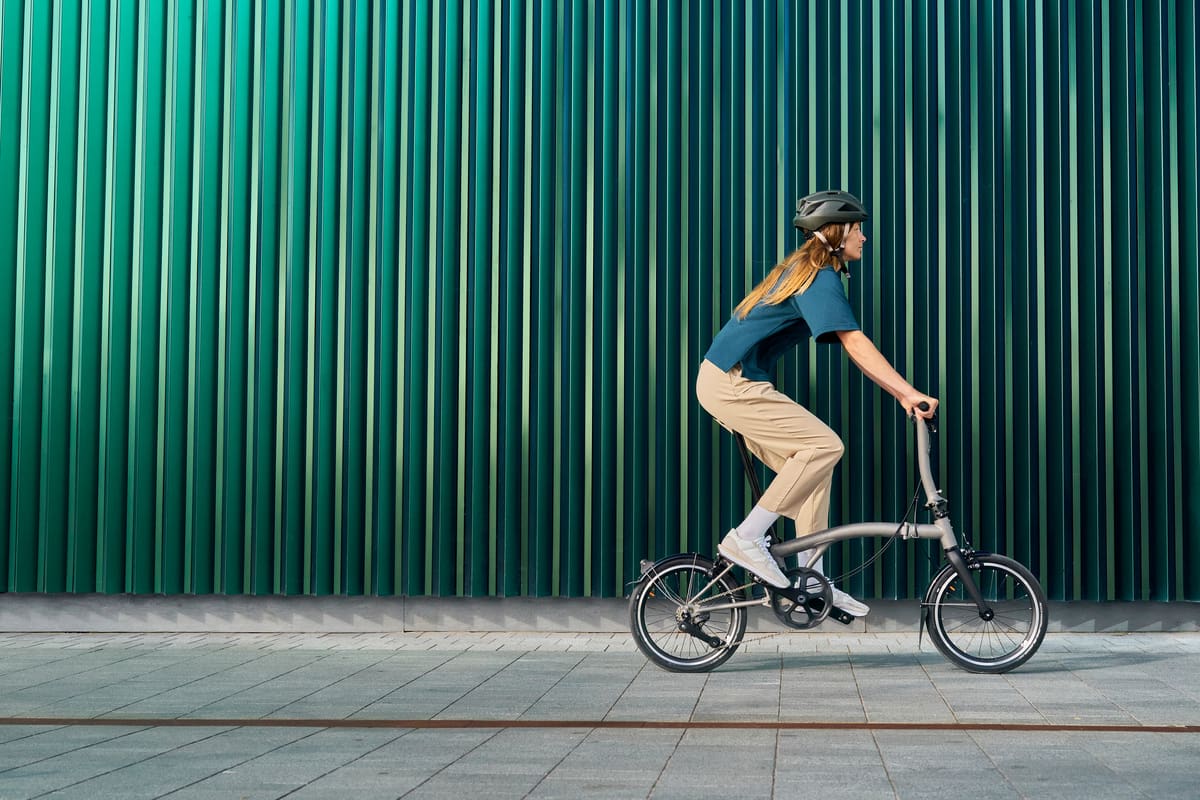
Viewed as a toy, the T-Line is expensive. Considered as transportation, it is inexpensive. But, it is an investment. A Toronto adult monthly transit pass costs roughly seventeen hundred dollars per year. After five years of transit, you own nothing but a memory of delays and winter platforms. After five years with a T-Line, you own the bike, along with thousands of door-to-desk shortcuts that transit can’t provide. In short, with the T-Line you gain the world’s lushest bike with full respect for your wallet. But, it is an investment. And, an investment that pays off.
Which Brompton T-Line to Choose?
T-Line 1-Speed: for the purist: This version is not about convenience. It is about conviction. At 6.95 kg (15.3 lb), it is the lightest Brompton ever built. One gear. The T-Line 1-Speed is not minimalism as aesthetic. It is minimalism as worldview.
T-Line 4-Speed: the precision tool for the last mile – The 4-Speed is a precision tool. At roughly 7.45 kg (16.4 lb), it delivers the ideal balance of lightness and gearing for real city terrain. The 4-Speed is the purest expression of the T-Line idea — a bike designed for the last mile. These bikes are generally in stock or available from Brompton USA in two short weeks. Check below or visit our pre-orders page here.
T-Line 12-Speed: the last mile and the extra mile – The 12-Speed, at approximately 8.3 kg (18.3 lb), expands the gear range to climb anything and spin at speed with the wind on your back. The slight increase in weight unlocks the last mile and the extra mile. These bikes are generally in stock or available from Brompton USA in two short weeks. Check table above or visit our pre-orders page here.
T-Line Electric (e-Motiq): better by a country mile – At roughly 12.7 kg (28.0 lb) with the battery and 10.5 kg (23.2 lb) without, the T-Line Electric is lighter than many non-electric city bikes. It is the complete realization of Brompton’s mission: titanium removes weight, e-Motiq removes effort. For riders who want the Brompton without the sweat, this is the one. These bikes are expected March 2026 and allocations are very tight – you’ll definitely want to pre-order. Check below or visit our pre-orders page here. (Give the page a few seconds to load).
Next Steps
Got a question? We’d love to help! For quick questions, click the chat button during opening hours or shoot us an email at info@pedaal.com. Want to really drill down with some questions? Book an in-store or remote sales appointment by clicking here. Of course, we’re also a phone call away too! Just dial 416-972-1422, ask for Eric or Timm and we’d love to help!
Questions about a Brompton? We can help!
Related Posts
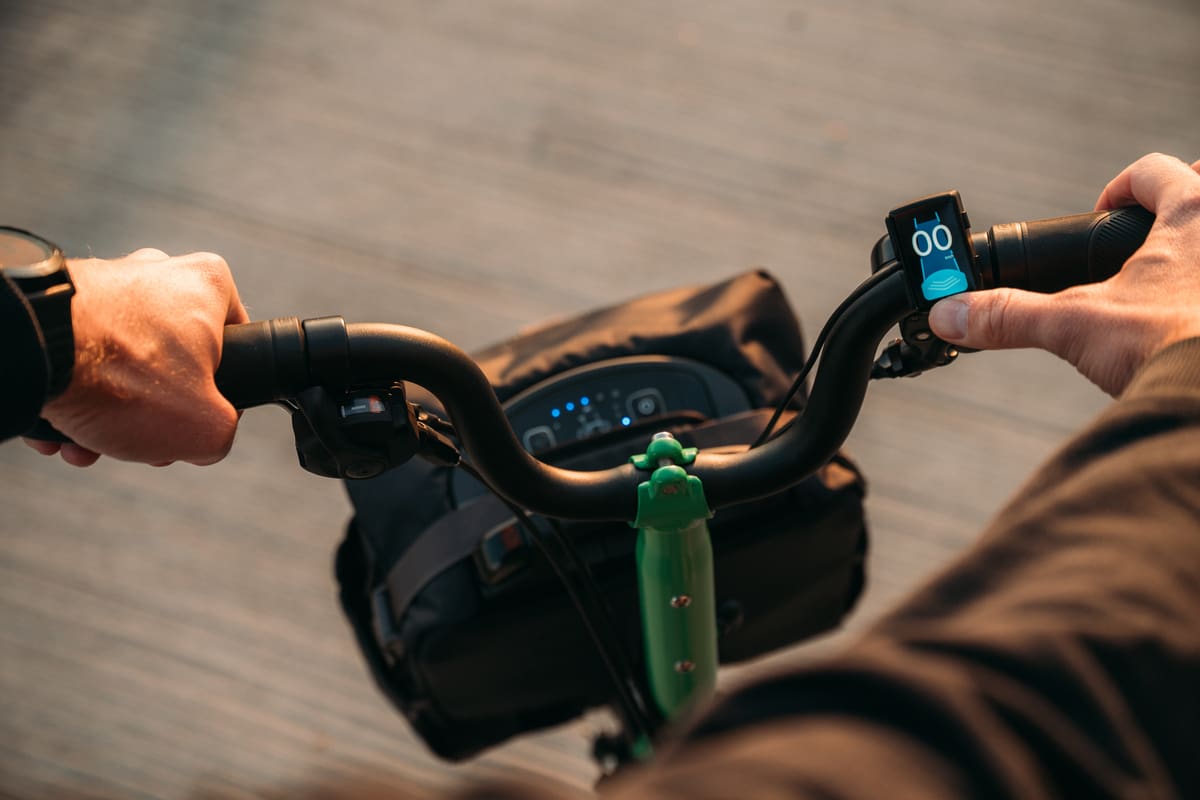
The Story Behind Brompton’s New e-Motiq Electric System
The new Brompton Electric with the e-Motiq system marks a quiet shift in how Brompton thinks about power. The motor is lighter, the controls are simpler, and the software observes how you ride before predicting range. In his book, Engineering for Change, Brompton CEO Will Butler-Adams writes that Brompton develops products by “pull, not push”;...
stay up to date
Stay in the Know. Join our Newsletter!
*By entering your email, you agree to our Terms & Conditions + Privacy Policy,
including receipt of emails. You can unsubscribe at any time.

Pedaal designated official Brompton Gold Dealer status - Read more