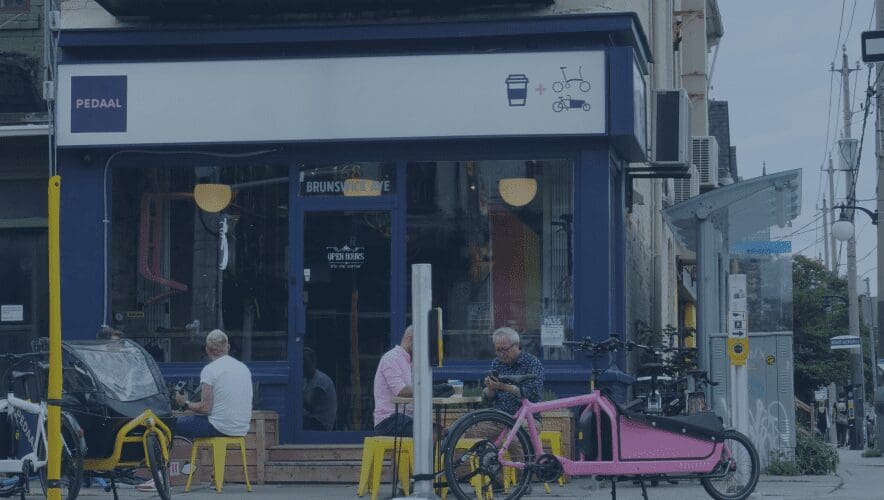
Charles Eames famously said that “recognizing the need is the primary condition for design.” Use-case, in short, is everything. The problem with most bicycle design, however, is that few bikes can claim to be made for the city. The city is lived outdoors and indoors. Can a bicycle be designed for the whole city, indoors and out? Brompton has spent 50 years answering that question.
Unlearning the Bicycle
Paul Rand, the graphic designer behind IBM, ABC and UPS, wrote: “The public is more familiar with bad design than good design. It is, in effect, conditioned to prefer bad design, because that is what it lives with. The new becomes threatening, the old reassuring.”
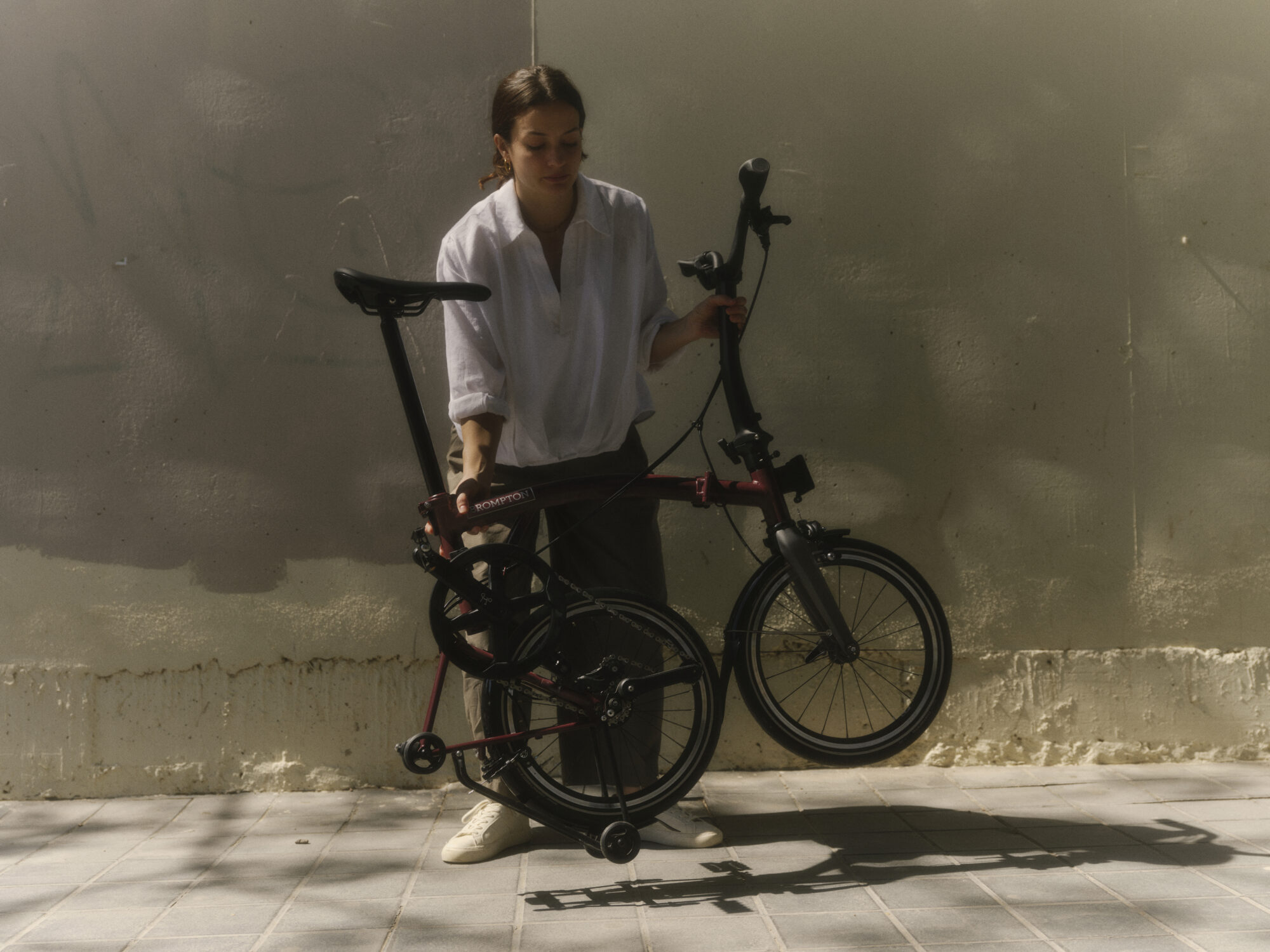
How very true. We know this because we sell Brompton folding bikes, and on first look they aren’t threatening, but we’ll admit they are a bit weird. They produce a moment of genuine incredulity: Can this really solve my urban transportation problems? Yes, it can. And, the one thing it absolutely terminates is tolerating bad design. Especially design that gets your bike stolen over and over again.
The City Bike, Inside Out
Why does theft occur? Because the entire bicycle market assumes bikes are meant to take us out of the city and into the great outdoors. But, this is a crazy assumption! In the city, we only go outdoors to go right back indoors, whether that is work, home, the gym, a café.
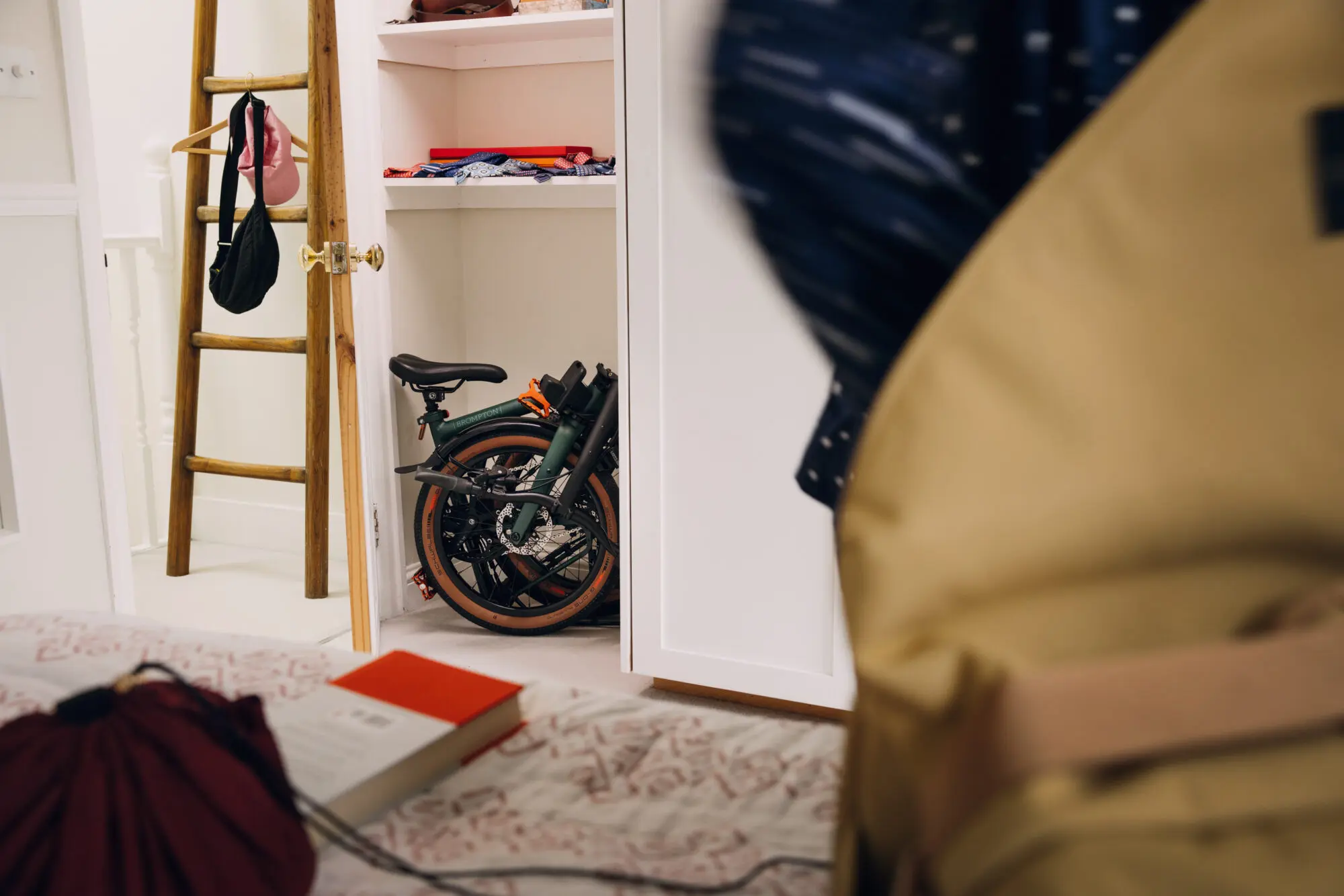
Thus, a true city bike must therefore be designed for the outdoors and the indoors. That’s the design moment! Eames would recognize that indoors a bike must become furniture. A real city bike is furniture for locomotion. This is this concept that drives the design and deconstructs everything else that missed the mark. Most bikes are out of place in the big city. Why? Because they’re always outdoors.
A Taxonomy of the Fold
To drill down, a regular bike cannot come into work, onto a commuter train, through a grocery store or onto an airplane. So, it stays outside. Well, until it gets stolen. Meanwhile, a Brompton sits beside you at work and while you sleep, boards the train, comes on vacation and turns into a grocery cart.

Brompton has, in other words, developed a complete taxonomy of indoor use: indoors and static, indoors and moving, and indoors inside something else that is moving. Think it’s good indoors? Just wait till it goes outdoors!
The Shape of a City Bike
Even the CEO of Brompton went through the same incredulity that you might go through yourself when considering a Brompton: “…the reason I’m still there 22 years later is that this unassuming little bike — counterintuitive in its design, odd-looking, seemingly unimpressive — completely changed my life.”
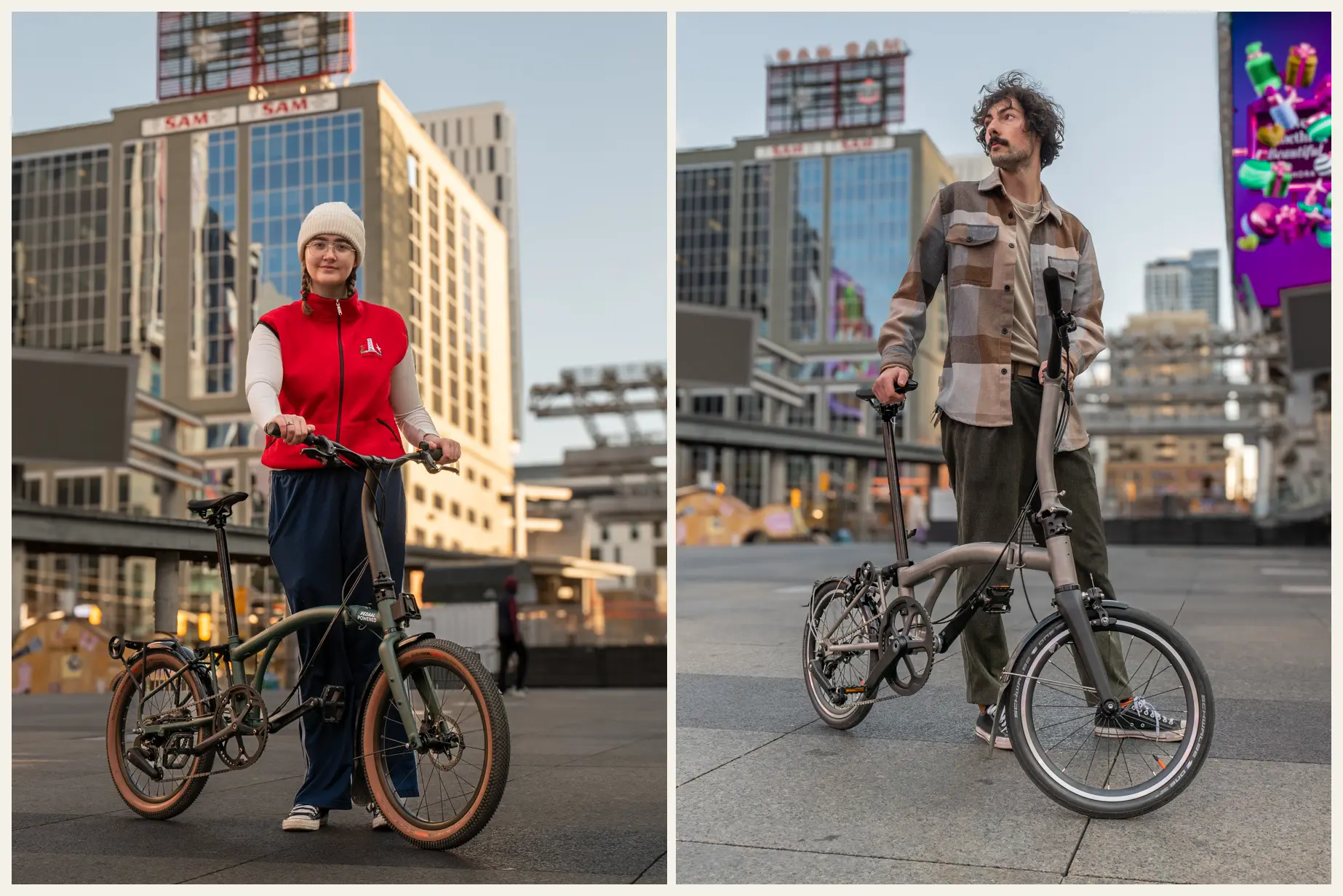
In other words, it may not look like a city bike, but that’s because we have no idea what one looks like. And, the reason we don’t know what it looks like is because we’ve been tolerating bad design. Truth is, a Brompton is the closest approximation to the city bike archetype. It may well be the Platonic form.
Speed at the Scale of the City
Richard Rogers, the architect behind the Pompidou Centre and Lloyd’s of London, understands the Brompton’s good design: “It’s immensely stable and flexible and robust and simple … It works. I use it every day.” Many look at the small wheels and think a Brompton is a kids bike. But, the small wheels aren’t there to make the bike smaller when folded. The smaller wheels are there because they’re faster.

In the country, larger wheels are faster because you can reach top speed and hold it. Well, good luck doing that in the city. Urban riding is acceleration from one stoplight to the next. Here, speed is measured by how quickly you pull away when the light turns green. Small wheels accelerate. Large wheels don’t. No matter how funny a Brompton may look, the physics are on your side.
Designing at Two Scales
But acceleration and agility are useless if the bike feels unstable. That’s why Brompton plants its small wheels onto the wheelbase of a full-sized bike. This is why Rogers observed that a Brompton is “immensely stable.” It folds small but rides big. And, between these two states, it’s a cinch to fold.

Here’s the engineering paradox that a Brompton solves with its design. To excel indoors and outdoors, a folding bike must perform two opposite tricks: disappear when folded and feel full-sized when opened. If you compare this to the competition, you’ll find they do the opposite. Their bikes are too big to bring inside and too twitchy to feel safe riding. And, they are murder to fold. It takes good design.
Engineering the Effortless
Which leads us to another design problem. Because, if you’ve solved the engineering paradox of a small fold and big ride, you’ve got a new problem to sort out. Folding and unfolding have to be easy. Otherwise, what’s the point? A Brompton is extraordinarily complicated in its design, but it all points towards simplicity.

A quality bike is built to a tolerance of ±2 millimetres. A Brompton is built to ±0.2. It has to be: five frame sections must unfold into one perfectly aligned bike. That requires 1,200 proprietary parts and control over every step of production. Its London factory is part medieval guild, part Industrial Revolution and part modern supply chain. Building a bike more engineered than a $20,000 racing bike is part miracle, part stubbornness.
Kinetic Freedom
Of course, many people think a Brompton is a luxury good because prices start around $3,000. But, when compared with a car, taxi or transit, a Brompton is cheap. Especially when you consider that it will be your primary transport. The TTC costs roughly $8,500 over five years and a cheap car costs at least $40,000. You can live your whole life chasing a carrot on a stick.

A Brompton gives you a lifetime of un-gridlocked, kinetic freedom and you only need to purchase it once. What is kinetic freedom? It’s when you’re always moving, always in flow, and never gridlocked. That means outdoors and indoors. You want the definition of luxury in the city? That’s it.
Beyond the Bicycle
It should be clear by now that a Brompton is not trying to compete with other bikes. All the same, few bikes are as transportable when it comes to leaving the city. Whether by car, plane or sailboat, a Brompton will open up far more adventure than your regular bike. That’s the bonus level everyone gets when they buy a Brompton. But, its real competition is the car.

Why? Because Bromptons are made for the last mile, and in the last mile every trip is too close to drive and too far to walk. Only a bike fills that gap efficiently. Compared to transit or driving, a regular bike costs a fraction, moves efficiently and takes you door to door. But, a Brompton never gets stolen, is even more efficient, and takes you bedroom to office.
A Better-Designed Life
So, why aren’t more people riding Bromptons? Well, good design takes curiosity and curiousity takes time. Brompton themselves are patient. In an interview, CEO Will Butler-Adams states:
There are millions of people who don’t know this bike exists — but if they did, it would change their lives… If you’re not greedy, if you don’t rush to “flog, flog, flog,” but instead take a thoughtful approach, you’ll connect with the right customer… This approach is about patience. It’s like Warren Buffett’s compound growth…. We do things well, build strong foundations through our customers. It’s not about pushing sales and moving on. It’s about looking after customers and being honest.
If good design ever had an ethos, that would be it. Make something properly. Look after the people who buy it. Trust that curiosity will do the rest. So, if you’re curious, come by, have a coffee and take one of our demo bikes for a ride.
Learn More