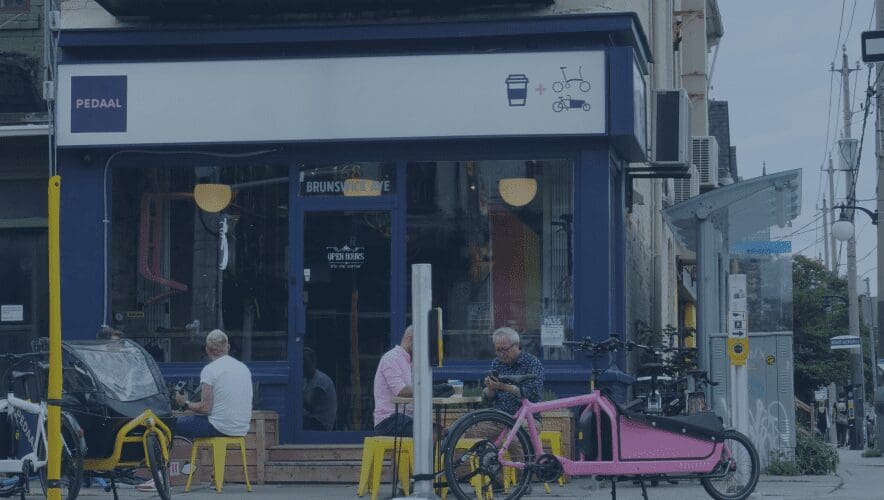
A visitor from the Netherlands to Toronto would observe an e-bike ecosystem that feels immature or downright out of control. On one hand, they would see bikes they recognize: lighter, highly regulated European e-bikes and cargo bikes that moderate power output to ensure safety in the bike lane. On the other hand, they would see food delivery riders moving at breakneck speeds on heavy throttle-assisted bikes or e-scooters that appear to have pedals, even if those pedals don’t seem to be doing anything.
Pedal Power?
Truthfully, not everything in the Netherlands is perfect. The e-bike market has always been divided between companies that contribute to high legal standards and those that operate at the edge of them. The same is true in Toronto. Bike shops typically sell the kinds of bikes a Dutch rider would expect, while most delivery bikes are sold through a grey market online or in back-alley stores. The difference is that Dutch legislation has gone much further in catching up with those who willfully operate in that grey area.
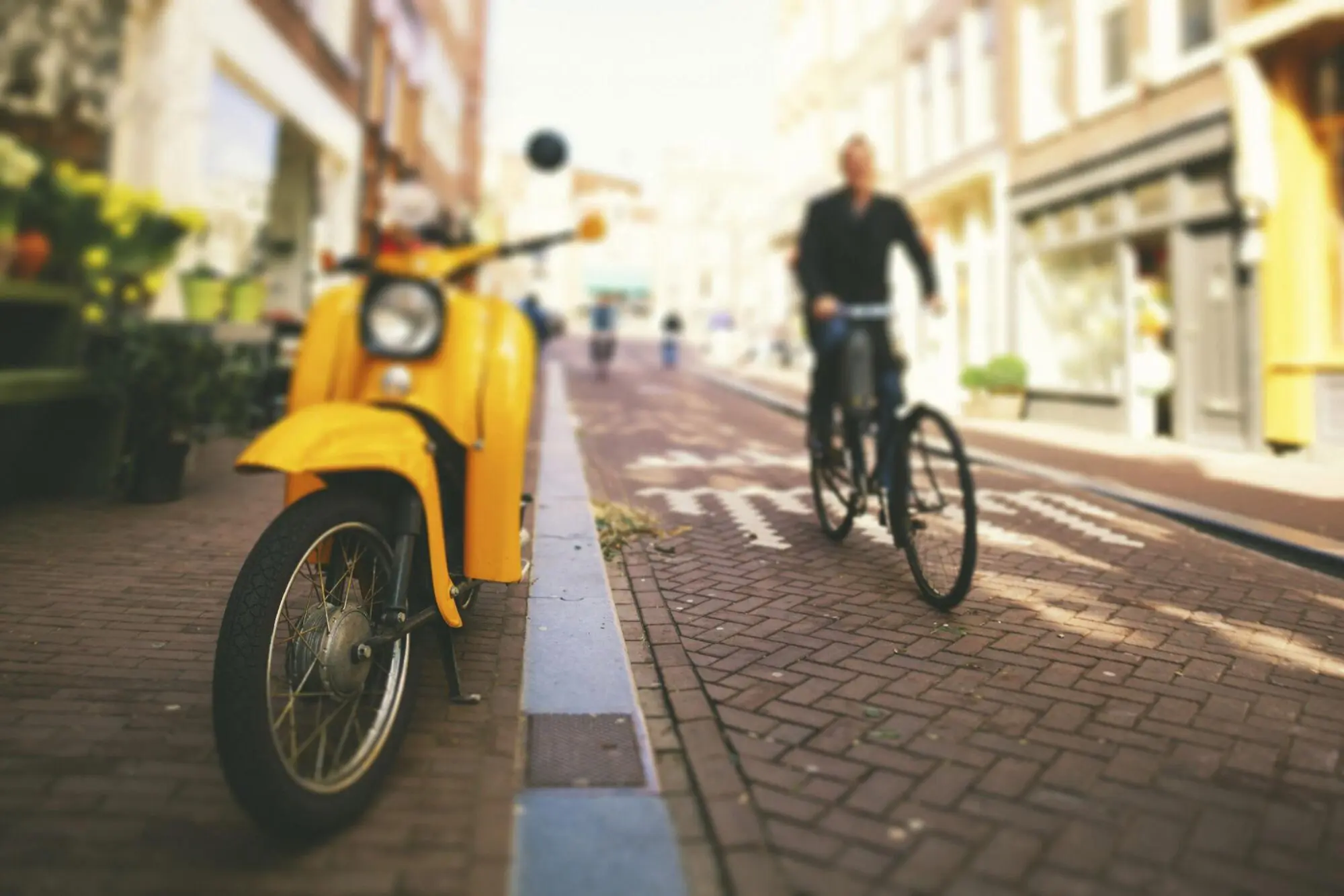
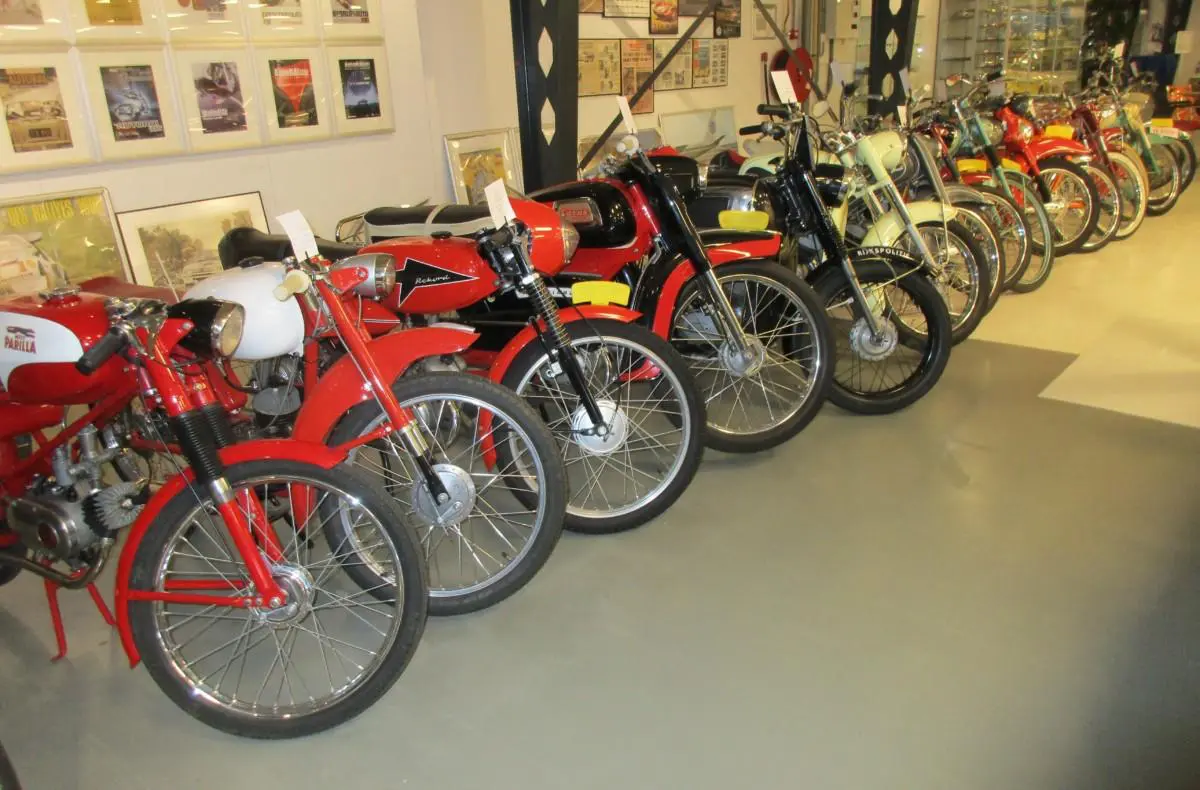
In the Netherlands, it all began with the introduction of the moped. Moped means “motor” and “pedal,” and it was a legally evasive product from the start. At the time, a bicycle was defined simply as something with pedals, so manufacturers put pedals on what was effectively a motorbike and called it a bicycle. After numerous accidents and fatalities, legislators were forced to respond. Today in the Netherlands, mopeds are classified as motor vehicles, not bicycles. Why? Because despite having pedals, a moped can be ridden without pedalling. The motor is autonomous from the pedals. It does not rely on them. That is what makes it a motor vehicle.
What Counts as an Electric Bicycle?
If only the same clarity were present in Ontario. At Pedaal, we have consulted with the Ministry of Transportation, and we were pleased to see a new set of proposed revisions open for comment. The most important change for many riders is that passengers will finally be permitted on electric cargo bikes. Until now, Ontario has been the only jurisdiction in the world to prohibit passengers on e-bikes. This is real progress.
While we welcome the proposal, we also have some critiques. If it all comes down to definitions, then the most important question is this: what defines an electric bike? In the Netherlands, any bike with an autonomous motor is treated as a motor vehicle. Pedals cannot exist as a legal accessory. They must be in use, and that means they must be integrated into the electric system.
Assistance vs Autonomy
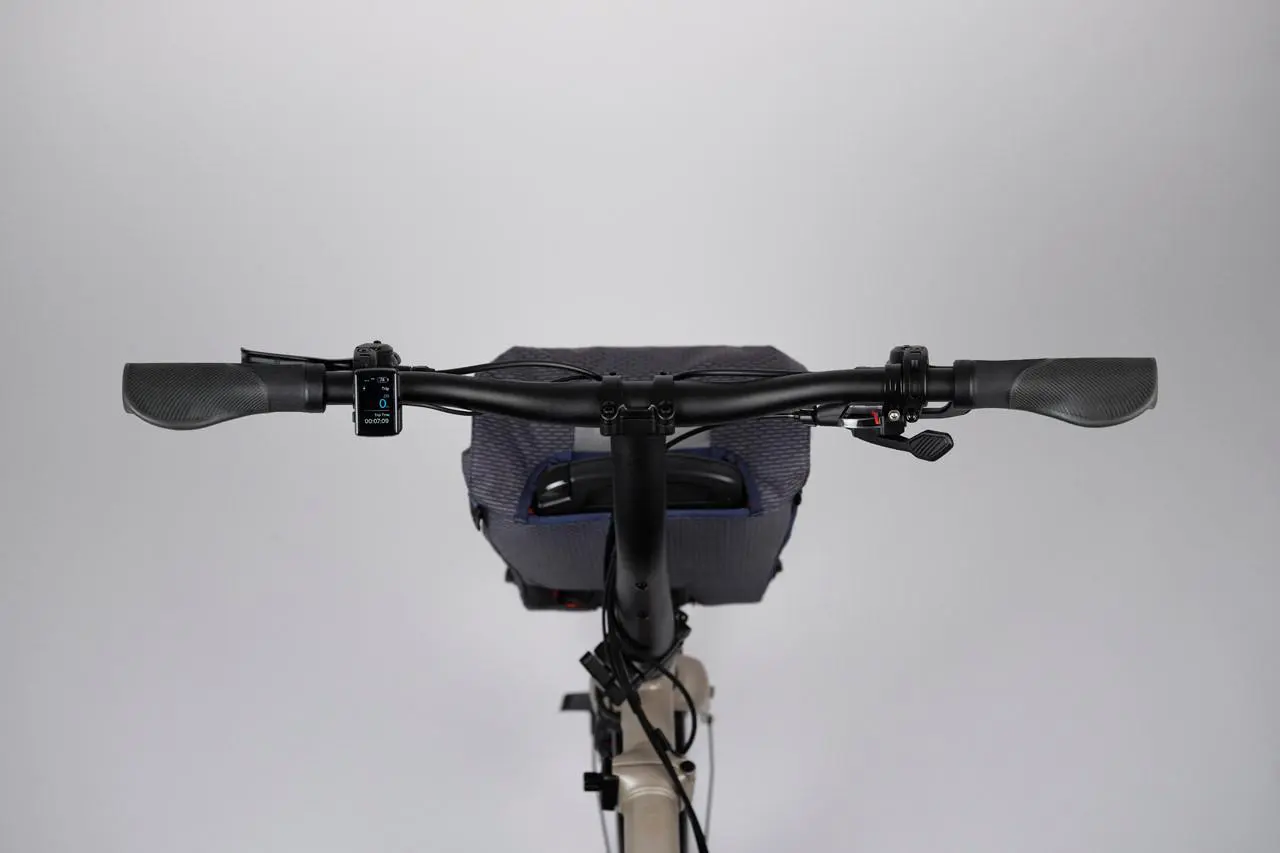
It is easy to build a bike with pedals and a motor that ignores them. It is much harder to build a system that responds to conditions and context. A true electric bicycle assists when needed, such as on a hill. The motor responds to what the rider is doing. Outputs are regulated by inputs like pedalling torque, cadence, and wheel RPM. The motor may have high peak power, but that power is only accessible when the context calls for it. A throttle does no such thing. It delivers peak power on demand.
The line between electric bike and motor vehicle remains blurred in the proposed MTO legislation. The MTO is clearly concerned about the unregulated rise of e-mopeds, and so are we. Anyone who needed a motorcycle licence to ride a Vespa has reason to be frustrated watching e-mopeds travel at similar speeds with no licence or insurance.
Getting E-Mopeds Right
Following the Dutch model, the MTO proposal classifies e-mopeds as motor vehicles. Furthermore, like the Netherlands, it introduces two categories of e-mopeds. In the Netherlands, a snorfiets tops out at 25 km/h, while a bromfiets reaches 45 km/h. In Ontario, those limits are 50 km/h and 70 km/h respectively. Like the Netherlands, neither would be permitted in bike lanes, and both require licence, insurance, and registration.
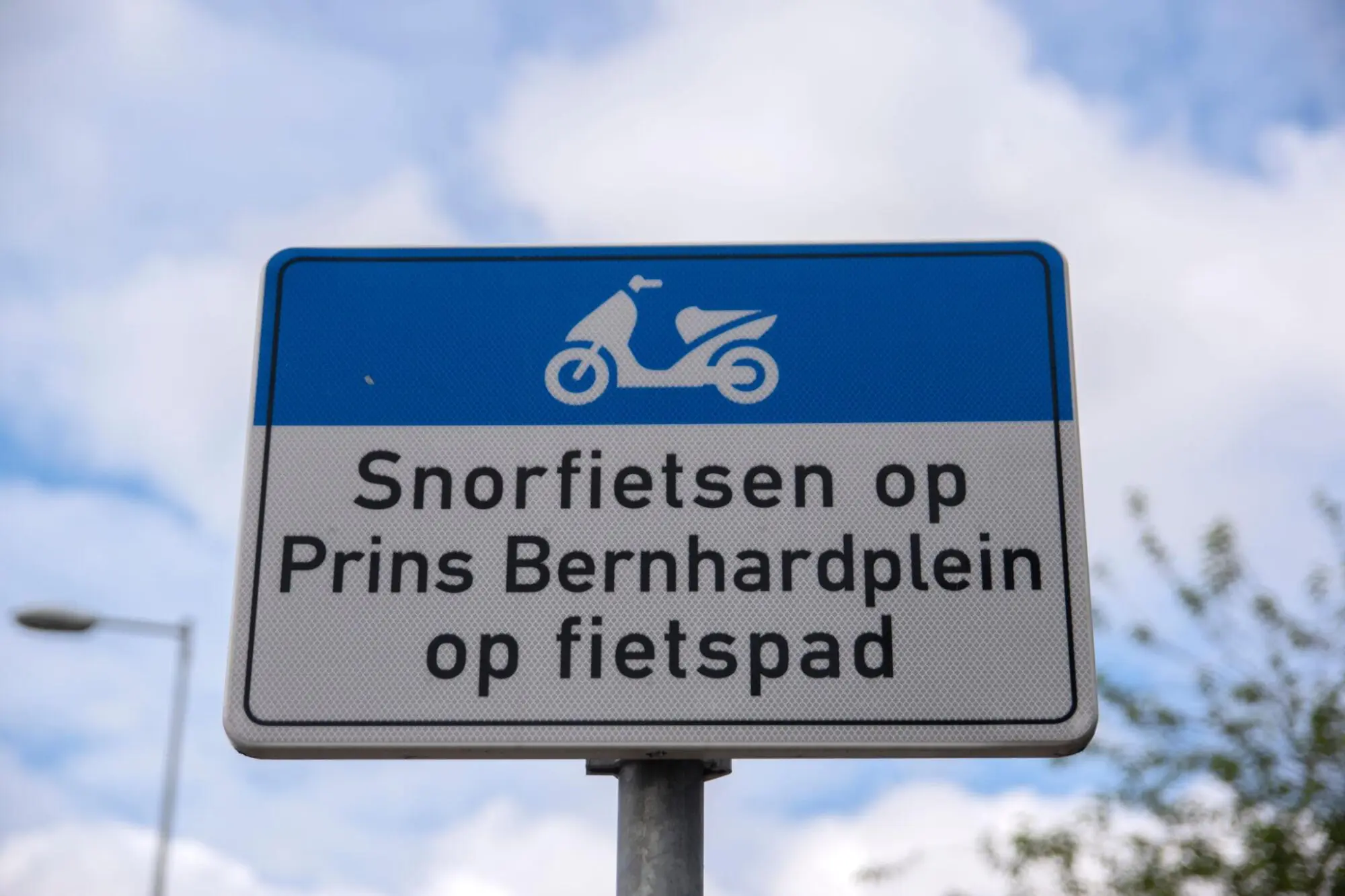
Thus, in one move, e-mopeds are brought into a system of responsibility. This is good. A form of green mobility is not being banned, but it is being treated seriously. This should improve safety, particularly since many of these vehicles are used in delivery work where riders are incentivized to move quickly. But most delivery bikes are not e-mopeds. They are bikes that look like bikes with throttles and largely ornamental pedals.
A Question of Definition
This raises a difficult question. What is the difference between an e-moped with a throttle and decorative pedals, and a bicycle that is effectively the same? The MTO’s answer is that one has an exposed frame and the other does not. That is not a serious distinction. It is a visual one, and it risks excluding legitimate forms of bicycle design that are already emerging elsewhere. One such example is the velomobile, a Class-1 pedal-assist bicycle with a fully enclosed, weatherproof, and aerodynamic body. It does not expose the frame and fork in the conventional way, but it remains fundamentally a bicycle because its power is tied to pedalling.
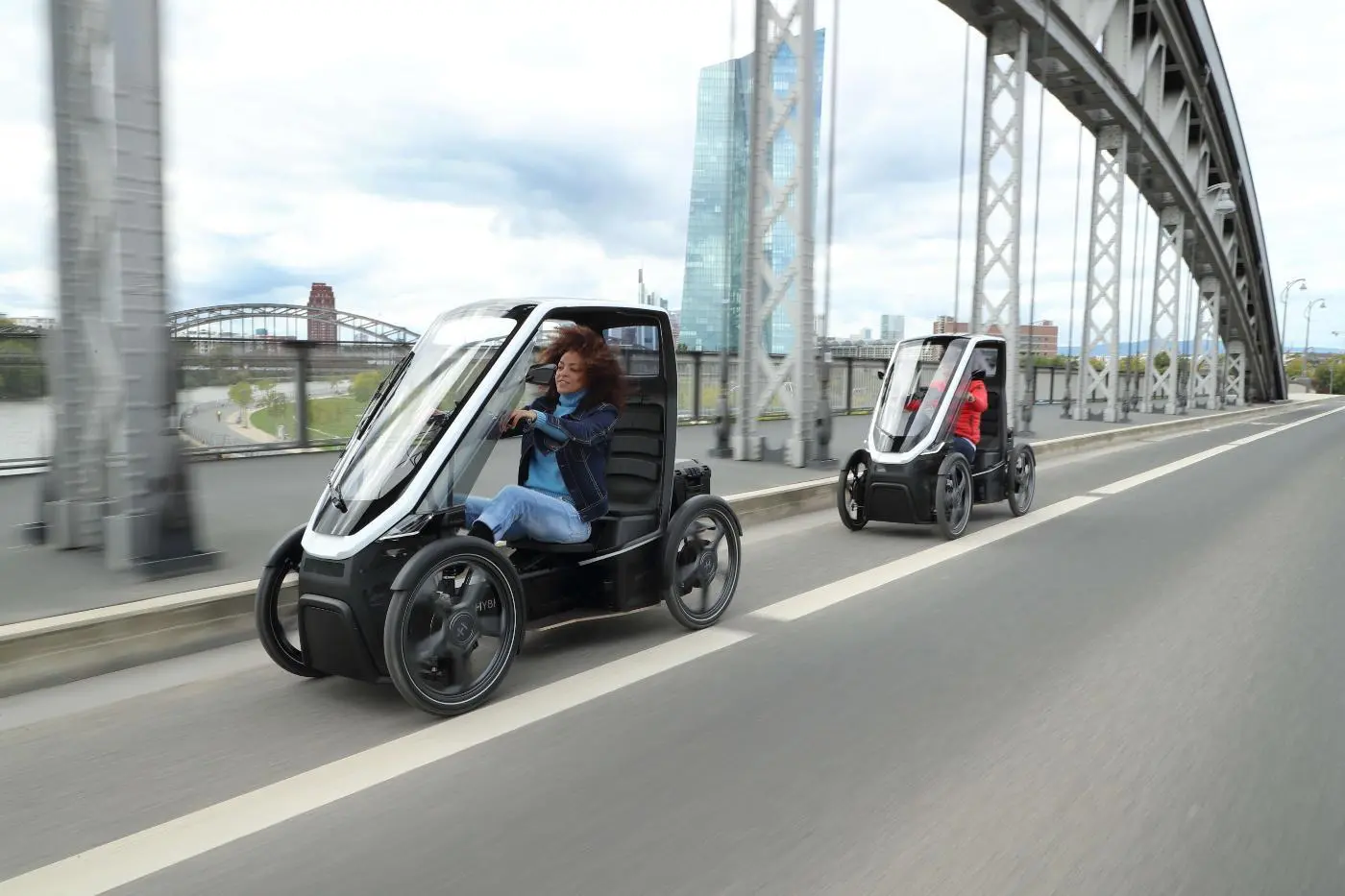
In other words, the MTO is relying on speed limits and aesthetics to determine whether something is a motor vehicle or a bicycle. These are secondary (if not tertiary) qualifications. The primary qualification should be whether the motor only engages when the cyclist is pedalling. If the motor is disconnected from pedalling and autonomous, it is a motor vehicle.
A Pedal Forward
The first move is corrective. It creates a basic distinction between computer-assisted bikes that support pedalling and bikes that deliver peak power on demand through a throttle. For years, we have asked the MTO to adopt the Class 1 and Class 2 system used in much of the United States, and we are glad to see that finally happen with the proposed legislation. In this system, Class 1 bikes use regulated pedal assist. Class 2 bikes use throttle power on demand. This is a meaningful improvement.
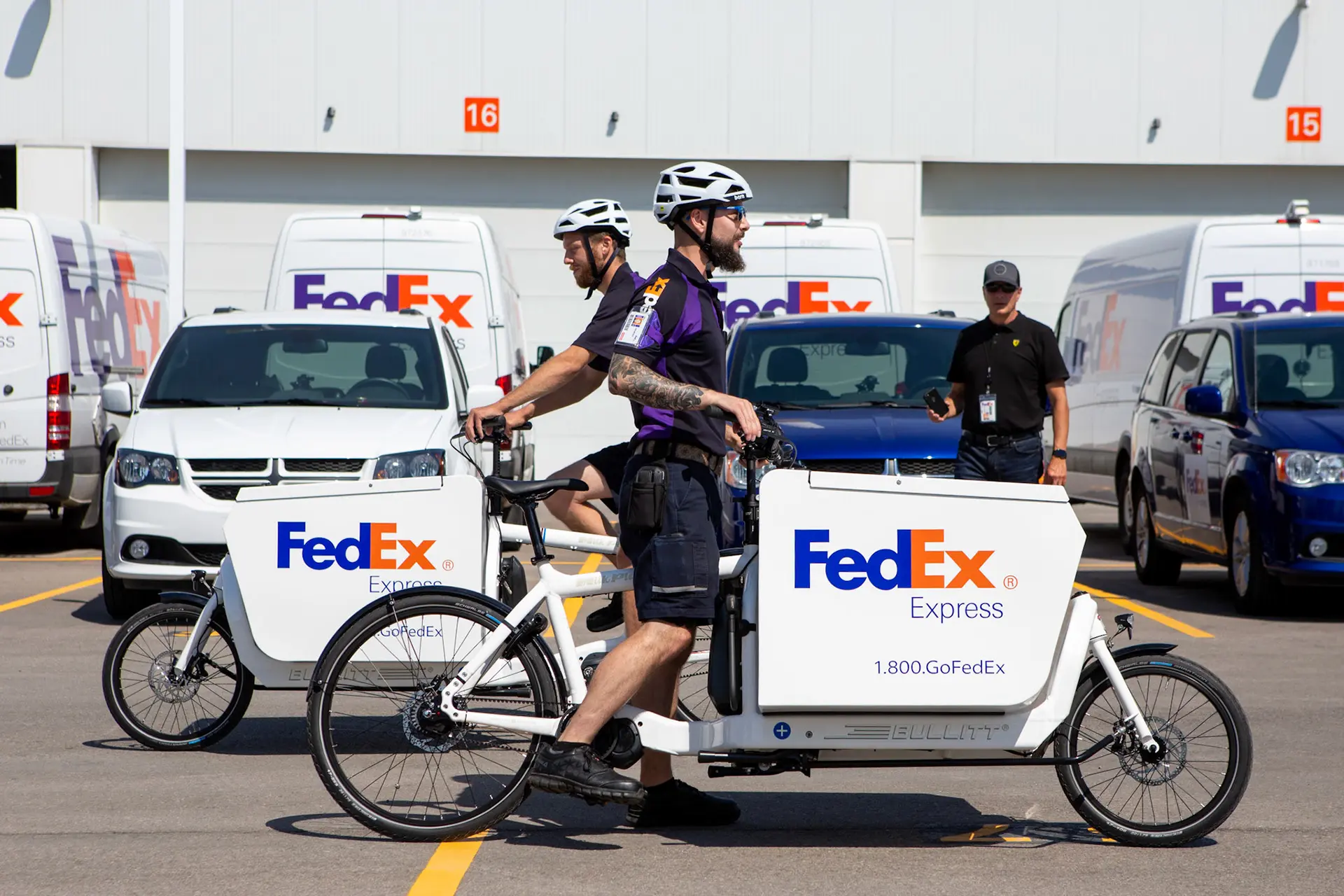
So far, we support the definition of e-mopeds, and we support the distinction between Class 1 and Class 2. But we have concerns about what is permissible within each class. After all, Class 2 bikes are inherently more dangerous than Class 1 bikes, so it follows that they should carry more restrictions, especially when it comes to the issue of passengers.
A Misreading of Cargo Bikes
Weight is the clearest example. The heavier the bike, the greater the potential for injury, particularly when power is delivered without constraint. One would expect more flexibility for Class 1 bikes and tighter limits for Class 2. Instead, the opposite is true in the proposed MTO legislation. Class 1 bikes are capped at 55 kilograms while Class 2 bikes can reach 120 kilograms. That is 264 pounds. As we will see in our discussion around kerb mass below, that is an extraordinary weight for something still considered a bicycle.
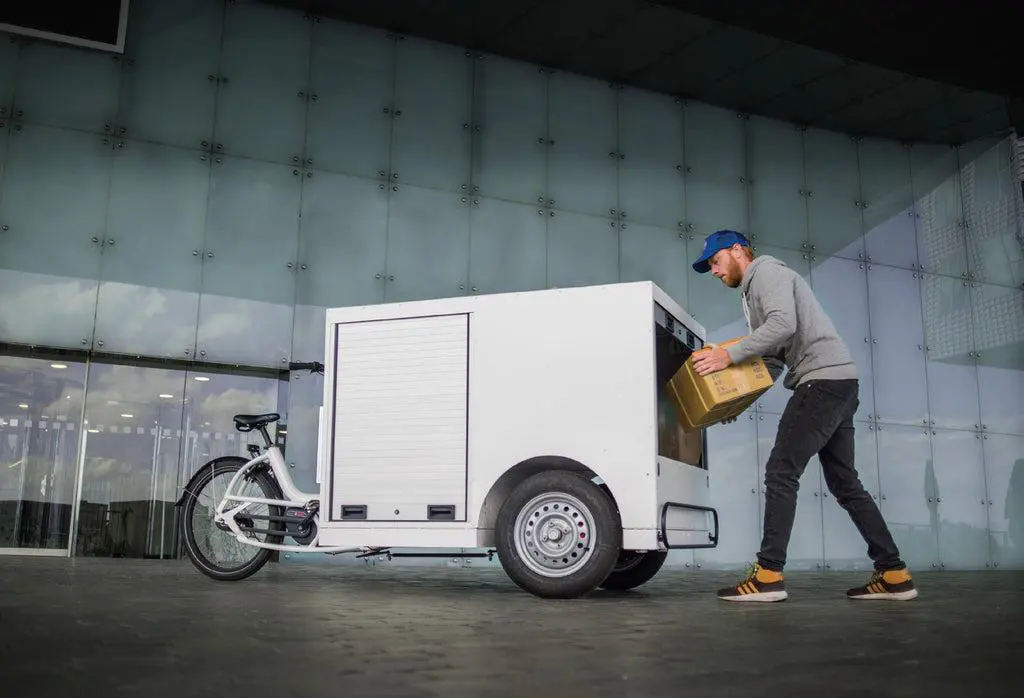
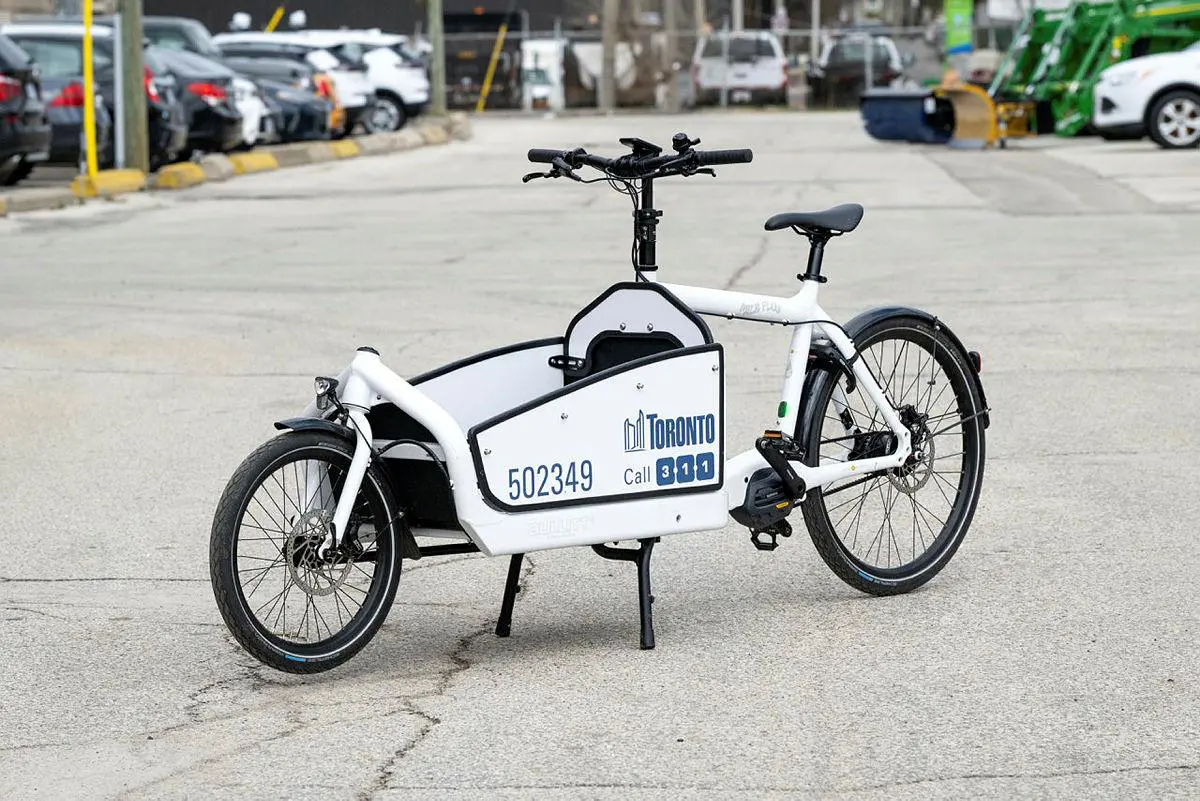
So what is the MTO thinking? It is difficult to say, but one clue appears in the imagery used to illustrate the classes. Cargo bikes are shown as examples of Class 2. The assumption seems to be that heavier bikes must somehow be Class 2 bikes. But this is misleading. The example the MTO employs is an image of a Riese & Müller cargo bike. And this is a Class 1 vehicle. In fact, some of the highest-capacity cargo bikes in the world are Class 1. The Urban Arrow Tender, produced in the Netherlands, can carry up to 600 kilograms in total system weight and roughly 2,500 litres of cargo.
Class 2: A Different Class
But Class 2 bikes do exist in the Netherlands, but unlike Ontario, they are not regular bikes with a throttle. Remember: an the Netherlands, any regular bike with a throttle is immediately an e-moped. Instead, they are a much more specialized form of passenger and commercial cargo bikes, like the Stint Cargo Bike. However, due to serious past fatalities, these bikes are largely unseen in the Netherlands. But, recent legislation has made an opening for such vehicles so long as they are sold with licence, insurance, and registration. We can only assume that the MTO refers to such bikes in its legislation, except the MTO legislation requires no added responsibility for the operator.
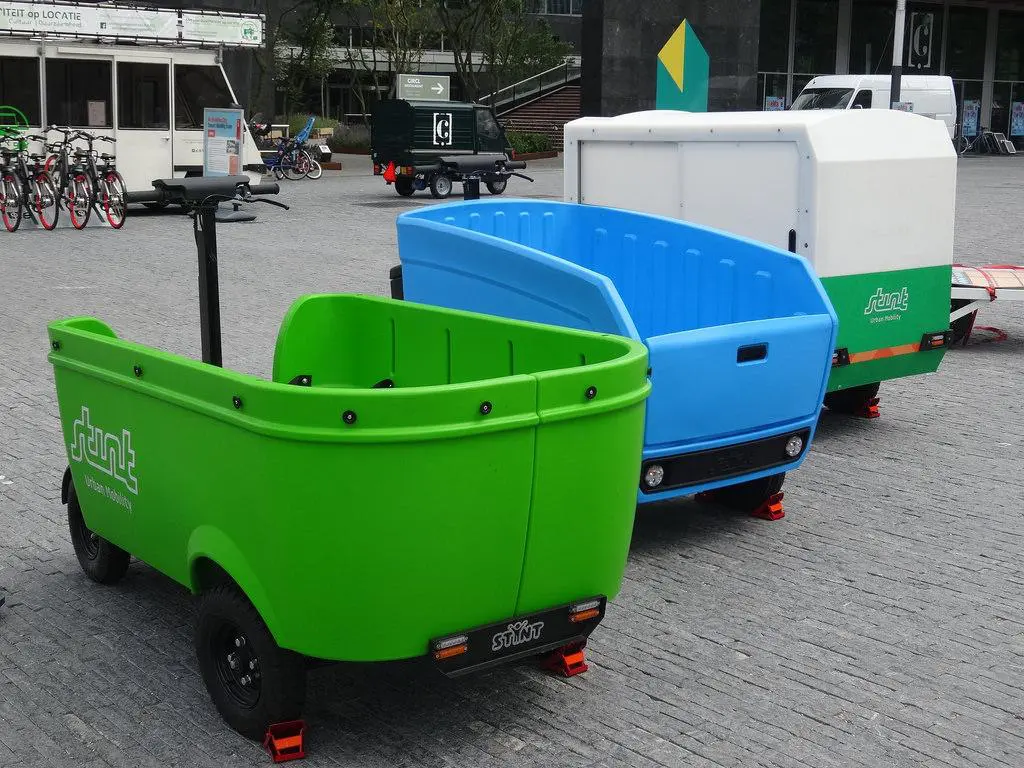
Here is where the MTO gets tied up in a knot. Class 2 bikes, which include nearly every bike used by food delivery riders, are now allowed to weigh in at 120 kilograms without any requirements for licensing, insurance, or registration. In the Netherlands, all regular-looking Class 2 bikes are classified as motor vehicles, whereas heavy-duty cargo bikes, and here the rule is that they must exceed roughly 75 kilograms, are permitted throttles only when the user is educated, licensed, and liable. (Read more here).
“Kerb Mass”
In the Netherlands, this logic is anchored in one concept: kerb mass. Kerb mass is the weight of the vehicle itself, including the battery, but without the rider or cargo. It sounds technical, but the reasoning is simple. The heavier the machine, the more force it carries at speed, and the greater the risk it poses in a collision. Dutch legislation uses this as a dividing line. Once a vehicle exceeds a certain threshold, it is no longer treated as a bicycle. What matters is not what the bike looks like, or even what it is designed to carry. What matters is how much energy it brings into the system. That is where responsibility begins to scale.
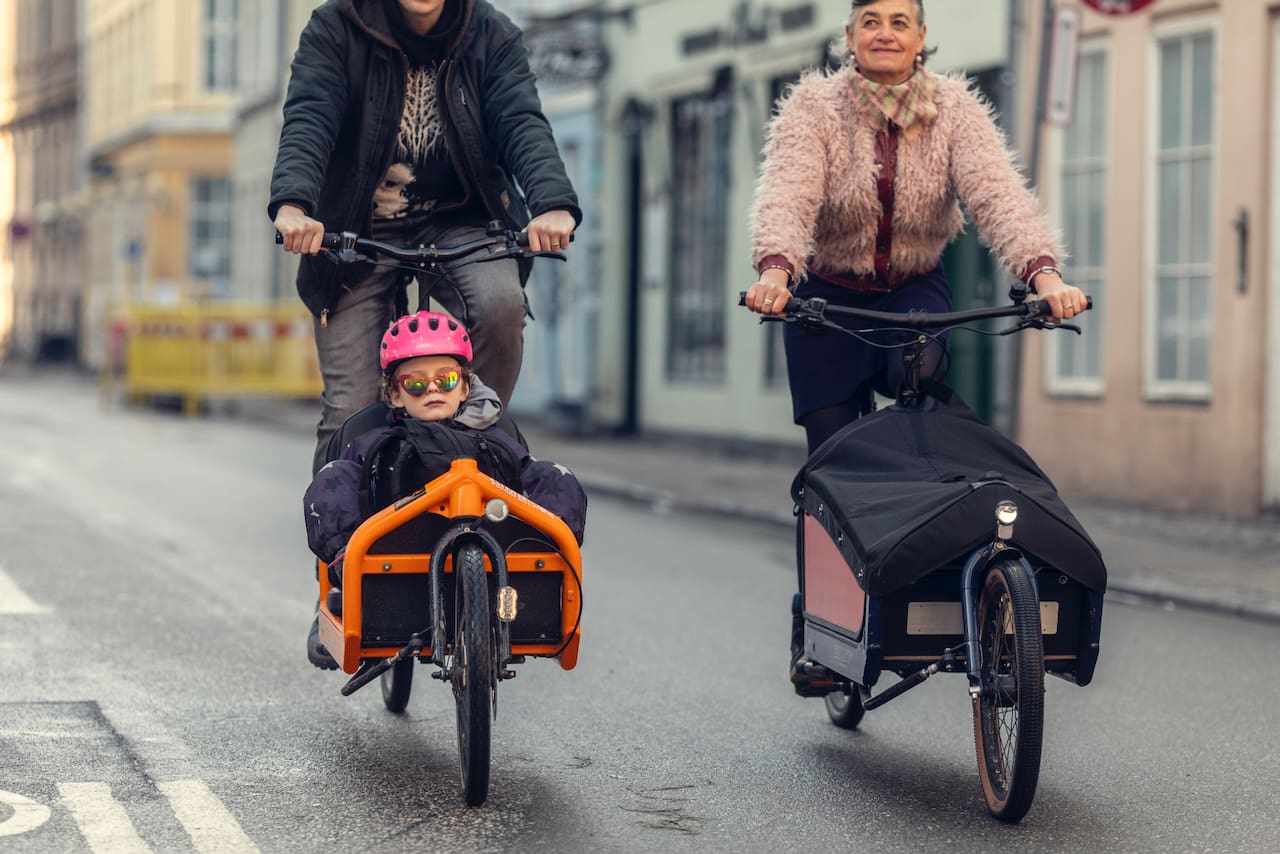
Kerb mass also has implications for how we think about passengers. A heavier cargo bike under 75 kilograms should be welcome in the bike lane, but only if its power is regulated through a Class 1 system. Class 2 bikes should not be permitted to carry passengers unless there is greater responsibility placed on the rider. In the Netherlands, a cargo bike that exceeds this threshold and uses a throttle is treated differently. This includes bicycle school buses, which require trained operators and carry liability.
The Lesson of the Bromfiets
So what should Ontario do with Class 2 bikes? The history of the bromfiets offers a clue. As mentioned earlier, the bromfiets was a clever workaround that allowed manufacturers to sell motorbikes as bicycles. That worked until it didn’t. Accidents forced a response. If the same thinking were applied today, the Class 2 bike would be the modern equivalent. It looks like a bicycle, but it behaves much more like a motorbike, at least in how power is delivered.
But unlike the bromfiets, these Class 2 bikes look like bicycles. That is what has confounded the MTO, and that ambiguity is precisely what cynical manufacturers exploit. The MTO now has the language to distinguish between Class 1 and Class 2, which is a step forward. The problem is that Class 2 bikes are more dangerous yet have fewer restrictions than Class 1 bikes. It is difficult to avoid the conclusion that change will only come after serious incidents force the issue.
Whack A Mole
This is where the problem becomes cyclical. In the Netherlands, an e-moped must be sold as an e-moped. But what happens when a legal e-bike can be converted into something else? The Dutch are now dealing with importers who sell compliant bikes with simple kits that turn them into throttle-driven machines. Some even provide the codes needed to unlock higher speeds. The line is constantly being tested. But the principle remains intact. Once a vehicle can move without pedalling, it is no longer treated as a bicycle. Legislation, it seems, is always playing whack-a-mole.
Ontario will likely arrive at a similar place. And like the Netherlands, it may take time. Larger throttle-assisted bikes may continue to exist for commercial purposes, but they should not be treated as ordinary bicycles. Most other throttle systems will likely fall under e-moped regulations. After all, the current distinction between an e-moped and a Class 2 bike rests largely on the presence of an exposed frame. Both can weigh 120 kilograms and both carry dangerous kinetic energy. That is not a meaningful safety distinction. It is an aesthetic one.
The Second Move
This brings us to a second move the MTO could make. Because, here’s the dirty secret: the majority of Class 2 bikes are already Class 1 bikes in disguise. Their motors are capable of regulated assistance, but they include throttles that are used most of the time, while the pedals function as little more than footrests and legal decoration. Remove the throttle, which is often straightforward, and many of these bikes meet the definition of a Class 1 bike.
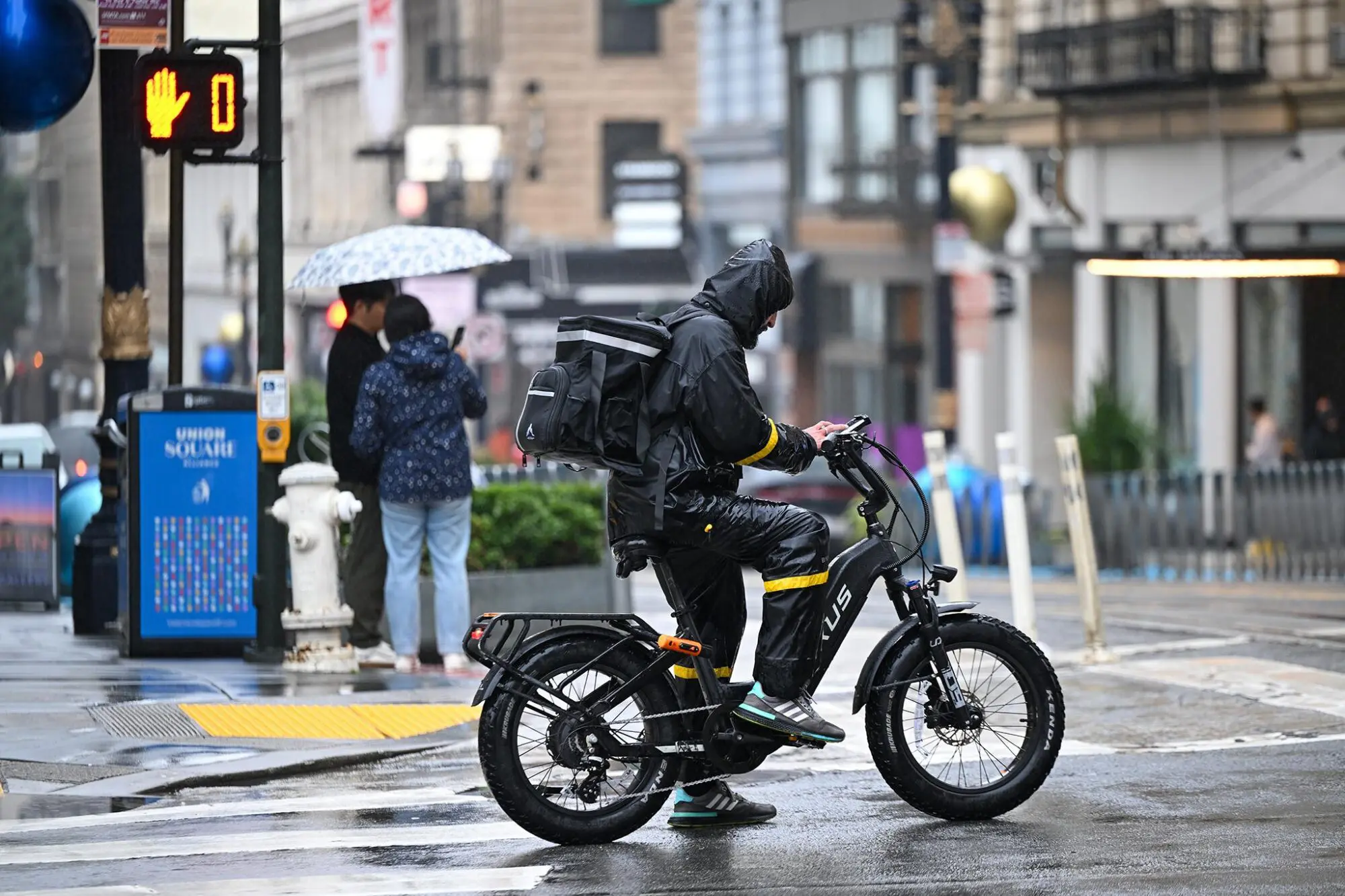
Doing so would immediately address both kerb mass and uncontrolled acceleration, which are the two factors that matter most in a crowded bike lane. At the end of the day, this would leave Class 1 electric bikes, including most cargo bikes under 75 kilograms, e-mopeds as motor vehicles, and room for larger LEVs with throttles that are properly regulated through licensing, registration, and insurance.
Dutch Wisdom
At the end of the day, the Dutch principle is simple. Every light electric vehicle should be measured against the baseline of a regular bicycle. Its mass, acceleration, and behaviour should remain as close to that baseline as possible. Electric assist is there to assist. It is not there to overpower. That distinction is what keeps people safe, especially when passengers are involved, and especially when those passengers are children.