
The P-Line has existed in Brompton’s lineup for nearly two decades, but for most of that time it occupied an odd space — the misfit child in the Brompton family. The concept, first introduced in 2005 under the name Superlight, was straightforward: use titanium where lightness and ride comfort matter, keep steel where durability matters. The idea was ahead of its time. However, the supply chain was not. You see, Brompton didn’t control its titanium pipeline, and much of the world’s aerospace-grade supply flowed through Russia. When titanium wasn’t under embargo, Superlight models trickled out; when it was, production stalled. The bike’s identity was shaped less by design intent and more by geopolitical volatility.

What’s New?
Materials Masterclass
This equation shifted when Brompton invested in UK-based titanium fabrication and partnered with C.W. Fletcher in Sheffield in 2015. That capability eventually made the full-titanium T-Line possible in 2022 — a daunting project that naturally took priority. All the while, the P-Line carried on quietly. It gained the wider MK6 frame and UK-made titanium extremities, but it remained too close to the C-Line in feel and too far from the T-Line in ambition. (If you’re into Brompton history, make sure to check out this book).
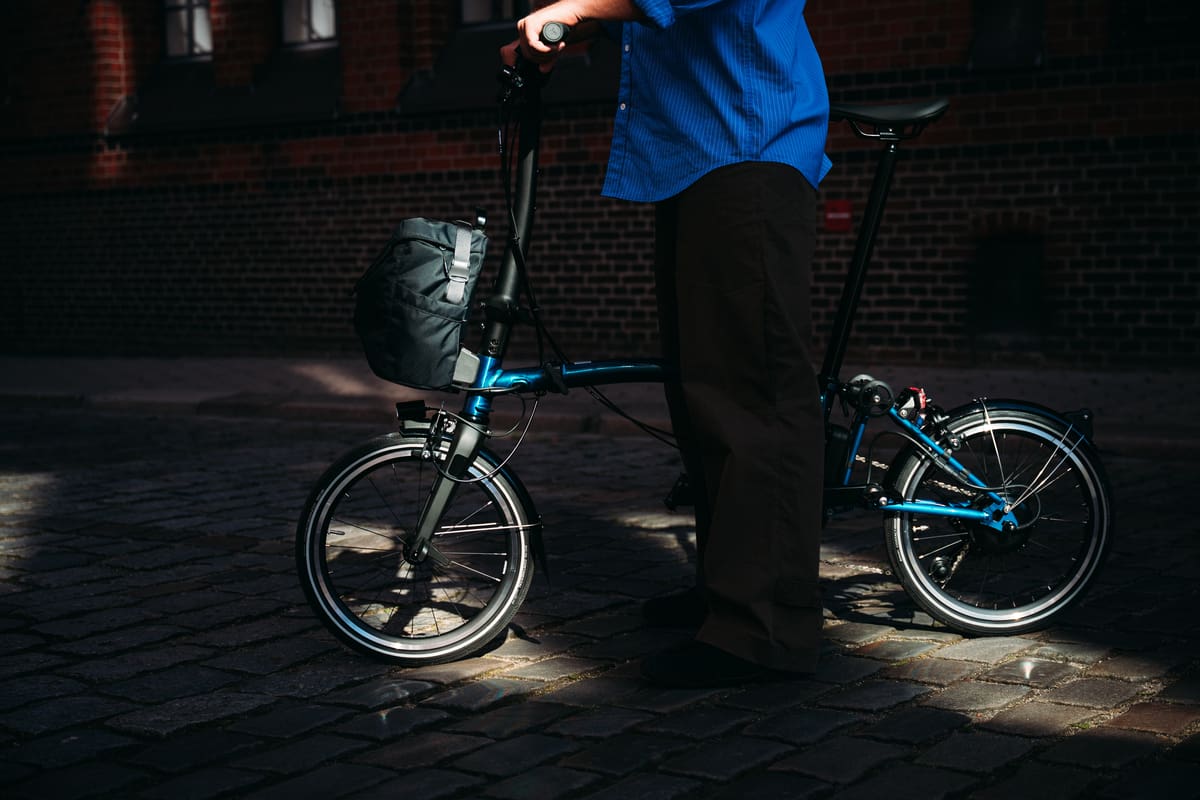
The new P-Line feels like a callback to the late ’90s and early 2000s, when companies like Trek and LeMond explored the idea of using multiple materials to tune ride feel — carbon bonded to aluminum, or carbon paired with steel. Brompton applies that same philosophy with far more results. Instead of committing to a single material, the P-Line uses the right material in the right place: steel for backbone and longevity, titanium in the rear triangle for comfort and weight savings, carbon in the fork for lightweight vibration damping, and a new alloy stem and seatpost to stiffen the front end while reducing feedback through the saddle. The P-Line is a masterclass in material science, And, this interrogation marks a radical shift in identity compared to previous P-Line models. If you’re looking at an older model of P-Line, we suggest you hold onto your wallet.
Colours
When Brompton moved from Brentford to Greenford in 2016, they built their own paint shop. This was a turning point, since bikes were previously painted in Wales. Suddenly Brompton controlled primers, lacquers, and powder coats. Colours became bolder, collaborations appeared, and limited finishes came and went. Riders loved it. Retailers struggled to keep up. By 2025, representing “all the options” in store required more than 170 Bromptons — not realistic for any Brompton retailers. Because the P-Line used its own palette, even carrying one of each colour was a huge commitment.
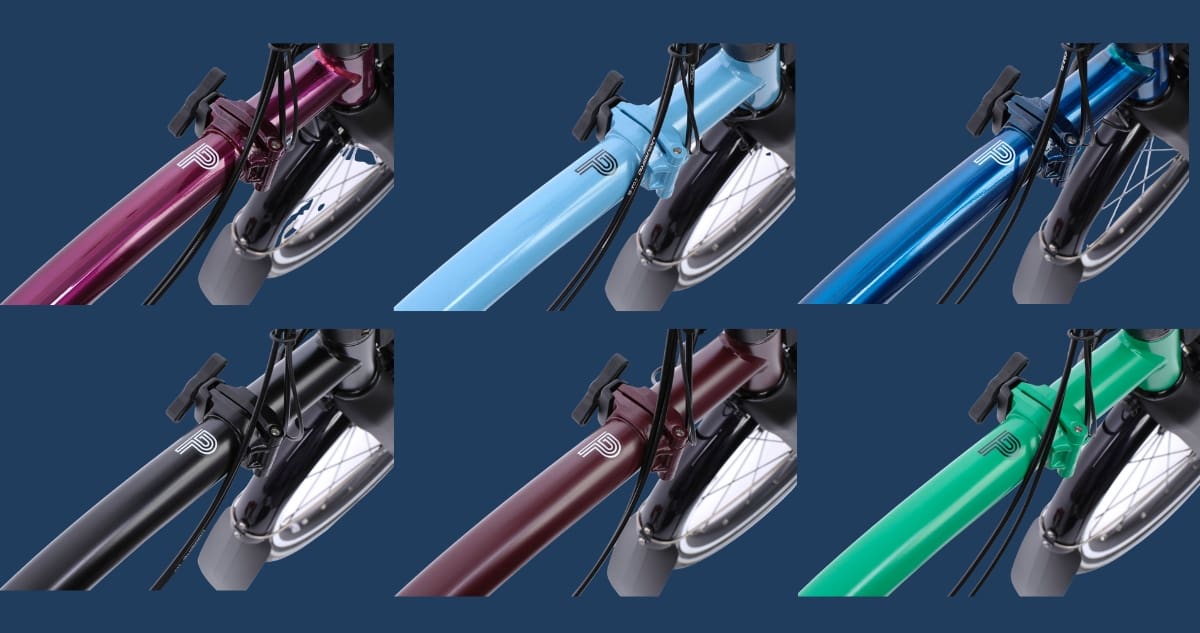
For 2026, Brompton simplifies things. The P-Line now shares colours with the C-Line, letting dealers show more choice with fewer bikes. You can try on a P-Line for feel and check the palettes by looking at a C-Line. In 2026 colours feel refined: Amethyst Lacquer, Palm Green, Matte Black, Cloud Metallic, Plum Red, plus a P-Line-exclusive finish: Pacific Lacquer. They have a ring of contemporary industrial design – the tones you see in furniture or architecture. We’re totally into that.
The e-Motiq
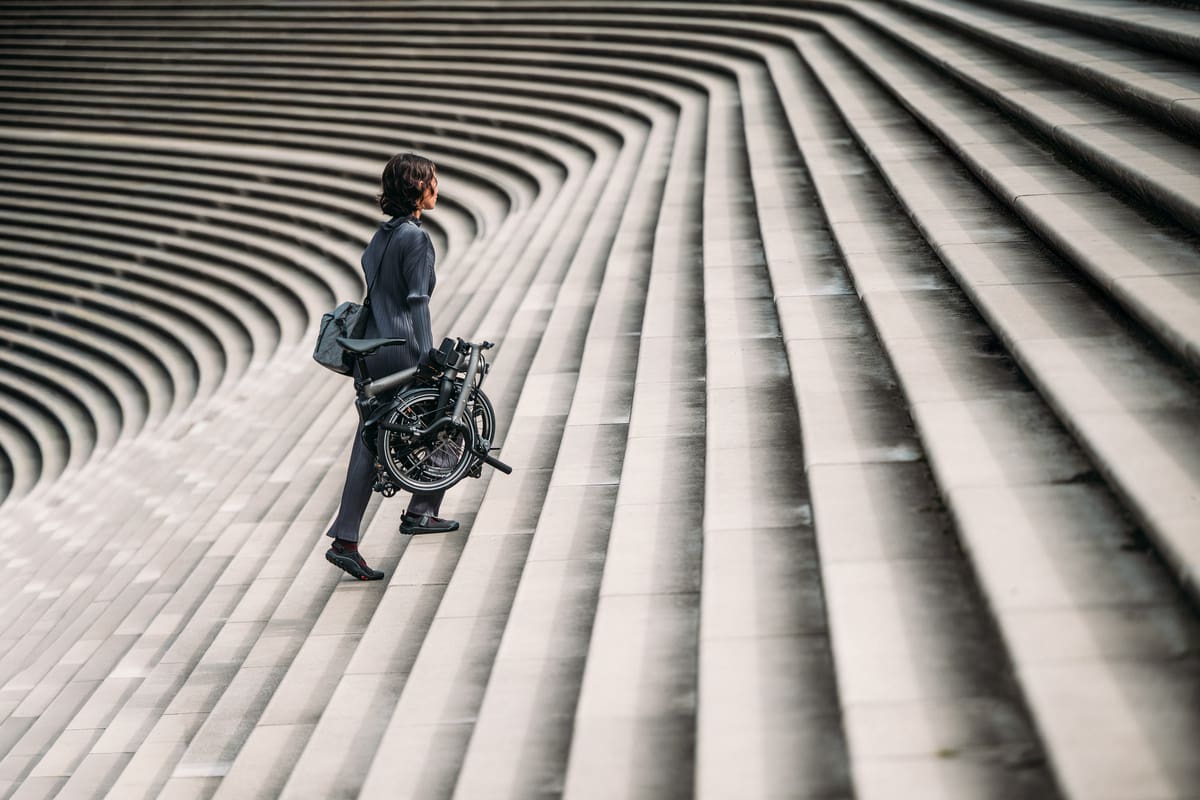
The P-Line Electric uses the same rear-hub e-Motiq motor as the C-Line — with smooth power delivery and Start Assist to help you roll away from lights or hills — but the experience changes because of the chassis underneath. The P-Line is far lighter, and you feel that immediately. It’s roughly three pounds lighter than the C-Line Electric, and those pounds matter in the only place an e-bike feels heavy: stairs. Getting it into a walk-up, onto a GO platform, or into an office becomes far less of a negotiation. The P-Line is a precision urban instrument.
On the road, the titanium rear triangle and carbon fork soften vibration in a way a full steel frame cannot, making longer rides calmer and less fatiguing. That means it goes beyond the last mile and produces comfort for the extra mile; those times you take the Brompton out all day, or on a multi-day tour. Best of all, the motor sits in the rear wheel, so handling up front remains neutral and intuitive. The bike still steers like a Brompton; the assist simply adds the oomph where you need it.

Who is this Bike For?
Brompton’s mission is to engineer bikes for change, and the P-Line is built for people who want frictionless movement. Freedom is unstuck mobility. The design ethos understands urban travel not as a distance problem, but as a time problem. In dense cities, the vast majority of trips fall into an awkward middle zone — too far to walk, too short to drive, and too unpredictable for transit. Transportation theorists call this the last mile, and if you work, live and play downtown, you know it all too well. But, a Brompton glues these distances together into frictionless flow: no detours to a Bike Share dock, no gridlock, no locking anything outside. A bike truly designed to replace your car for the majority of your trips.
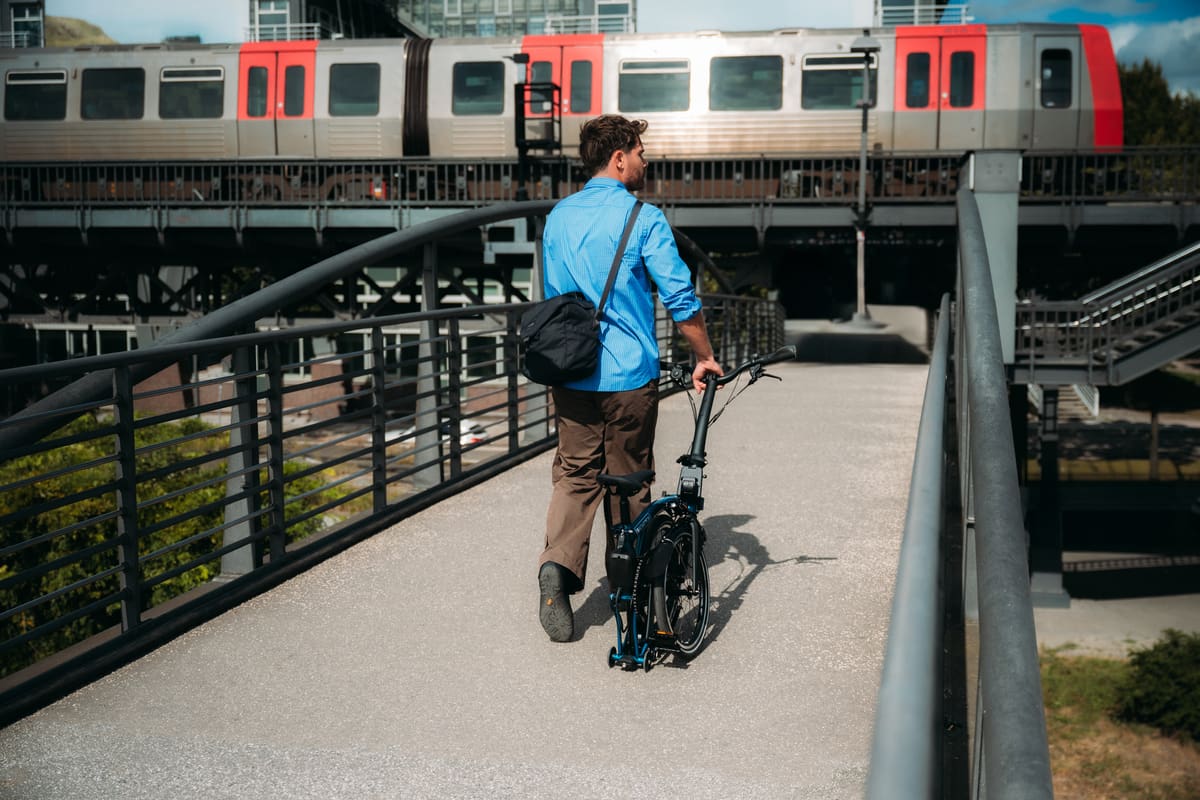
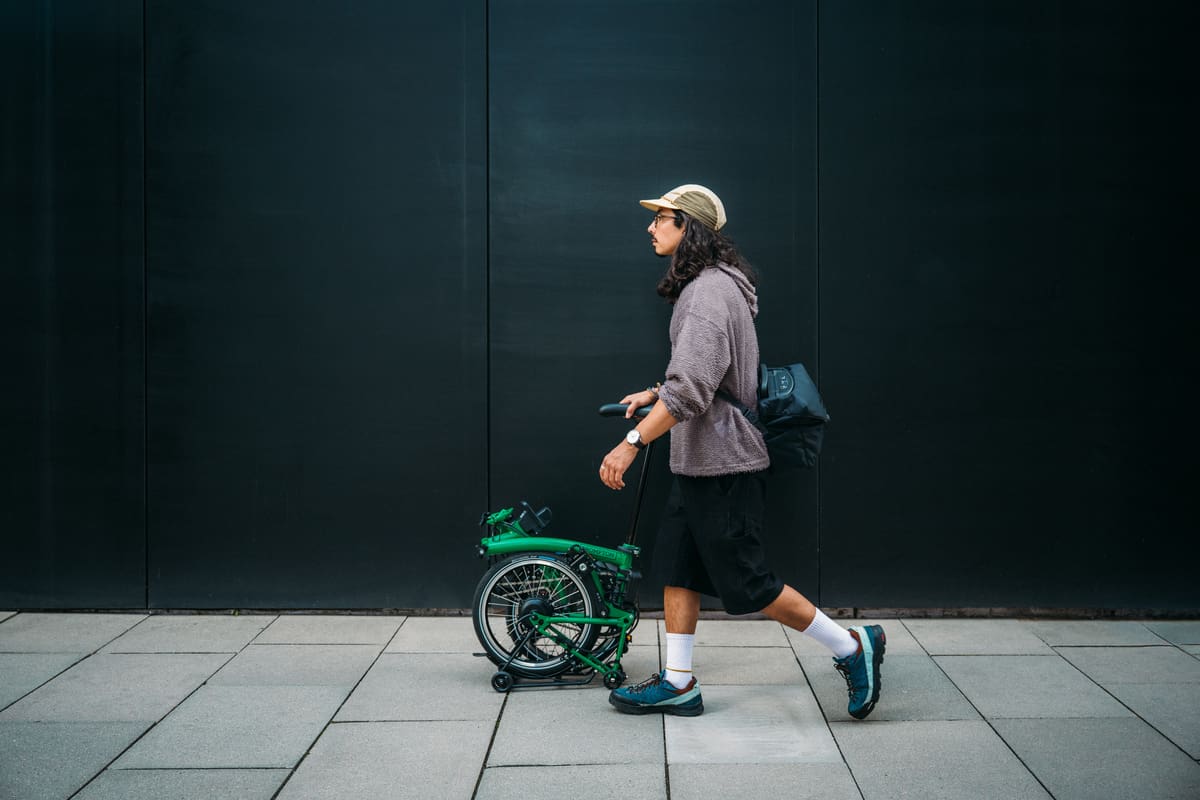
But cities aren’t just horizontal. They’re vertical. You ride across intersections and plazas, then shift into buildings — climbing stairs, navigating lobbies, stepping into elevators. Outside, the bike is unfolded. Inside, it’s folded. Many people assume that once folded, the bike must be carried, but Brompton has spent years refining its rolling system so that indoors the bike behaves like luggage. Brompton calls this SuperRoll. SuperRoll changes the rules, because if you roll a P-Line and a C-Line side by side and you wouldn’t know which is which.
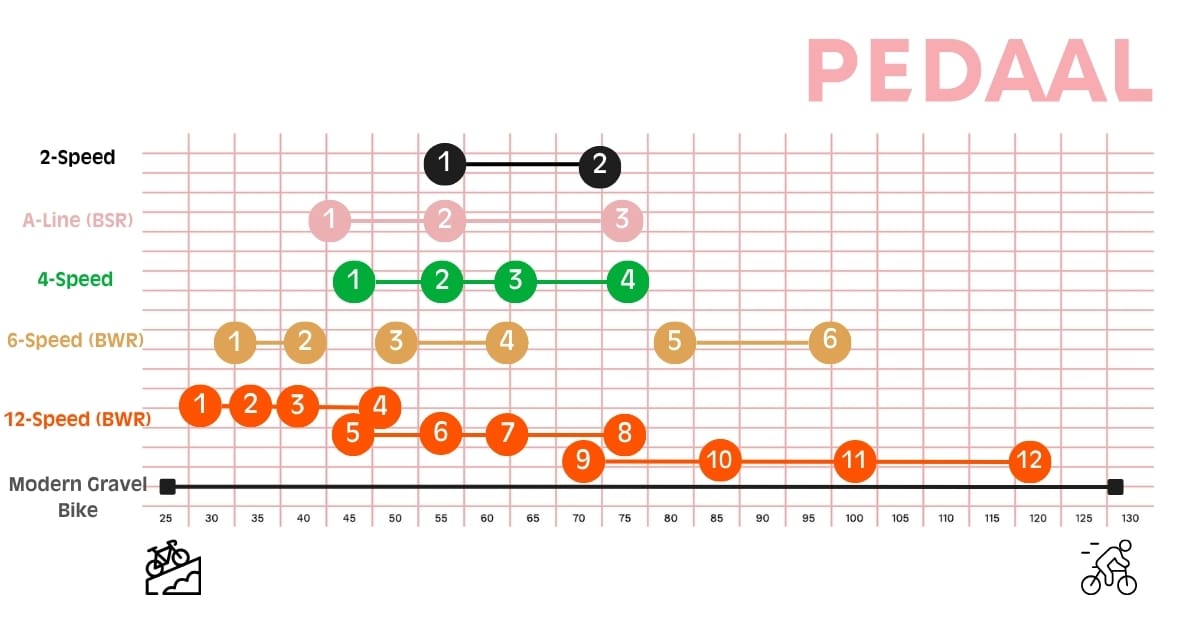
Where the weight difference matters is when the city turns vertical. Stairs are the tax you pay for tall buildings and transit platforms. You can’t roll up stairs — you have to carry. And stairs make everything feel heavy. This is where the P-Line 4-Speed especially earns its place. The lighter frame, plus minimalist drivetrain makes vertical ascent more frictionless, and the material blend makes outdoor riding smoother, quieter, and less fatiguing. For adventures beyond the commute, the P-Line 12-speed is your bike. It’s gear range is so big that there’s no hill it can’t climb or distance it can’t conquer. The 4-speed conquers the city, the 12-speed puts the wheels on your next big adventure.

How it Rides
At the time of writing, the new P-Line hasn’t landed in Canada yet, but we can already guess how it will feel — because the bikes that bookend it reveal its DNA. If you’ve ridden a T-Line, you know what precise and exact steering feels like. The C-Line’s steel stem can flex slightly, giving a rubbery sensation at the bars; the T-Line, with its oversized front end, tracks like it’s reading your mind. The new P-Line takes that front-end sharpness and applies it with its own material recipe: a stiffer, larger-diameter steel head tube paired with a lightweight alloy stem. Oversizing the alloy increases stiffness, so steering feels crisp without being harsh.
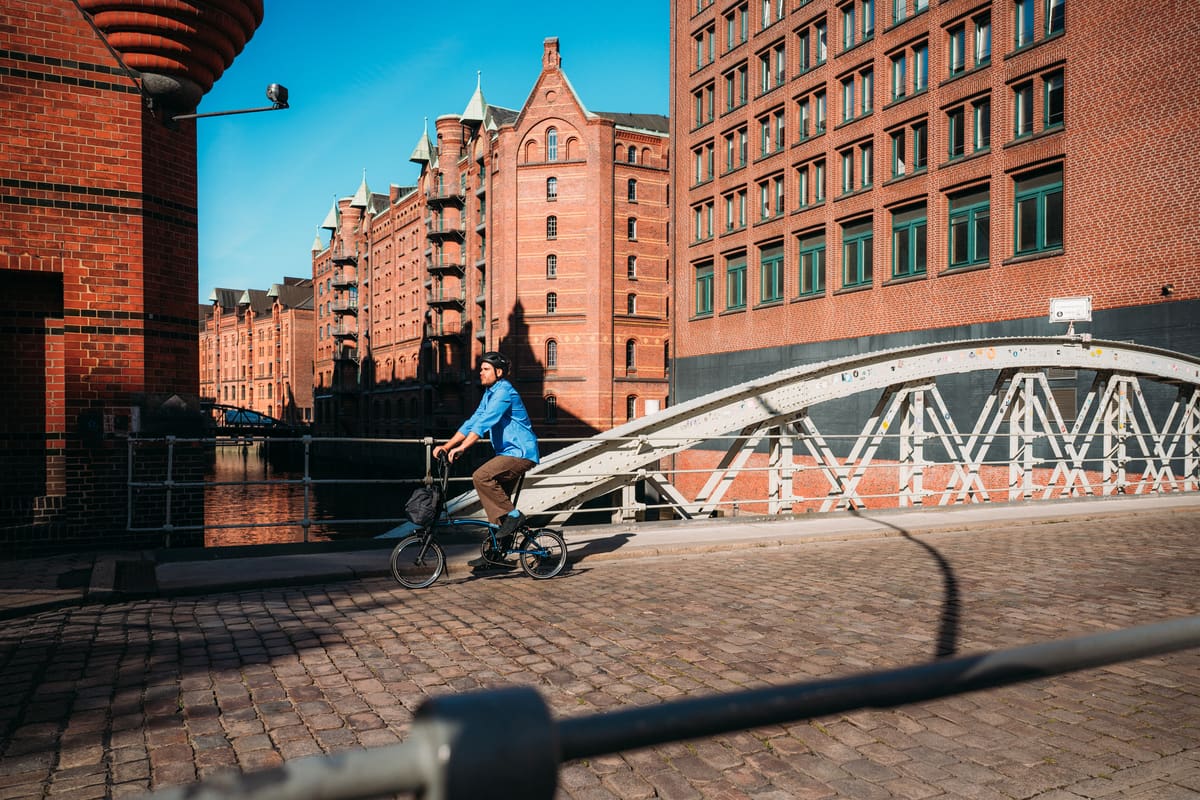
Ride comfort is handled by the rest of the frame. A carbon fork filters out vibration before it reaches your hands. The titanium rear triangle brings a lively, springy feel — light over the back wheel, but controlled. The steel main frame anchors the bike with stability. The biggest change may be the seatpost. Previous P-Lines (and all C-Lines) used a high-tensile steel post — the heaviest, most vibration-transmitting component on the bike. The new alloy post is lighter and more compliant. It keeps the front end precise and the rear end forgiving. The result is more comfort over more distance, which, of course, means more distance is possible.

On the electric version, the motor doesn’t change the bike — the P-Line changes how the motor feels. Because the assist pushes from the rear wheel, handling remains natural and balanced. The bike still behaves like a Brompton; it just demands less from your legs. Read more about the e-Motiq system here.
What you Gain/What you Give Up
Understanding the P-Line requires a mindset shift. Most people evaluate bikes as recreational purchases — something used occasionally, justified emotionally, and judged by price-per-ride. A Brompton replaces car trips, transit trips, the walk to a Bike Share dock, and the waiting that comes with those systems. The average urban car trip is under three miles — a distance a Brompton handles faster and more predictably than driving or transit. The question stops being why does the bike cost this much? and becomes how much does it save me every week? That doesn’t just mean money, it also means time, stress and quality of life. If you live in the city because you don’t want to live in the suburbs, then it matters that you enjoy the city. The P-Line makes that happen. It eats gridlock for breakfast.
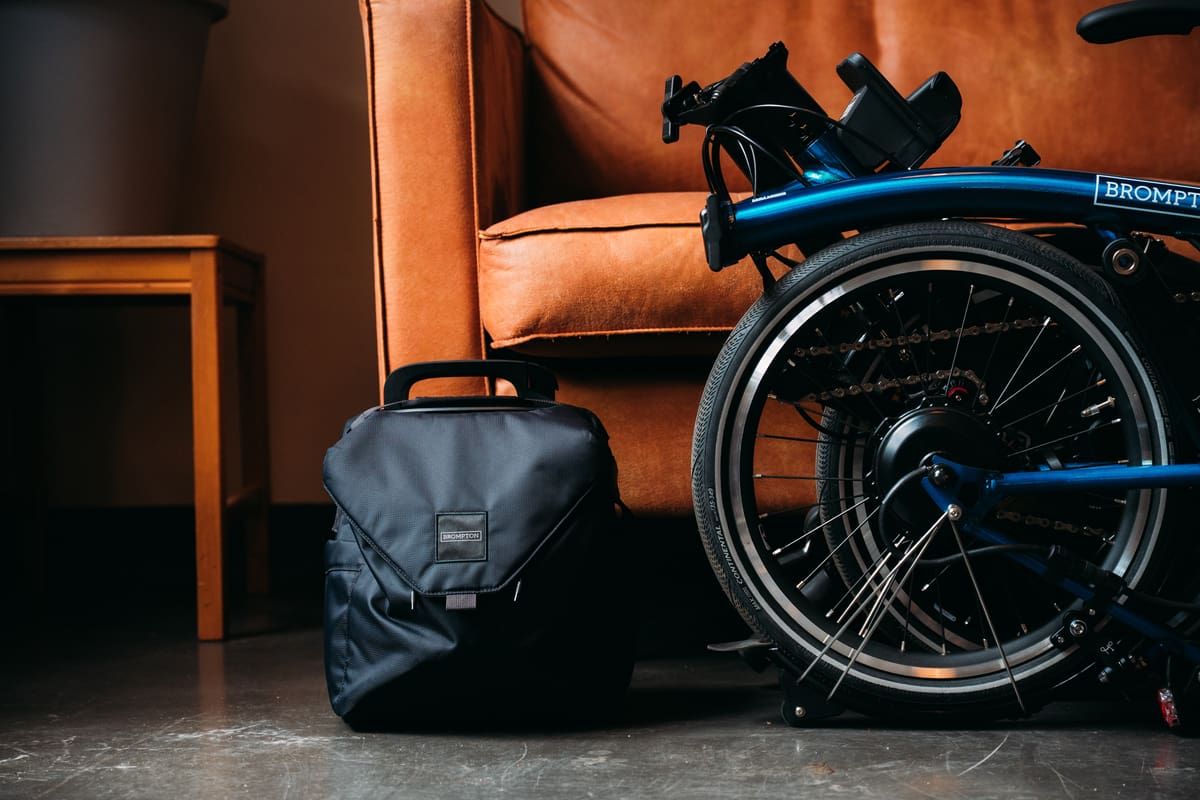
The difference between C-Line and P-Line isn’t what the bike can do — they fold the same, roll the same, and fit in the same spaces — but how effortlessly they do it. The P-Line 12-speed is roughly five pounds lighter than the C-Line 4-speed, and those pounds disappear when the bike leaves the ground. Outdoors, the material mix softens vibration and reduces fatigue. Indoors, the bike walks up stairs without dropping your shoulders. In short, with the P-Line you gain lighter weight, sharper steering, less fatigue, and more range. All without entering the T-Line price bracket.
Which Brompton P-Line to Choose?
Choose the P-Line 4-speed if your Brompton lives almost entirely inside the city. That means short trips and constant indoor/outdoor transitions. You value simplicity, low weight, and speed of movement over gear range. These bikes are expected March 2026. Check below or visit our pre-orders page here. (Give the page a few seconds to load).
Choose the P-Line 12-speed if you want a Brompton that can be your only bike. Effortless in the city, extremely capable outside the city. Imagine: commuting during the week, rail-trail on the weekend. These bikes are expected March 2026. Check below or visit our pre-orders page here. (Give the page a few seconds to load).
Choose the P-Line Electric (e-Motiq) if you want the ease of a Brompton with the unwanted effort removed. The ultimate urban transportation tool with a rear-hub assist, intuitive handling, and less weight to carry up stairs. These bikes are expected March 2026. Check below or visit our pre-orders page here. (Give the page a few seconds to load).
Next Steps
Got a question? We’d love to help! For quick questions, click the chat button during opening hours or shoot us an email at info@pedaal.com. Want to really drill down with some questions? Book an in-store or remote sales appointment by clicking here. Of course, we’re also a phone call away too! Just dial 416-972-1422, ask for Eric or Timm and we’d love to help!
Questions about a Brompton? We can help!
Related Posts
Brompton C-Line 2026 Overview
2025 was a seismic year for the Brompton C-Line, so what’s new for 2026? Turns out, quite a bit! In 2025, Brompton retired the long-running 6-speed platform and introduced a wider frame and a new 12-speed drivetrain. With that foundation in place, the 2026 Brompton C-Line represents the refinement stage. The long-anticipated 4-speed finally joins...
stay up to date
Stay in the Know. Join our Newsletter!
*By entering your email, you agree to our Terms & Conditions + Privacy Policy,
including receipt of emails. You can unsubscribe at any time.
Pedaal designated official Brompton Gold Dealer status - Read more