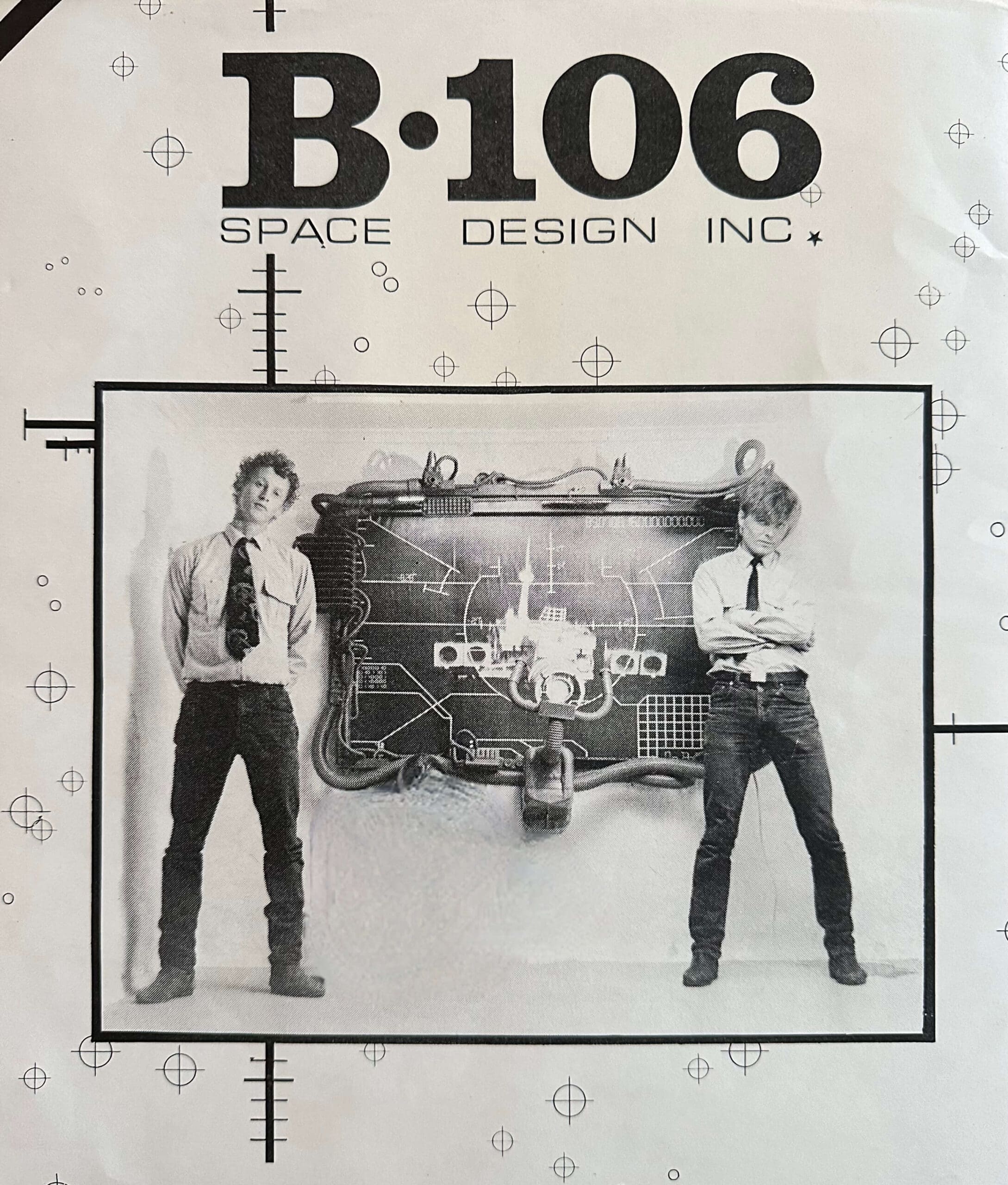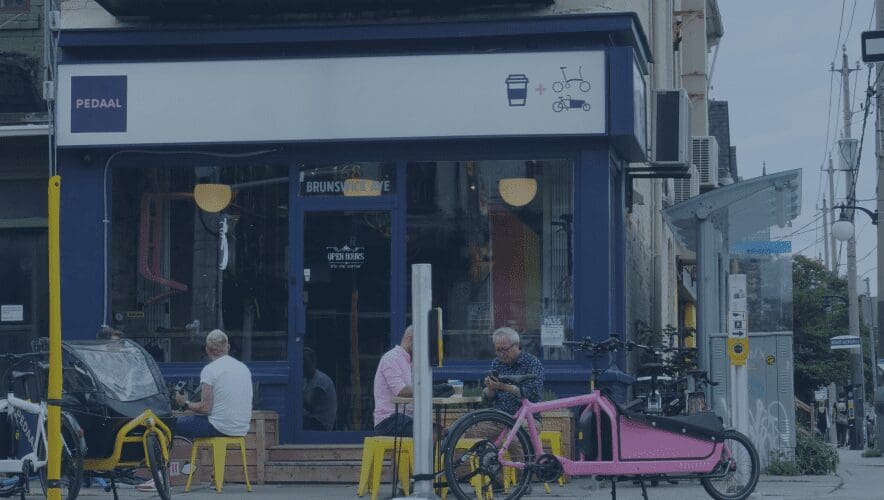
The Bullitt cargo bike was borne out of the mid-80s squats of Nørrebro, Copenhagen. In fact, this punk rock origin was a precursor to the sparkling bicycle culture of Copenhagen today. The Bullitt B106 pays tribute to this heritage. Our version of the B106 pays tribute to our own punk rock story. In tribute to Toronto, we’ll call our version the Bullitt B106ix.
From Anarchy to Engineering
But, let’s go back to Denmark. It’s the 1980s. Copenhagen. The city is going bankrupt, automobiles are choking the downtown, and it is the third most sprawled in Europe. On the island of Christiania, downtown Copenhagen, punks took over an old army base and turned it into a “free state” squat. Still car-free, Christiania is the home of the world’s first mass-produced cargo bike, the eponymous Christiania cargo bike.
This set the stage for a later versions of the Christiania bike, bikes designed to co-exist with cars. Brands like Nihola cut the Christiania’s weight in half and introduced safer Ackermann steering. Black Iron Horse came later and globalized this design further. And then there was Bullitt.
Space & Time
Copenhagen is famous for cargo three-wheelers, whereas Holland tends to be famous for cargo two-wheelers. Nonetheless, the cargo bike, like the cargo trike, originated in Copenhagen. Bullitt is the company that has resurrected this story into a global machine that still, if you survey all other options, corrects the drift.
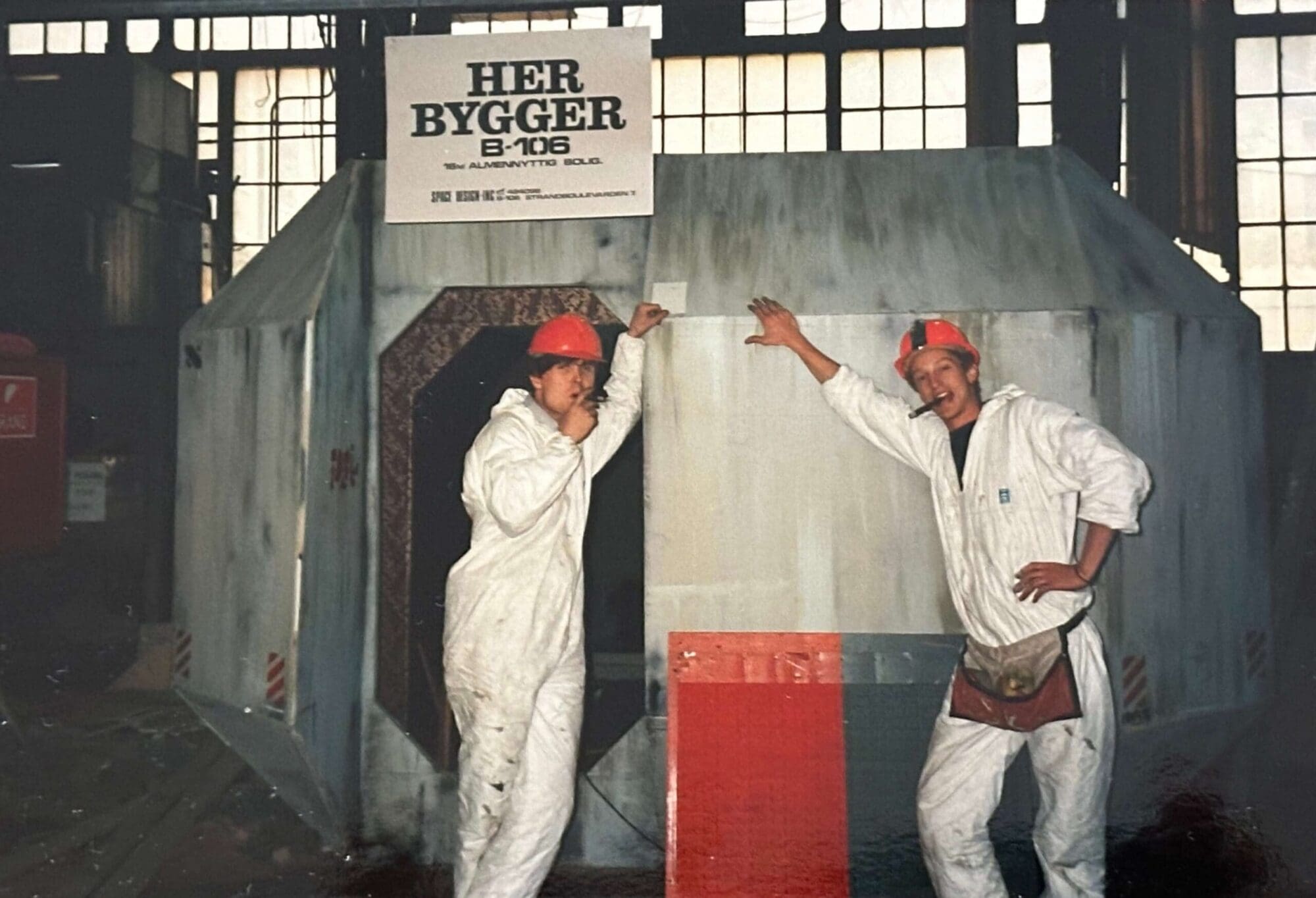
Like the Christiania bikes, it all began in a squat. Two punks, Lars and Hans – later to become Larry vs Harry – who called their studio B106 Space Designs. The first idea was a spaceship. But, the result became the Bullitt. A bike that cuts time through space. The solution to gridlock.
Going Dutch Ain’t Much
Historically, the cargo bike in Denmark had two sides, one family and one commercial. On the car-free island of Christiania, people rode kids around on three wheelers. But in the sprawled city, couriers used two-wheelers to expediently deliver packages. One day, as the story goes, a Dutchman named Andreas Van Andel visited Copenhagen and saw the two-wheeler in motion. He realized that this design, mated to Holland’s extensive bicycle infrastructure, could be the ultimate kid-carrying machine.
He was right. With Holland’s much larger population, the two-wheeled cargo bike suddenly scaled to mass-production. But in the process, the Danish two-wheeler lost its punk rock credentials. It became the Dutch version of a Chevy Suburban: inexplicably heavy and designed solely for carrying kids around. Somewhere at B106 Space Designs, two punks realized that something was gained in the Dutch design, but something was also lost. And so, Bullitt was born.
The Canadian Thread
There’s a small Canadian story to Bullitt’s first emergence in North America. Sometime in the late 1980s, Hans (aka Harry) moved to Montreal to be a bike messenger. Unlike any other North American city, Montreal was every bit the city closest to Europe in the 1980s. It also had a squat culture deeply involved in bicycle politics. It’s the reason Montreal had bike lanes as far back as the 1980s. In fact, today, most of the bicycle industry in Canada is based out of Quebec. But with apologies to Montreal, the story of the cargo bike in Canada began in Toronto. And that’s a story we can tell.
What’s our story? We were two punks with a long history working in bike shops outside of Toronto. One of us worked in Birmingham and Oxford, the other in Vancouver, Edmonton, and Toronto. We both landed in Toronto and worked at a small store that represented what a downtown bike store used to look like before H&M replaced vintage stores and glass condos filled old parking lots. In other words, Toronto was still pretty punk rock.
The Anti-Bike Shop Bike Shop
We worked for an owner who was as absentee as he was eccentric. He saw two bright employees that he could only support with blank cheques, and we still owe him a debt of gratitude, even if we eventually had to leave to start our own shop, Pedaal.
The bike industry is deeply nepotistic and insular, yet many successful stores have been started by people who aren’t bike people designed to sell transportation rather than some lycra-clad alternative to golf. We’re respected in the Toronto bike industry even if no one can quite figure out what we’re doing. That’s strange to us because we sell transportation solutions for everyone. And, that’s the story of the B106ix.
Carrying New Ideas
Every year Shimano hosts a show in Toronto where retailers spend time and money curating the most fetishistic bikes money can buy. Each proect is rich in narrative. Each selected part is a wink and nudge on taste-making and insider knowledge. It’s the kind of show we love, even if we wish the narrative could expand. So we entered with something very different. Our mission, after all, is to expand horizons. That’s what a good spaceship does.
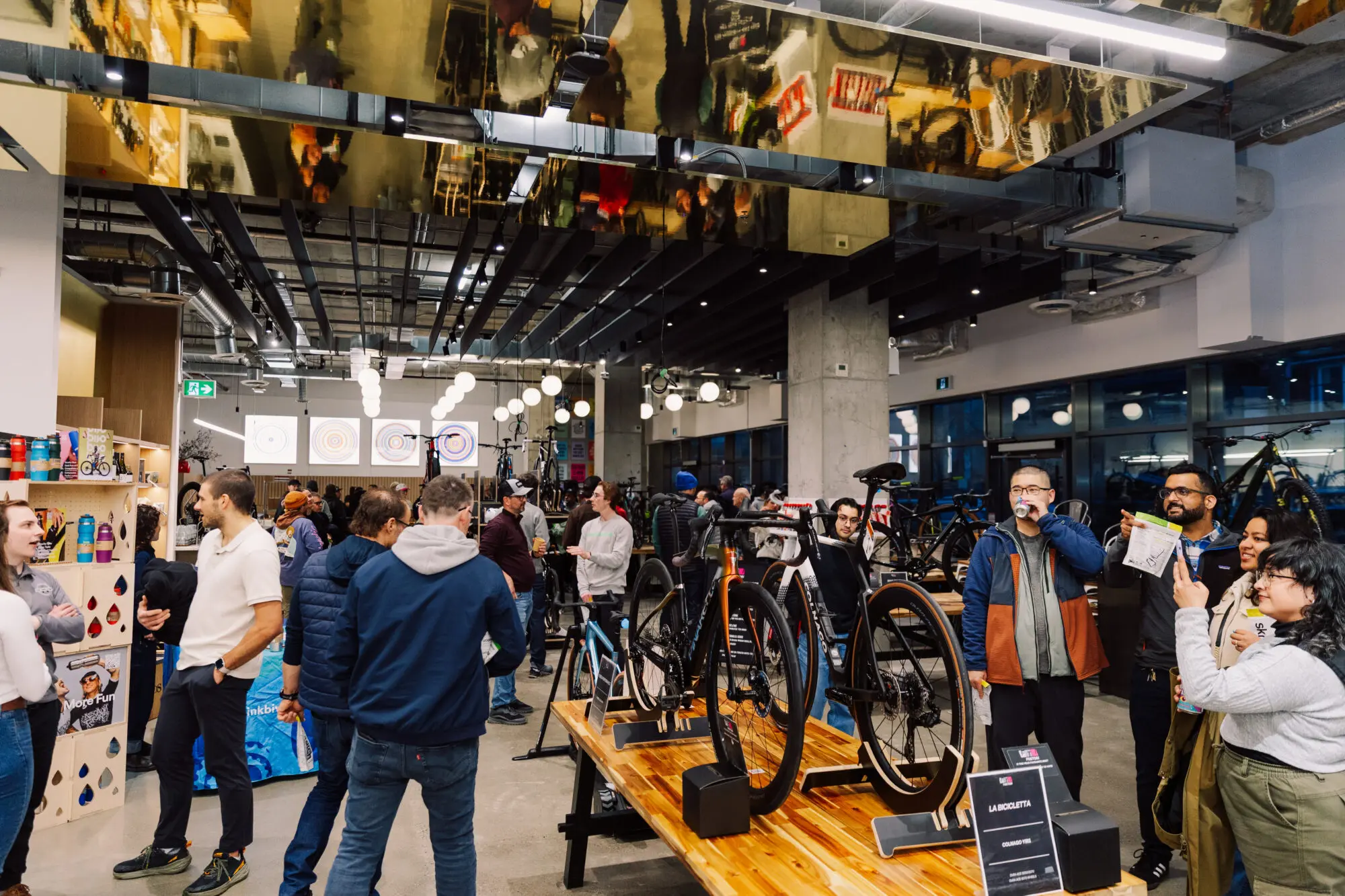
To a retailer ready to expand, Bullitt speaks their language while cracking open something new. So, we thought we’d turn the Bullitt into a bike our industry understands while reminding them that Mom’s ride bikes and kids ride in them. A cargo bike carries stuff. It also carries new ideas.
Bikepacking by Cargo Bike
These days, the big thing in the bicycle industry is bikepacking. If a Bullitt is about beating transit, walking, and driving in the urban “last mile,” bikepacking recognizes a bike is still more fun over distance than driving. The goal is to stay off pavement, using gravel roads that criss-cross the continent. You pack what you need and head out. It’s great fun.
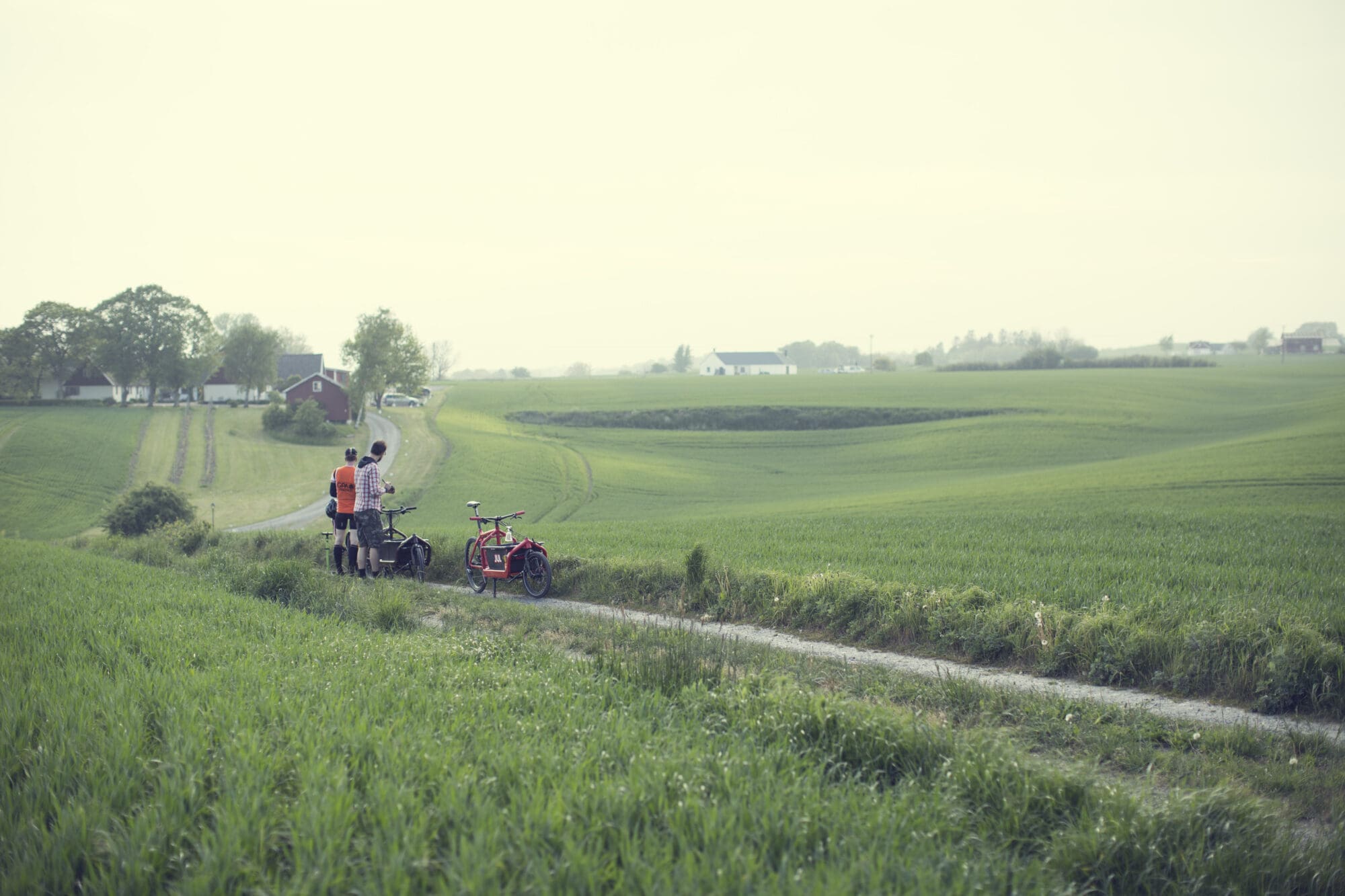
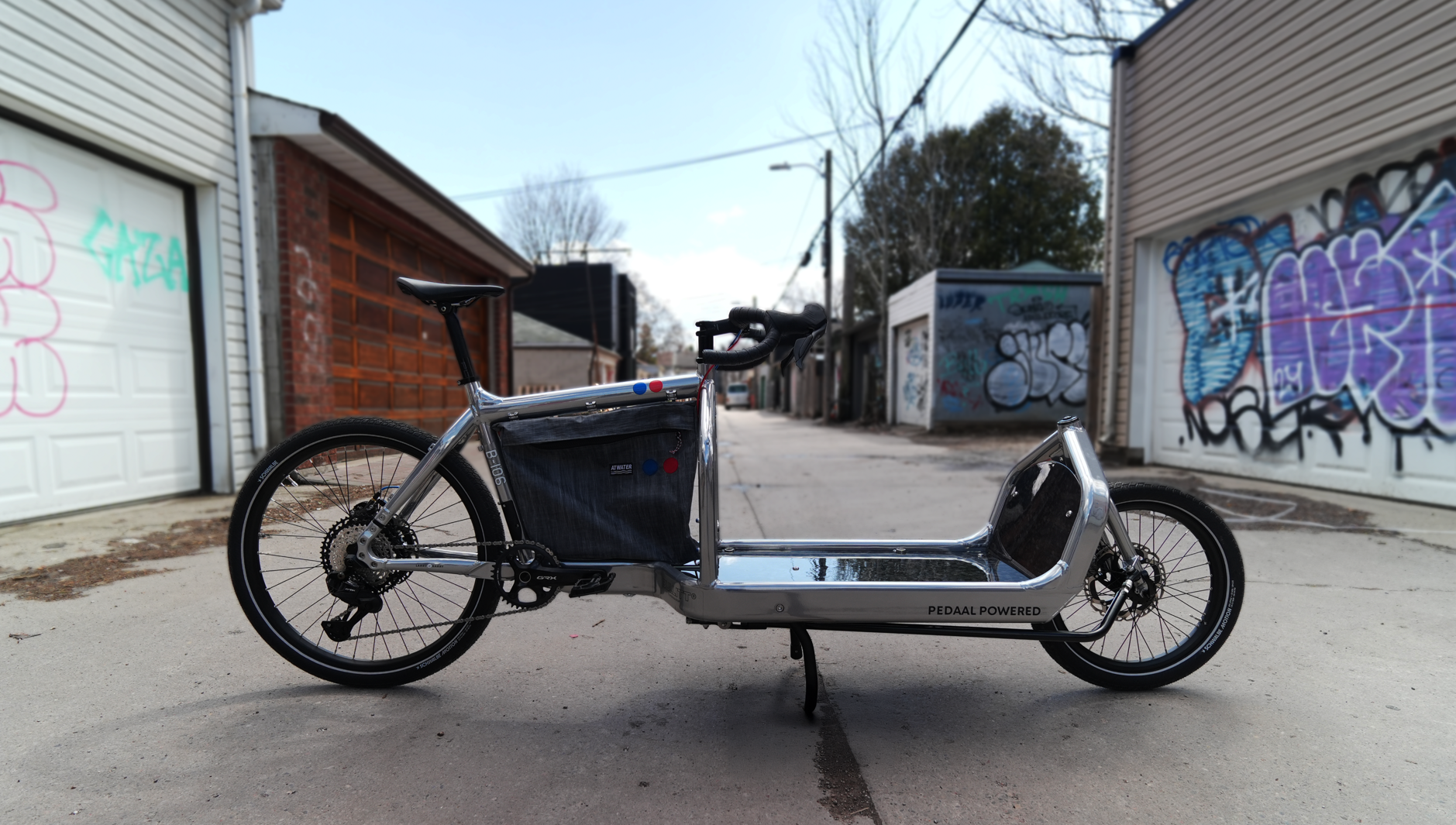
In Denmark and Germany, Bullitt bikes are popular with the bikepacking crowd. It is, after all, the lightest cargo bike on earth and feels more like a Subaru Crosstrek than a Honda Odyssey. So we took the B106 and turned it into an epic bikepacking machine. We wanted to give the show something it understood, if only to create an opening. We’re tastemakers too, and Bullitt let us do our own curatorial wink and nudge.
Every Detail Considered
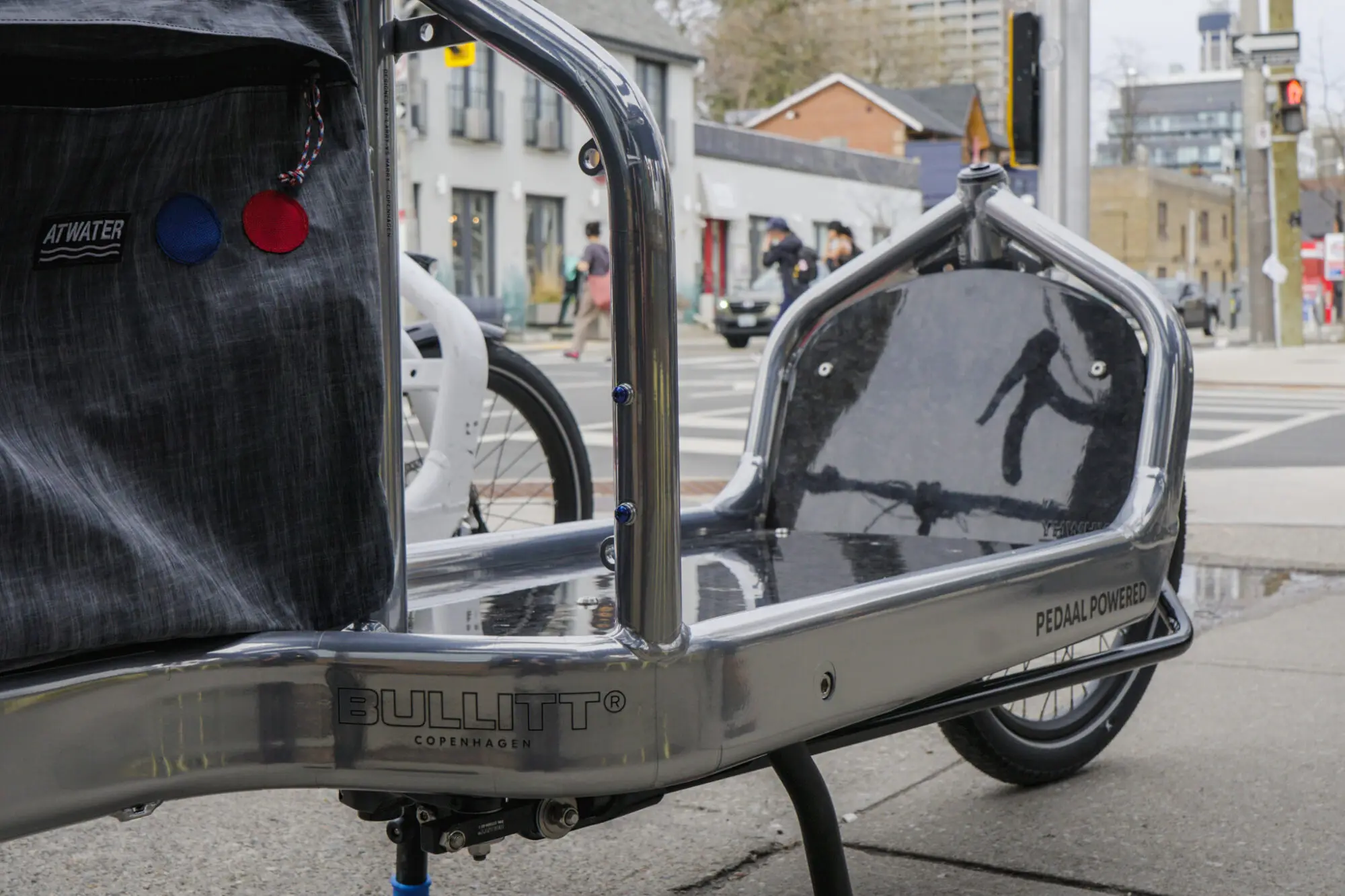
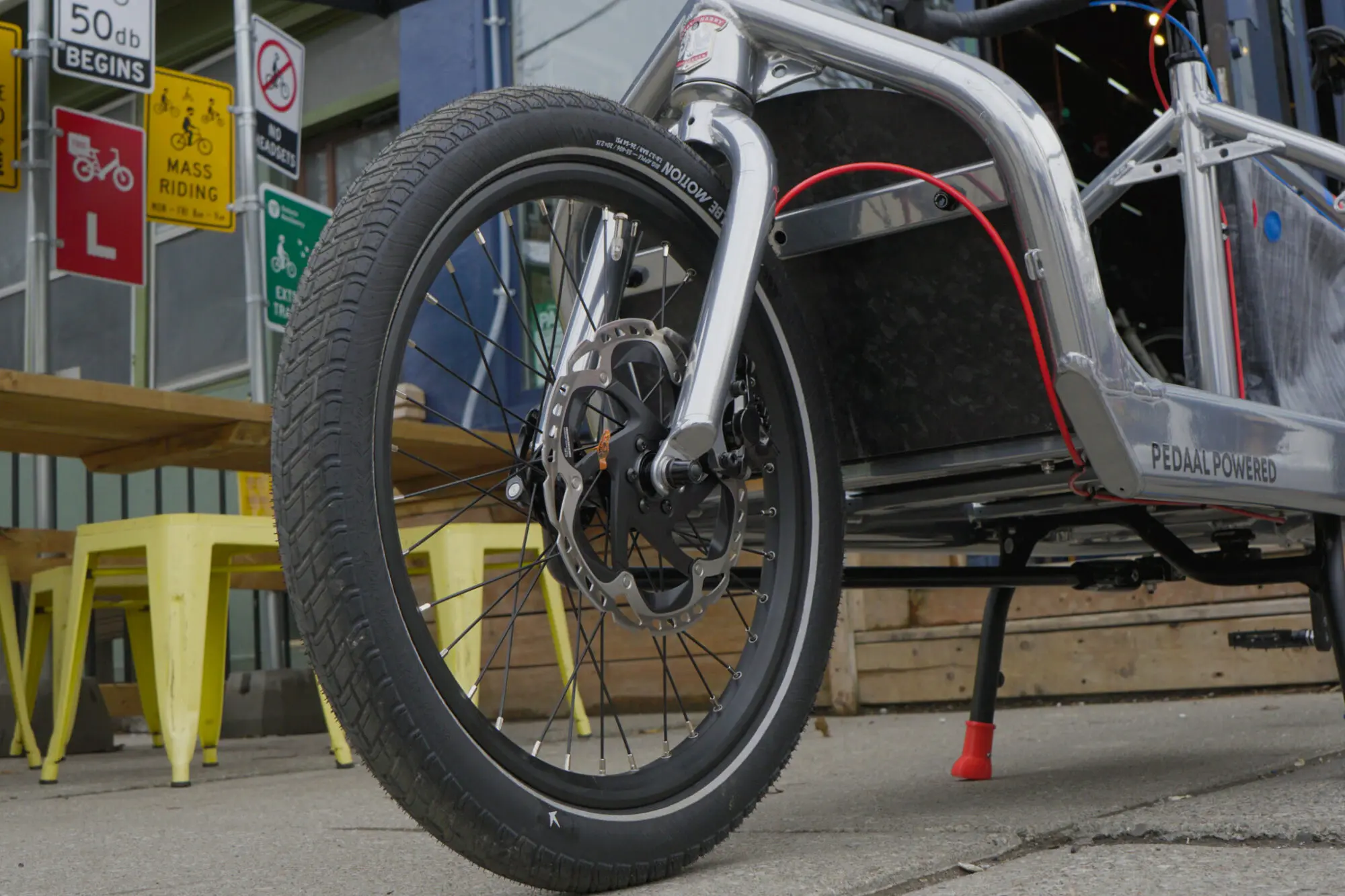
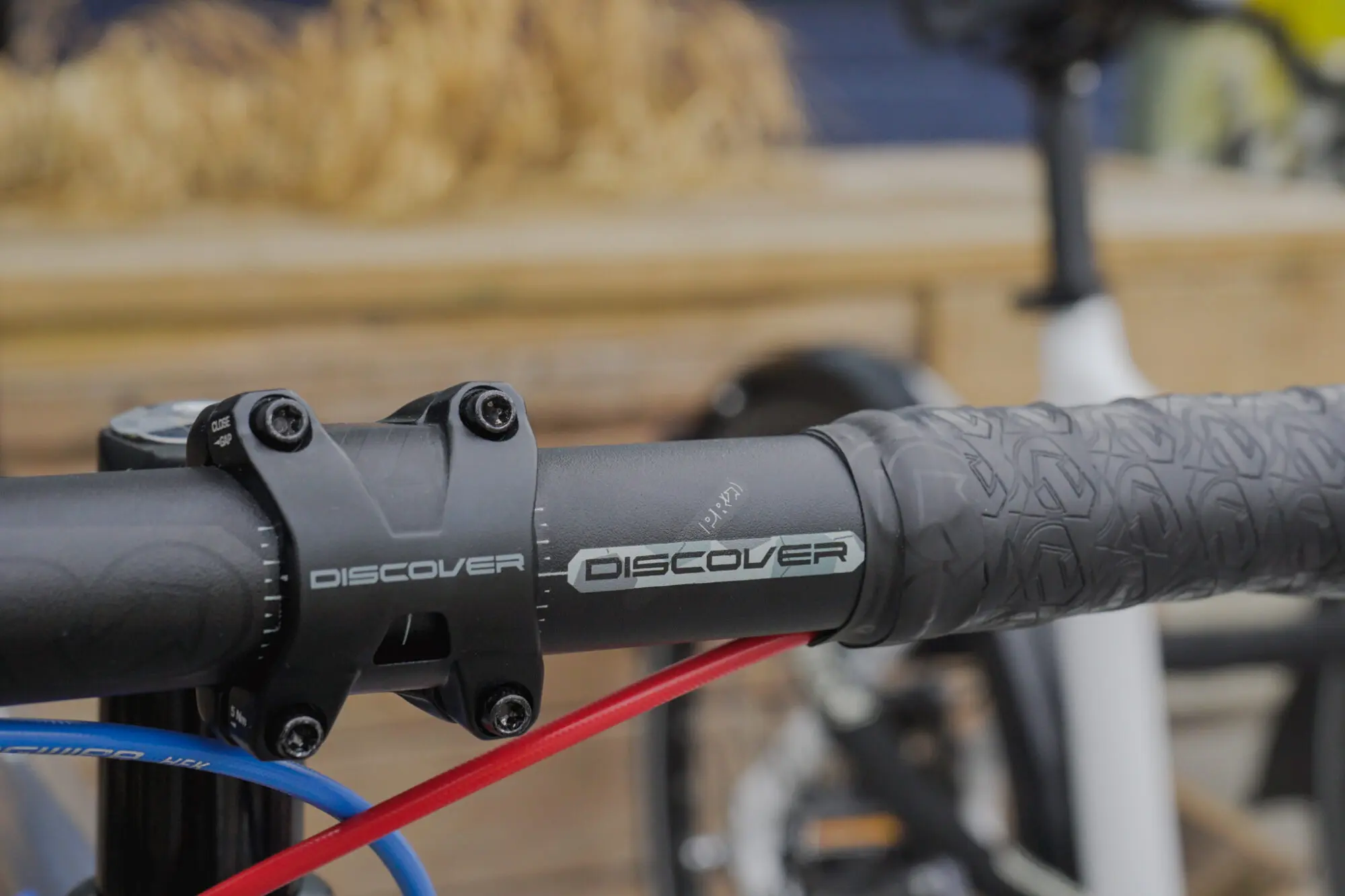
The silver of the B106 is paint, not raw metal. Each bike was painted by automobile painters who specialize in custom supercar finishes. It had to look like a spaceship. That was the point of B106 Space Design. Each bike has a small red and blue dot – we’re not sure what it symbolizes – and we echoed that pattern throughout. Right-side bottle cage bolts? Red. Left side? Blue. Handlebar tape? Sublimated red on the right and blue on the left. Subtle, but it’s there. Brake cables? Red and blue. Even the kickstand feet are red and blue, just to be cute.
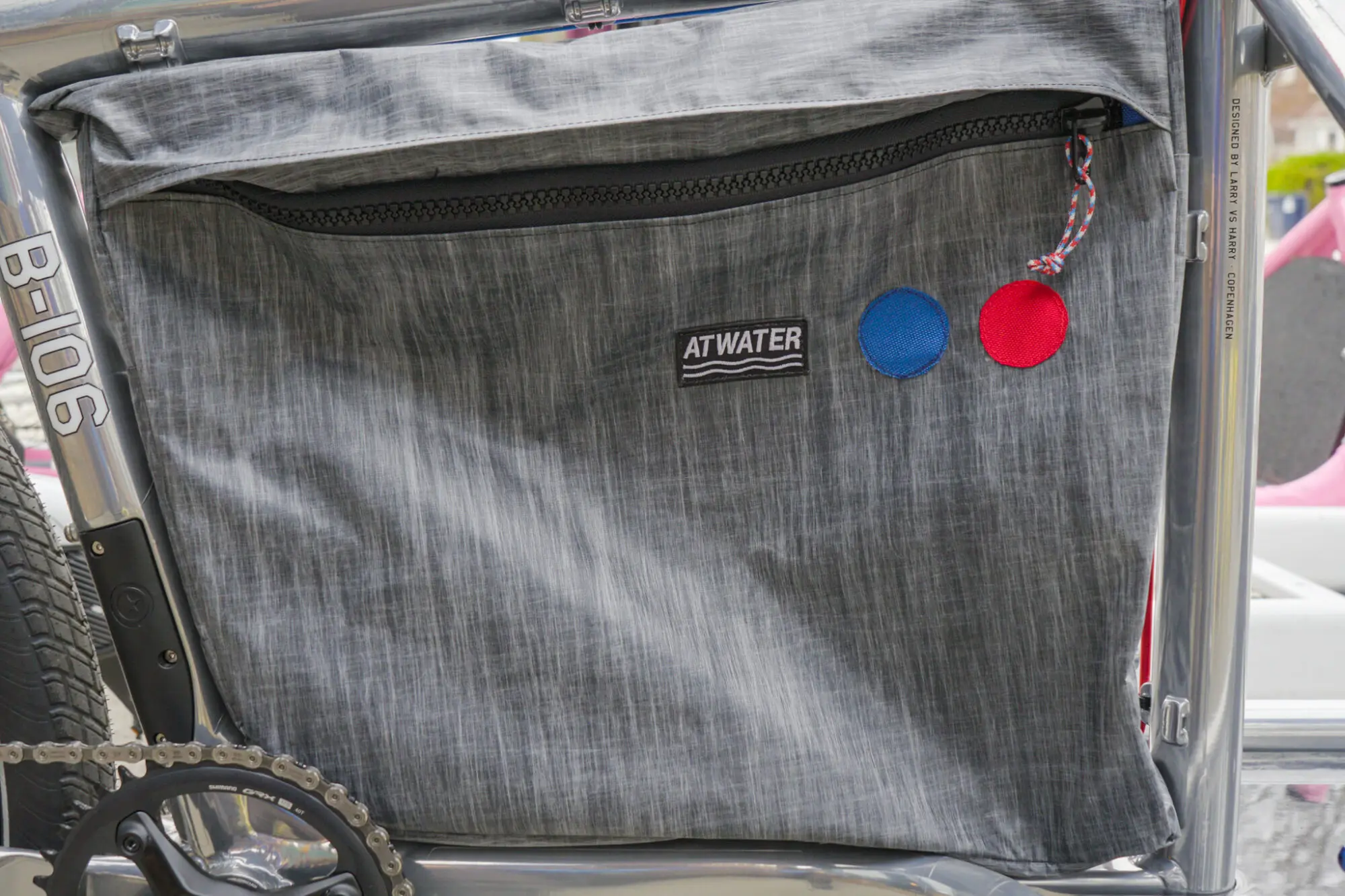
What you don’t often see on a cargo bike is a drop bar. But for bikepacking, it offers multiple hand positions, which matters when you’re riding for hours. It looks cool and rides phenomenally well. The shifters are Di2, mated to a dinner-plate XT cassette with a GRX derailleur for crisp shifting. To up the bling factor, we installed a YHWHY carbon fiber deck flown in from Singapore. The coup de grâce was a custom Atwater frame bag, built for the show by Narek at Atwater, himself a Bullitt rider. The bag is shiny grey, just like the bike.
Everyone on the Podium
Did it win? It did! The vote was by attendees and, as newcomers among thirty participants, our B106ix came in second. Rumour had it first place was won because the store brought their riding club to load the votes. That about sums up the insider nature of the bicycle industry. We didn’t bring a club. We don’t even have a club. We’re here to convince anyone and everyone that city cycling is for everyone. It takes chutzpah to import these things. So, if cargo bikes come second place in our insular little industry, we see that as real progress.
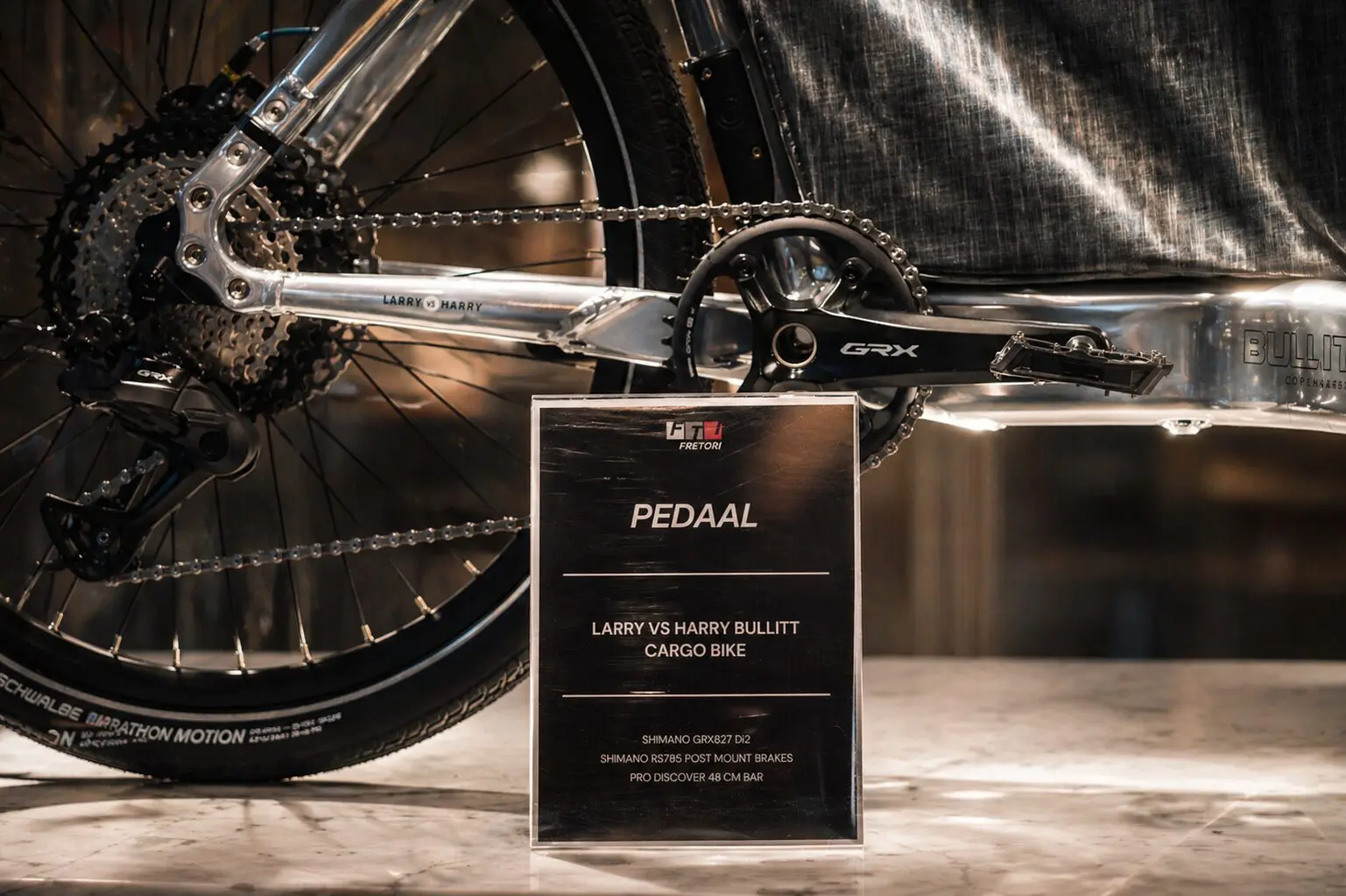
Is the B106ix for sale? As much as we’d love to keep it, our mission is to release great ideas into the wild. This is a bike meant to go into the wild, whether that’s a bikepacking trip or a daily ride with your kid. It’s a piece of history we may only fully understand ourselves, but that doesn’t matter. Above all, it’s a cool bike that rides beautifully and balances taste, bling, and a wink and nudge that you can make your own.