The 1970s are back. Iran is unsettling oil markets, Detroit is again making fortunes from enormous cars, and tariffs are redrawing Canada’s relationship with America. We do not pretend to have the answers, but we have some questions. If Carney is right that America has changed and Canada must put its own house in order, which American ideas should we keep—and which deserve a tariff of their own?

Does decoupling mean finding new suppliers, or importing new ideas?
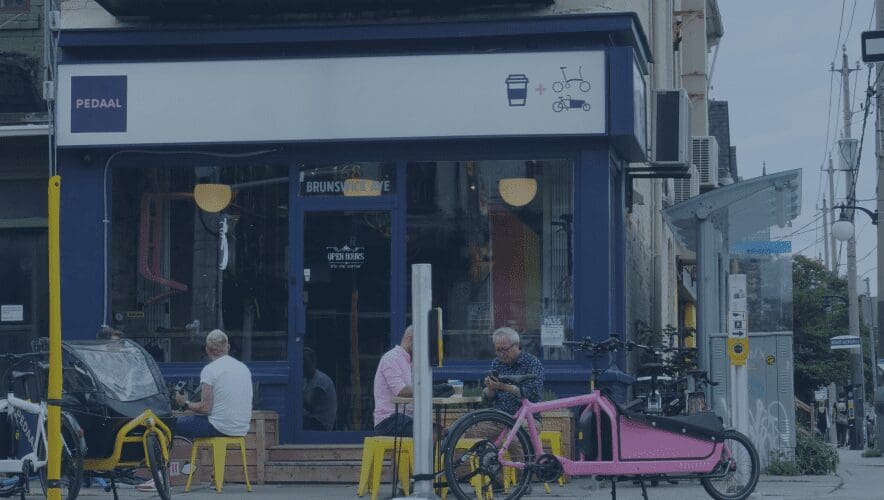
Decoupling can mean finding a new supplier for the same product. It can also mean asking whether we need the same product at all. When the Business Development Bank of Canada backed Pedaal’s import business, they understood the distinction. We were not importing the same product from a different country. We were importing a different answer.
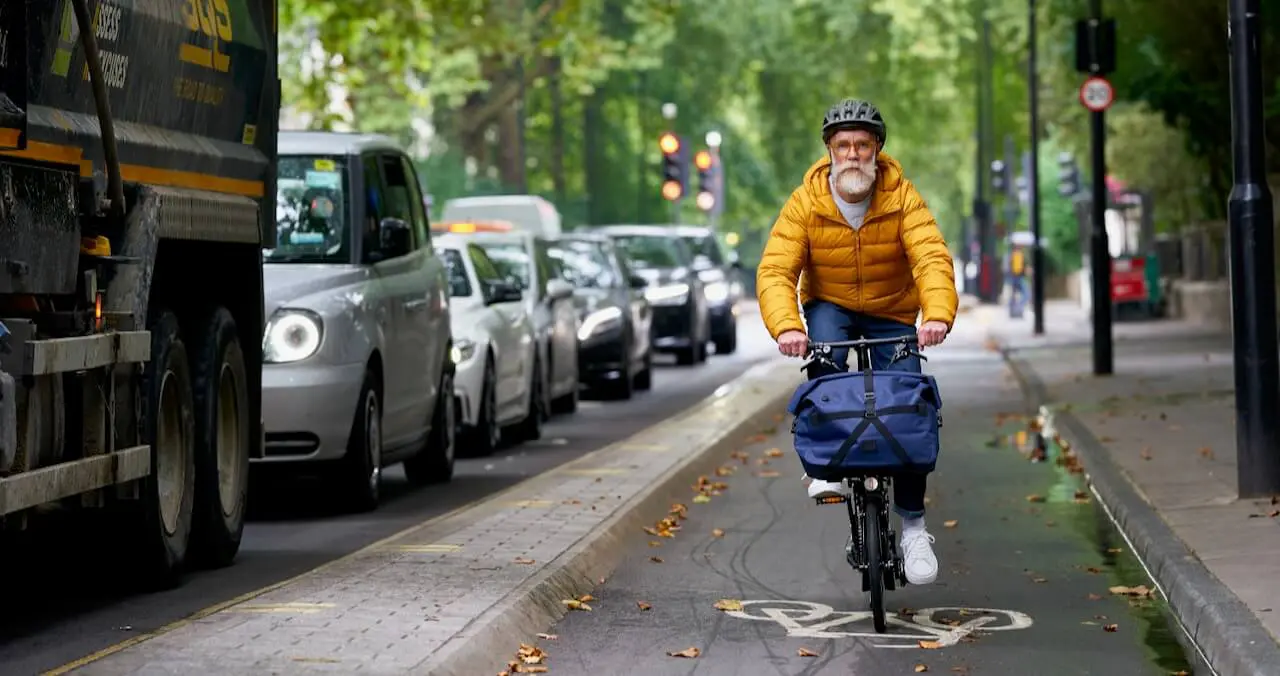
Carney’s metaphor of putting our house in order is useful. With gridlock now costing Ontario an estimated $56.4 billion each year, our driveway might need some clearing. If Americans treat the automobile as essential to freedom, could Canadians ask whether freedom might actually mean having multiple ways to move? Carney has called Canada “the most European of non-European countries.” Maybe it’s time to start demythologizing the car, and live out the Canadian dream.
Has Canada already begun challenging the automobile?
Thankfully, Canadians have already begun challenging the primacy of the car. In 2021, the federal government created the National Active Transportation Strategy and backed it with $400 million. Toronto has committed to net-zero emissions by 2040, including a target that 75% of school and work trips under five kilometres be made by walking, cycling or transit by 2030.
More importantly, Toronto has built this assumption into its housing policy. As Dylan Reid points out in Spacing, the city abolished most car-parking minimums for new developments while requiring substantially more bicycle parking. In other words, Toronto can make room for more people, but not for all of their cars.
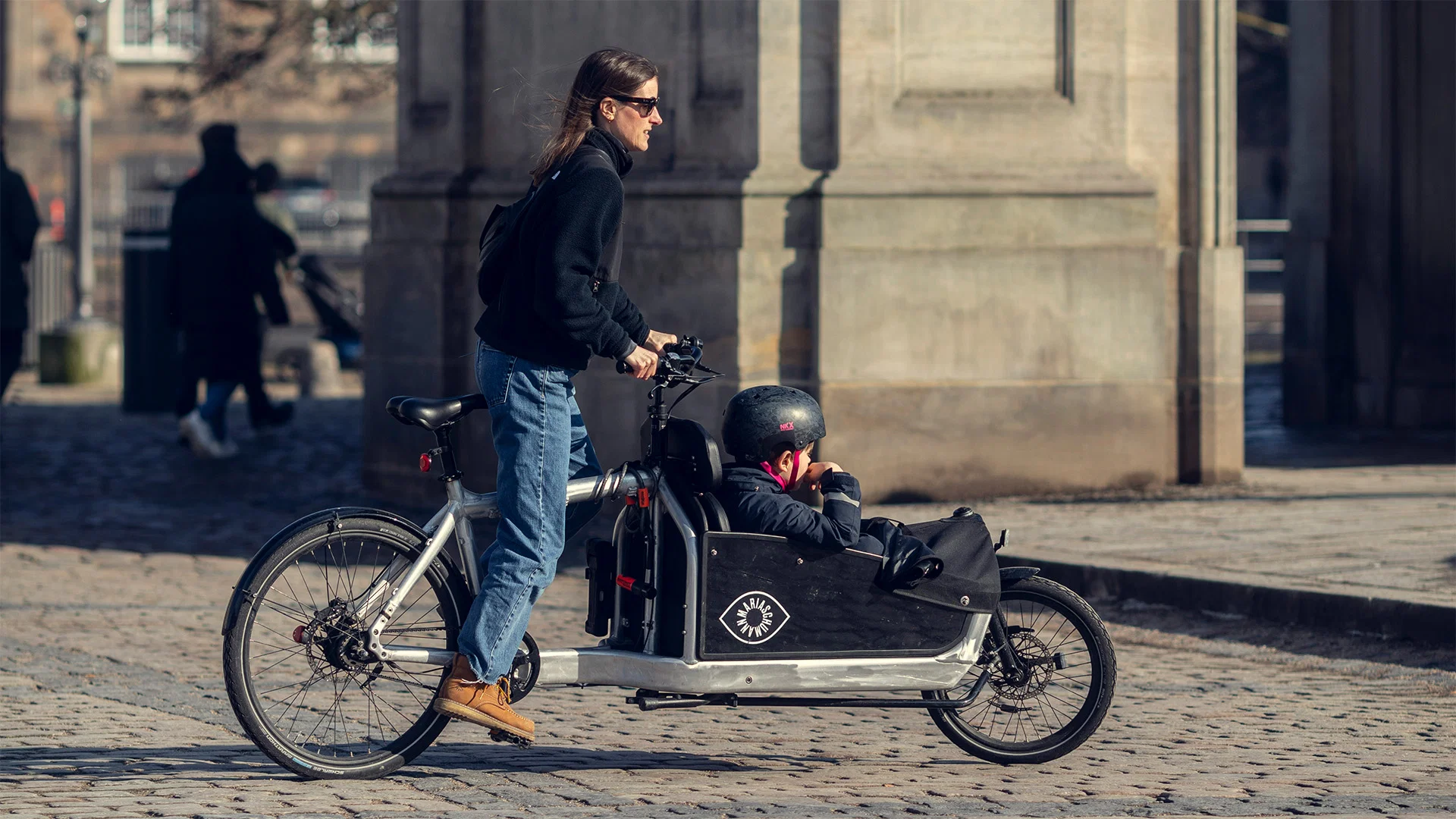
Doug Ford understands only part of the problem. His government is investing nearly $70 billion in public transit, including the Ontario Line and expanded GO service, to move commuters over longer distances. But what will move the thousands of new residents making shorter trips within the city? If the motorist is passing through Bloor and the cyclist is dropping off a child at daycare, which one is really using the street? (Hint: both!)
What happens when cities grow denser?
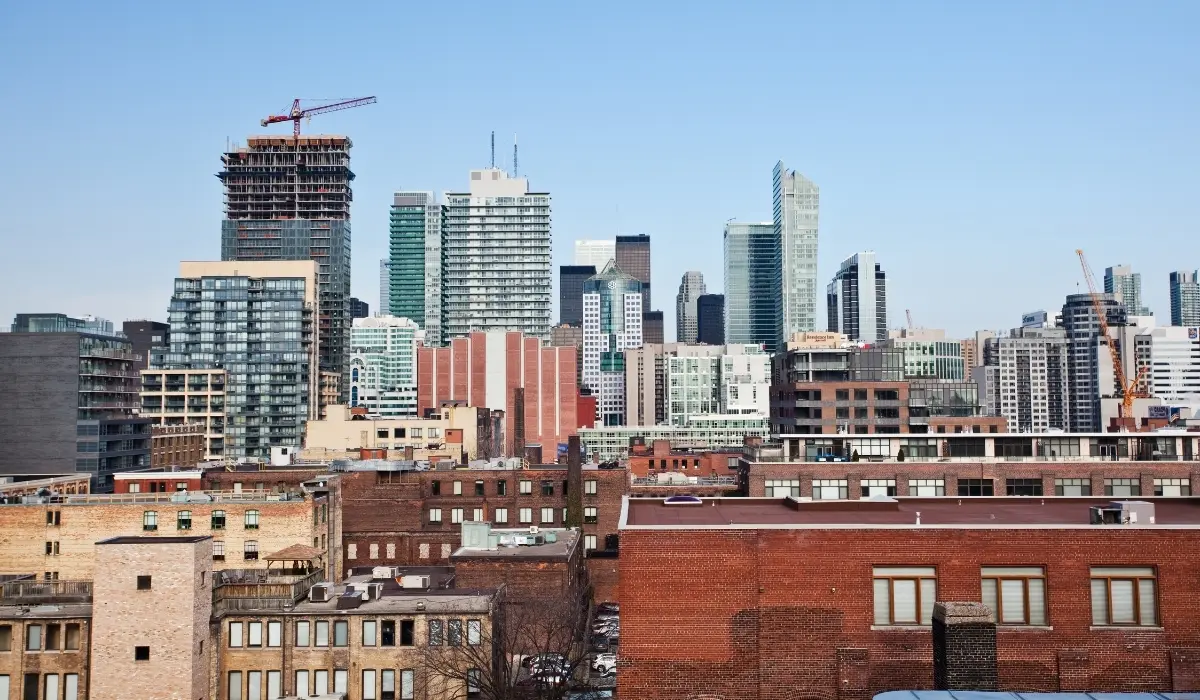
What is Doug Ford missing here? As cities grow denser, useful journeys become shorter. Schools, shops, restaurants, friends and appointments increasingly sit within a few kilometres of home. The Dutch have put a useful number on this. According to the Netherlands Institute for Transport Policy Analysis, 69% of Dutch journeys are shorter than 7.5 kilometres. Why? Because density brings daily life closer to home. But, this creates an entirely new problem.
The problem with urban distances in this range is that the majority of them remain too close to drive, too expensive to drive, and too frustrating to drive. The answer, of course, is that you ride a bike! That’s why only 35% of Dutch trips in the so-called last-mile are made by car. To be clear, this isn’t a question of bike versus car. Car ownership in the Netherlands is some of the highest in Europe. You still need a car for longer distances. But, in a dense city, a bike is better than a car and helps fund that car.

In other words, a bicycle does not pretend to defeat the automobile over longer distances. There is no war on the car. The mistake is asking the automobile to defeat the bicycle over shorter ones.
Could energy wealth make us less dependent on gasoline?
Carney argues that Canada must become stronger and less dependent on America. We agree. But sovereignty also means becoming less vulnerable to global systems we cannot control—and few are more volatile than the price of oil. Even if Canada is a major oil supplier.
The Netherlands faced the same contradiction in the 1970s while tensions in Iran were also flaring. Revenues from the enormous Groningen gas field were pouring into the national budget. Rather than save the windfall, as Norway later did, the Dutch spent it modernizing the country—a practice known as potverteren, or “consuming the pot.” Crazy as it may seem, it was the gas money that built all those bike lanes. Canada can do the same.
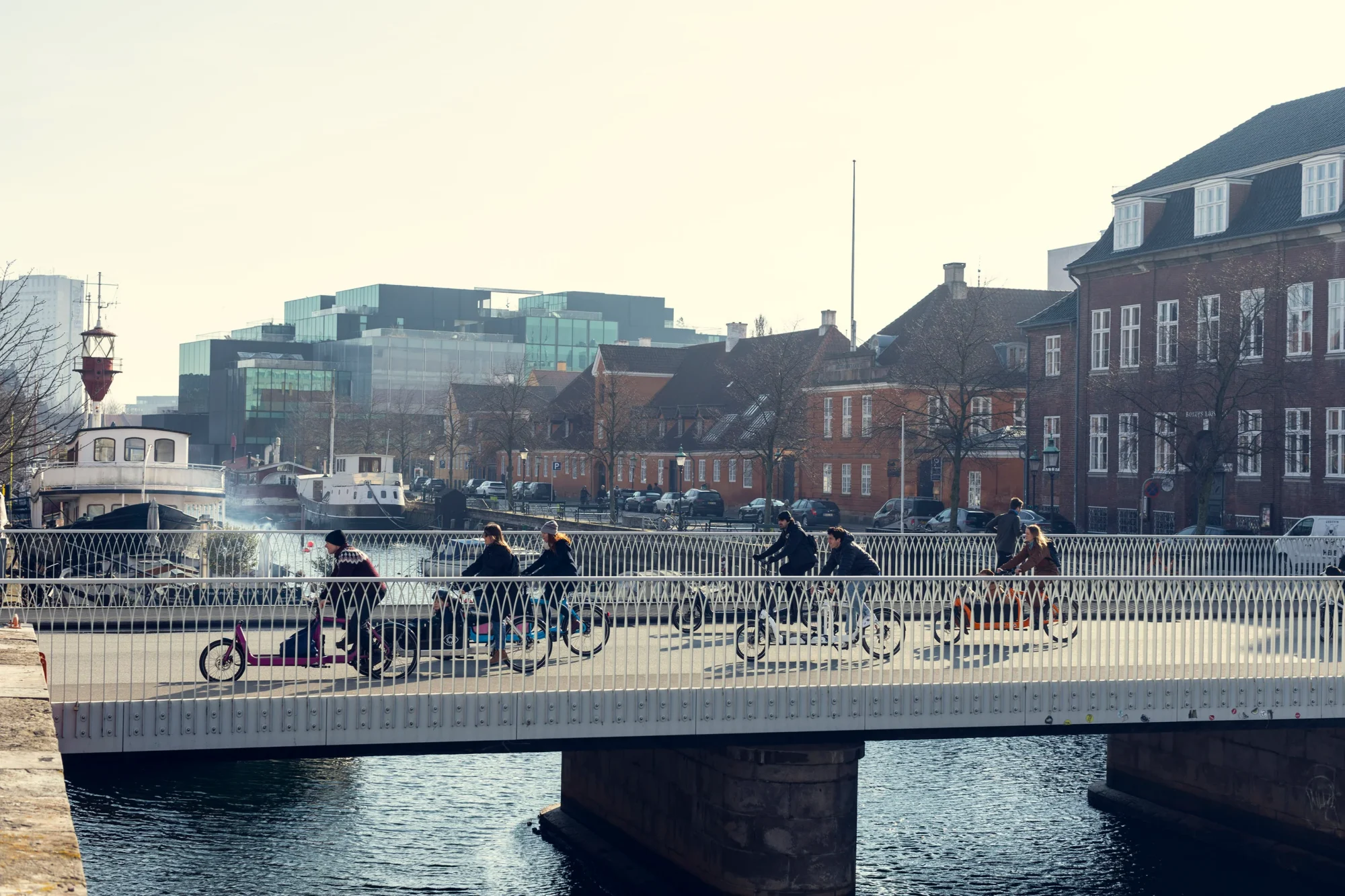
Today, an astonishing 64% of Dutch trips under 7.5 kilometres are made without a car, representing roughly 44% of all journeys. Now, that is transportation sovereignty! Could Canada use its energy wealth to make its cities more efficient?
Does the automobile industry remember the 1970s?
History has a way of repeating itself. In 1973 and 1979 huge oil shocks caught Detroit with their pants down. Volkswagen had been asking North Americans to “Think Small” while Detroit built big gas guzzlers. Suddenly the American public listened. Thanks to compact cars, in 1980 the Big Three were selling 30% fewer cars than two years earlier. Americans had discovered that smaller could be better.

Until they forgot. Today another oil shock is in full swing, and much of the Big Three’s profit comes from large pickups and SUVs. That works while gasoline is cheap, but leaves the industry exposed when prices jump. And because the majority American car trips are less than three miles, it’s a horrendous burden on the wallet for a tool that’s inefficient at short distances.
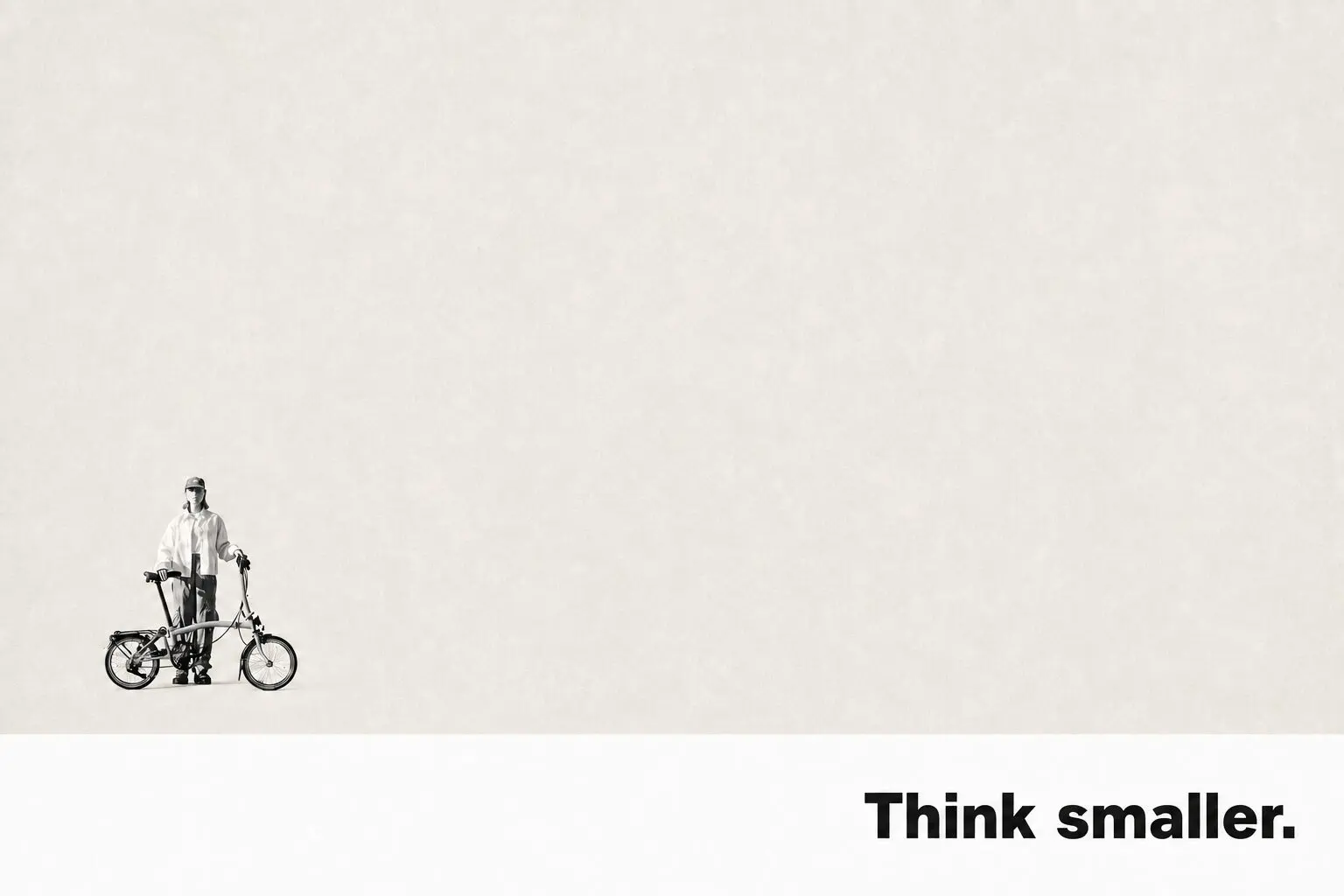
Here’s what we think: If Canada wants to decouple from the United States, perhaps we should think even smaller than a compact car. Of course we still need reasonably priced cars for longer journeys. But as daily life moves closer to home, perhaps we should think even smaller. We happen to sell the smallest solution out there; a vehicle that moves quickly through the city and then follows us indoors.
Could the commute become the exercise?
In a recent press conference, Carney says Canadians should prepare to feel some pain. We’re ready. But if we are going to feel pain, let’s choose the kind that makes us feel good. Canadians already drive their bikes to trailheads so they can feel the burn. What if we felt that burn on the way to work, school or the grocery store instead?
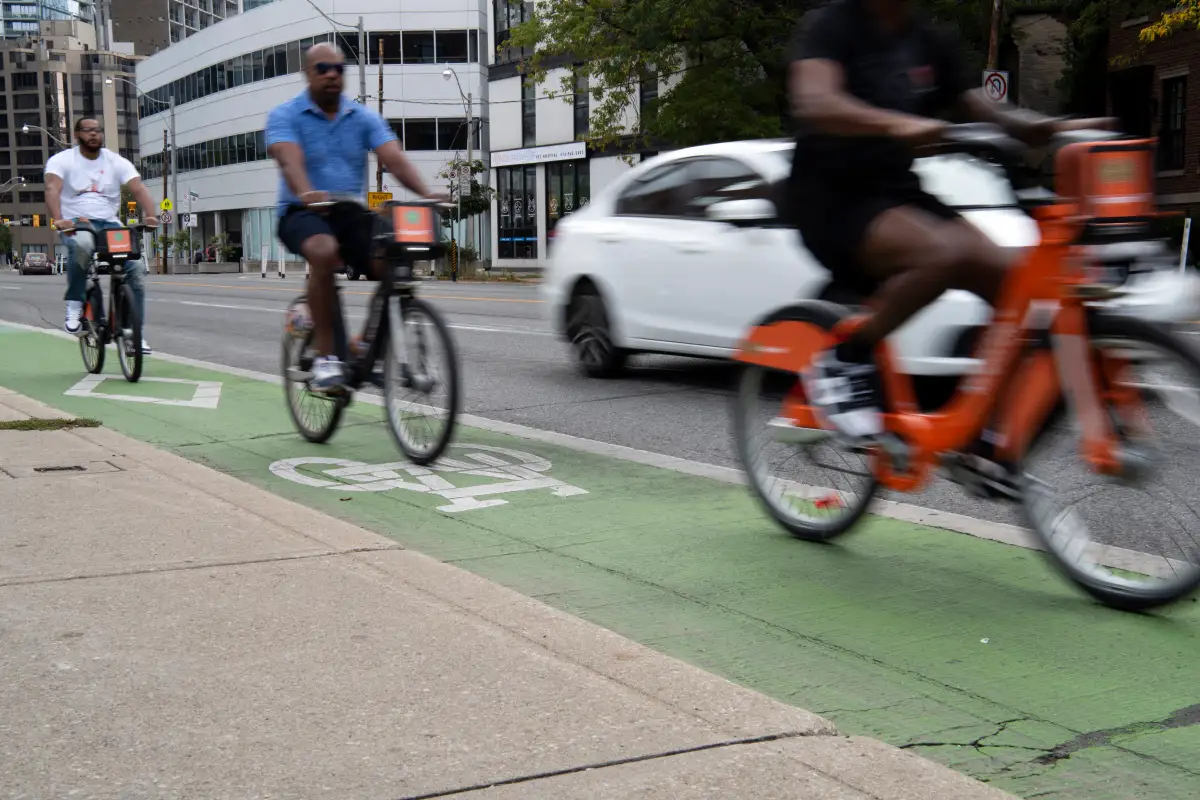
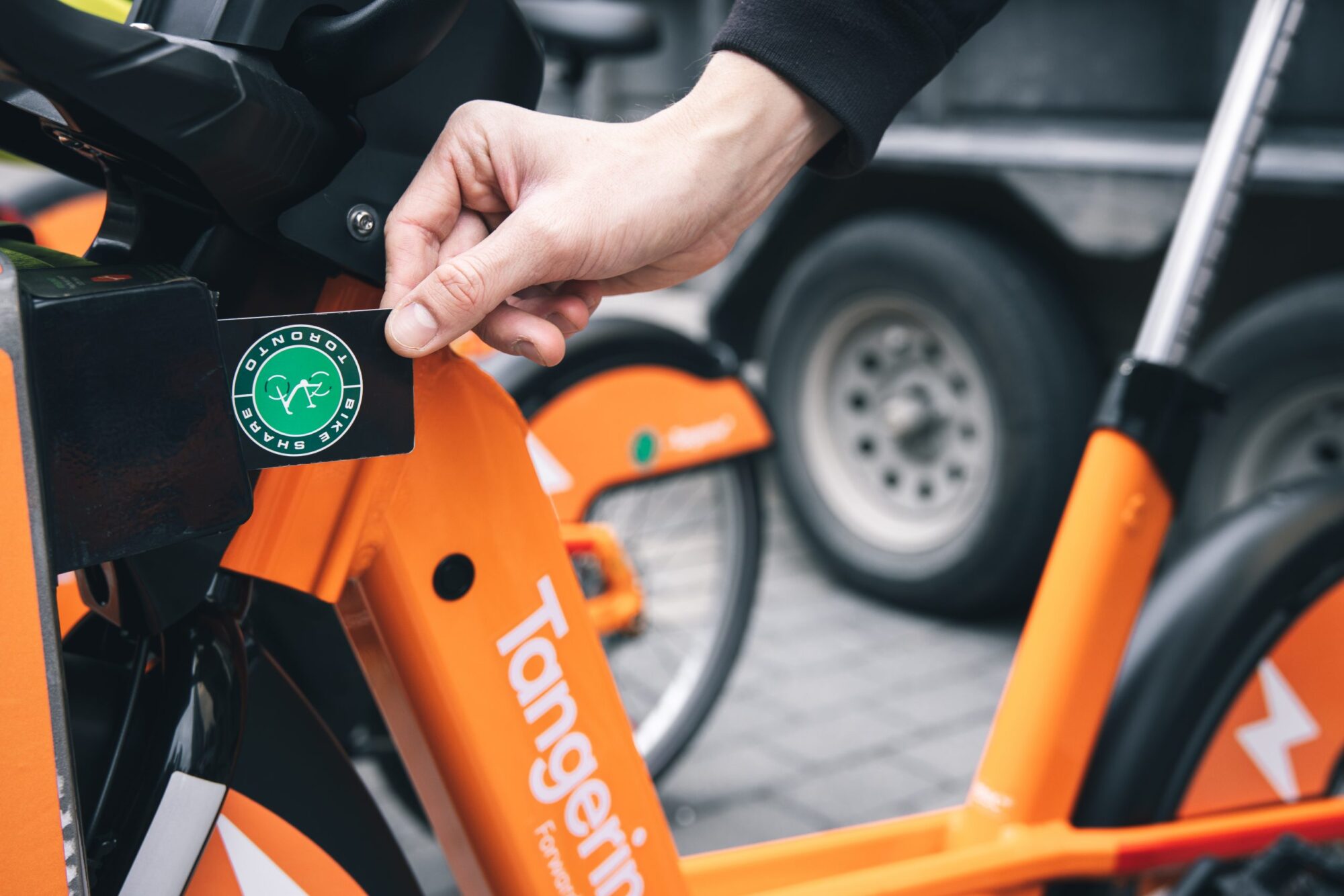
Toronto Bike Share data suggests Canadians are getting the burn. The thigh burn, that is. In 2025, it recorded 7.8 million rides, 900,000 more than the year before and nearly 241% more than in 2019. The system now has more than 10,000 bicycles and 1,000 stations across all 25 wards. The barrier to entry is low and the payoff is usually like: why didn’t I do this ages ago?
Welcome to the new bicycle boom
If the 1970s are back, we should remember that the decade produced more than oil shocks and enormous cars. It also produced North America’s biggest bicycle boom. This time around, the city has caught up. Bike Share makes getting started gloriously cheap and frictionless; folding bikes navigate the indoor-outdoor reality of city life; and cargo bikes add trunk space and safe boxes for children. What begins at the Bike Share dock suddenly becomes a way of life.
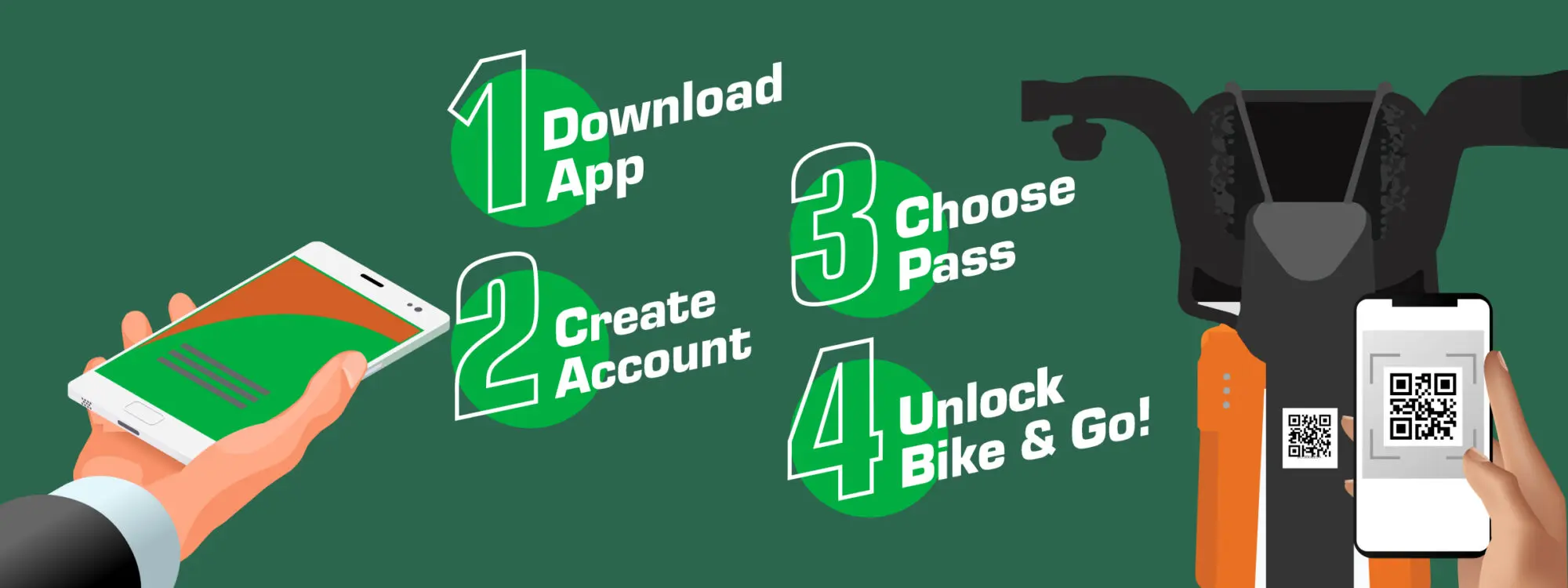
Canada does not need to become the Netherlands or give up the automobile. Putting a country’s house in order starts in the driveway. So hey, why not download the Bike Share app and give it a try? You’ll spend nothing on gasoline, feel the wind in your hair and arrive in a better mood. Do it for yourself – and, if you like, for your country. The best protest, after all, is living well.