Canada has exported many things to Britain, although Mark Carney may be one of the more successful. He ran the Bank of England for nearly seven years, becoming the first foreigner to hold the position in the institution’s three-century history. Somewhere in his tenure he visited the Brompton factory in London. Today, we are taking a tour of the Brompton factory and of the Value(s) Carney may have found there. Read on!

Always Onshore
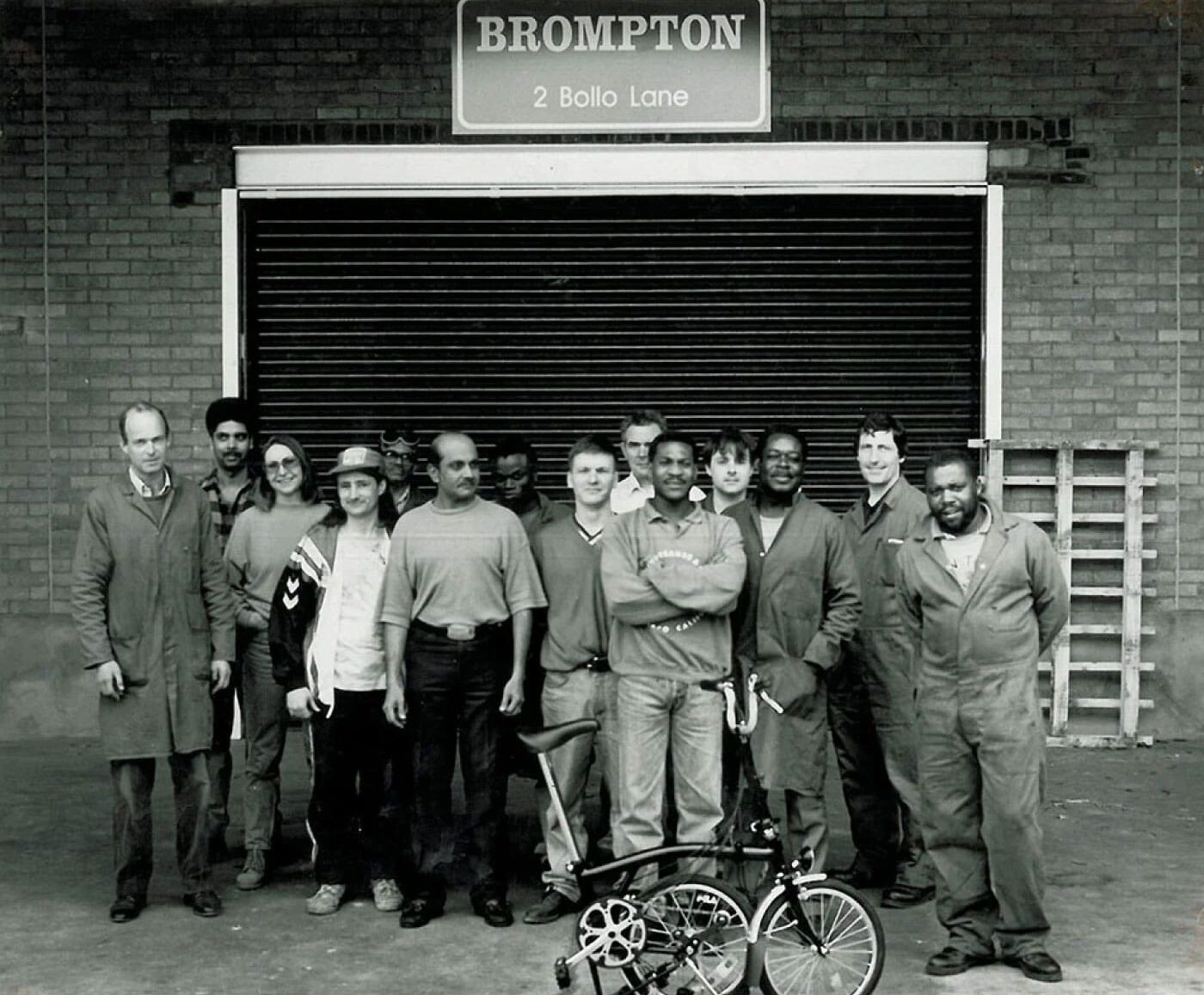
Carney seems to thrive in a crisis. The picture above was taken just three months before Britain voted on Brexit. At that moment, investment in the UK was slowing and uncertainty was rising. But, Brompton was moving in the exact opposite direction. For decades, British manufacturing had been offshoring to cheaper countries. Brompton, on the other hand, was growing into a larger factory in London. For an economist like Carney, that had to be interesting. Will Butler-Adams (that’s him above, nice shorts!) sent us this chalkboard diagram that Carney scribbled whilst there. Interpret as you will. Apparently the two got along rather well.

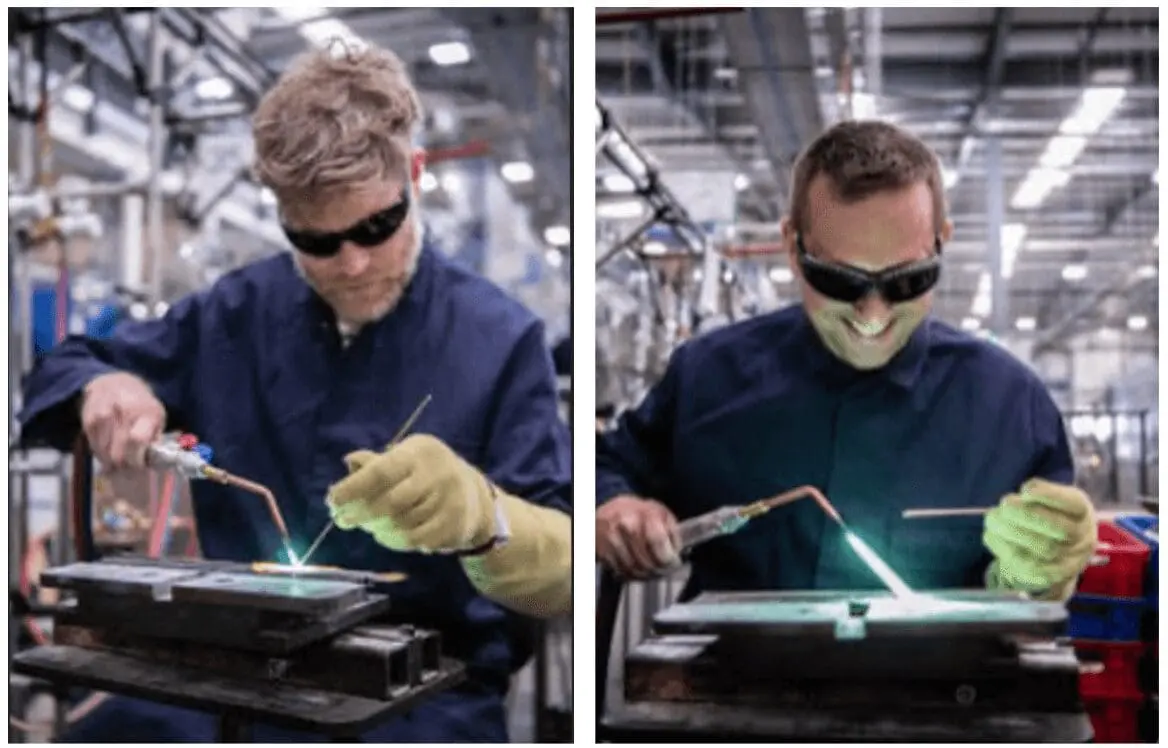
Anyhow, Brompton was doing something special. They still are. They aren’t on-shoring, they’ve always been onshore. They employ skilled brazers, manufacture 1,200 proprietary parts and build their folding frames to tolerances of ±0.2 millimetres, ten times more precise than a normal bicycle frame. Above all, Brompton manufactured a transportation solution that unlocked gridlock around the world. If Carney wanted to understand how a country creates value, especially in fraught times, it helped to visit somewhere that made it.
Politics in the Fold
Brompton has developed a strange hold on Canadian politicians. Jagmeet Singh has ridden a Brompton for years and appears with one on the cover of his book. This, of course, is on-brand for a downtown politician invested in how people can efficiently move through cities. But, Carney encountered the same bicycle through the eyes of an economist. He went to Brompton to see how it was designed, manufactured and sold to the world.

And so, the Brompton factory is a good place to investigate several economic questions at once. Can skilled manufacturing survive in a high-cost country? Can a company train people properly, pay London wages, make something durable and compete internationally? Can good design create its own market? Can exporting a finished product produce more enduring value than shipping out raw material and buying it back as something useful? Brompton has spent fifty years providing a stubborn answer to all four.
The Limits of Price
One wonders whether some of the argument that later became Mark Carney’s book Value(s) was already taking shape when he toured the Brompton factory. Customers often remark on the $3,000 starting price of a Brompton as “expensive”, which makes sense in a market that presents bicycles as rarefied toys-for-boys. However, unlike other bicycles, a Brompton is priced as transportation. And, with so few companies competing in the urban cycling space, you could even say they set the bar. Yet, according to Value(s), even if a Brompton is priced correctly, much of the value it creates remains outside the transaction. That gap between price and value is the subject of Carney’s Value(s).

So, what remains uncounted? Well, the market can record the bicycle sale, but it is blind to the time returned to its owner, the space freed on a road or train, the car journey prevented and the decades the bicycle continues working after the original transaction. Value(s) examines this habit of confusing what can be priced with what is valuable. Once price becomes our measure of value, useful things begin to look expensive while expensive systems begin to look productive.
The Three-Mile Machine
If this philosophy helped Carney steer the Bank of England through Brexit he has a new crisis to manage with Trump. Thankfully, Carney’s philosophy is the opposite of American nativism. Canada is reducing its dependence on the USA not by making everything at home, but by expanding its trading relationships. In this process, Carney is not simply asking Canada to replace American products with the same things from somewhere else. New trading partners expose us to different products, different solutions and different ideas about prosperity. So, if Canada changes where it buys things without reconsidering what it values, it will diversify its trade while preserving the economy beneath it. In other words, useful things will still look expensive, while expensive systems continue to pass for productivity.

Consider the automobile. The automobile is America’s most successful export to Canada, both as a physical product and as an organizing idea. To be clear, we are not against cars, but when nearly half of all car trips in America are under three miles, we believe that is a lot of public space filled up by the wrong tool. The problem is not the car. It is the short trips made by car. Expanding roads to accommodate these trips only produces more of them, returning us to the same gridlock at greater expense. It’s a death spiral, and the bicycle can help.

The Dutch, who are the most self conscious when it comes to matters of practicality, offer a better division of labour. The Netherlands has the highest rate of car ownership in Europe, but that does not mean the Dutch drive everywhere. The bicycle handles short trips, which the Dutch define as those under five miles, while the car is reserved for the minority of trips that might require more distance. In short, cycling reduces the cost of driving by reducing how often one must drive. This is where Doug Ford loses the narrative: Cycling helps citizens afford a car. That’s a win-win on the price side and the Value(s) side. And, for the Canadian automotive industry, at least what’s left of it after Trump.
Gridlock Capitalism
And so, Carney’s explanation of Value(s) helps explain how Doug Ford is missing the picture. Ford appears to see any threat to automobile production as an economic emergency while seeing the congestion it produces as a reason to build more roads. Congestion now costs the Greater Toronto and Hamilton Area an estimated $44.7 billion each year, an astonishing lost opportunity produced by the system we continue protecting. Ford recognizes the value of choice when Ontario trades, but not when Ontarians move. He wants less economic dependence on the United States while protecting a transportation system deeply dependent on the car.

But, what Doug Ford may not realize is that Toronto citizens are not arguing for reduced car ownership or a reduced auto industry. This is no war on the car. They are arguing for reduced car usage, especially for the short trips that clog our roads while accomplishing very little. Freeing ourselves from some of this gridlock is one way for Canada to get its act together while the United States falls apart. Carney often calls Canada “the most European non-European country.” Let’s prove that on two wheels!

In other words, Carney’s Value(s) helps explain what Ford’s automobile economy fails to measure. This is not because the automobile lacks value. A car is enormously useful when it carries people or goods beyond the practical range of a bicycle. But, when the same machine is used for a short trip through a dense city, Carney’s distinction between price and value reveals what isn’t on the receipt. In Carney’s terms, financing, fuel, parking and repairs are priced, while the land a car consumes, the gridlock it creates and the time it takes remain unpriced social costs carried by the city. The bicycle reverses the equation. Its receipt captures the price of the bicycle, but not the road capacity it returns, the transit space it frees or the time it gives back. These are unpriced social surplus shared by the city. Receipt, please!
Financing Sovereignty
Trump’s answer is to make Americans buy American. Carney knows Canada is too small to make everything it needs, so his answer is to make more things here while buying more intelligently from a wider group of partners. But, some mechanism is needed to kick this off. Trade agreements help, but they are not the currency that pays the manufacturer. In other words, a Canadian company still has to order the goods, float them across the ocean and warehouse them until a customer appears. And so, Carney’s government has expanded BDC lending as the mechanism. That seems smart.
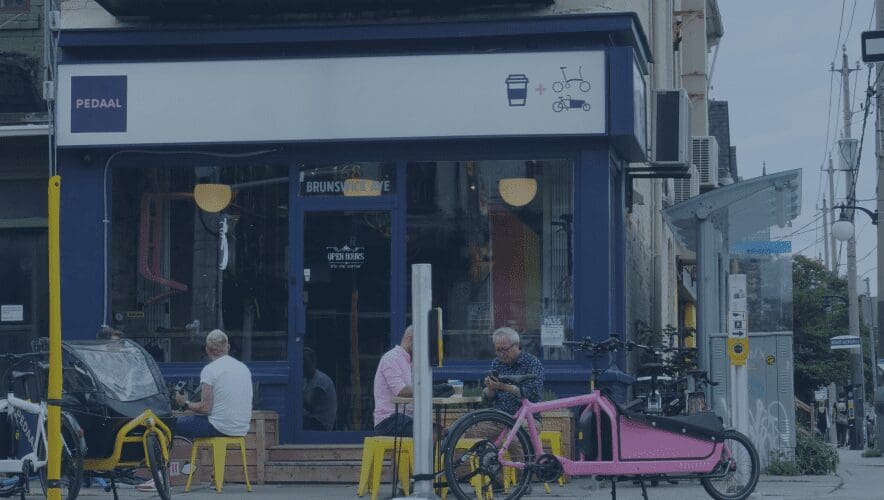
Pedaal has become a small microcosm of this strategic BDC financing, of Value(s) in action. In 2026, after being appointed Brompton’s Canadian distributor, Pedaal received the maximum amount of financing available from BDC. Our argument was pretty simple. Brompton is a precision tool for the last mile, designed and manufactured in Britain. It was developed in an ecosystem that encountered the problem of the last mile long before ours. Above all, the obsessive manufacturing processes developed by Brompton could not easily be replicated in Canada. (Or anywhere, honestly). Importing Bromptons is one small way Canada can decouple from the USA. But, it also introduces a different system of value, one that directly challenges the American idea that all movement should be organized around a car.
The Value of Getting Somewhere
Carney has warned that this shift in values may require some belt-tightening, but the Dutch model shows that using less need not leave us with less. Decoupling doesn’t have to be a bummer. Ride a bike and your commute becomes cheaper, certainly, but also more fun. Above all, high bicycle ownership allows cars to perform the trips for which they remain valuable, while reducing the congestion, pollution and lost time that never appear on an automobile balance sheet. This is what Value(s) is about. It is also what Canadian sovereignty is about. America is gridlocked in more ways than one. We can move beyond that.
So why was Carney at the Brompton factory? As Governor of the Bank of England, he was studying how a British manufacturer created value at home and exported it to the world. Ten years later, he finds himself on the other side of the same relationship. Through BDC, his government is helping Canadian businesses finance the imports that turn new trading relationships into actual trade. Pedaal is a small example: Brompton creates the value in London; we build its market in Canada. A bike saves time in traffic, and your car is there to crank the Tragically Hip on the way to your next camping spot. Canadian sovereignty at its best.

So, if you value your time, your money and your kinetic freedom, there is room for you in the bike lane. And because we are here to convince, not troll, there is plenty of room for Doug Ford too.