The City of Toronto looms large over the Ontario landscape culturally, metaphorically, and especially physically. With a population north of 3.5 million people, how could it not? Let’s consider, briefly, a few other big numbers. Even more people live in the Greater Toronto and Hamilton Area (GTHA), with a population over eight million people. The Golden Horseshoe around the western shore of Lake Ontario is home to over eleven million people. These striking numbers are hard to ignore.

We’re on a road to nowhere
And there’s more.
- The majority of people in and around Toronto who work do so outside their homes, commuting to get to their workplaces.
- They’re served by congested highways and busy regional roads, but also by GO Transit commuter trains and buses.
- 70% of Toronto commuters drive to work, while 25% use public transit, the largest share in Canada. That’s almost twice the share of public transit in Ontario province-wide, at 14%.
- The average commute time in Toronto is 35 minutes, the longest in Canada.
This is not a healthy life!
“For many Canadians, commuting is a major part of their daily routine and longer commutes can impact workers’ well-being and work-life balance.”
— Statistics Canada, Number of Canadian commuters increases for fourth straight year in 2025, August 26, 2025

These numbers reflect a daunting challenge that many people have to deal with every workday. These numbers also represent a huge opportunity.
GO Transit sees well over 200,000 passenger trips on a typical weekday. Yes, that’s 200,000 trips!
While I don’t commute to Toronto for work, I do travel to and from Toronto regularly for cancer treatment. I use my recently-acquired Brompton Electric G Line and a GO Transit train to do so in a flexible and low-stress way. This kind of multimodal transportation is ideally suited to Toronto and adjacent municipalities. I want to share a little more detail about my own Brompton-plus-train travel experiences to help show why.
Good morning, good morning
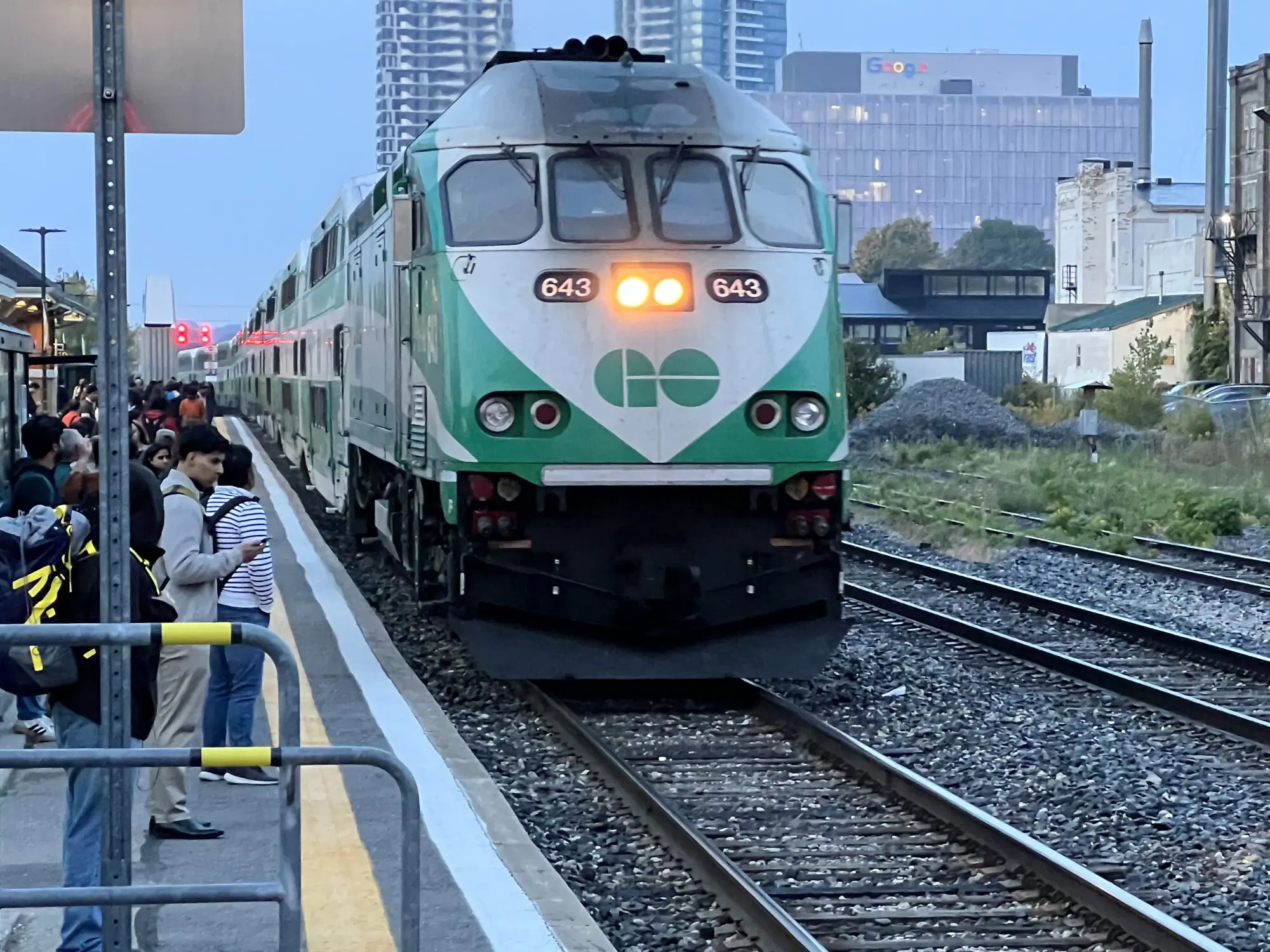
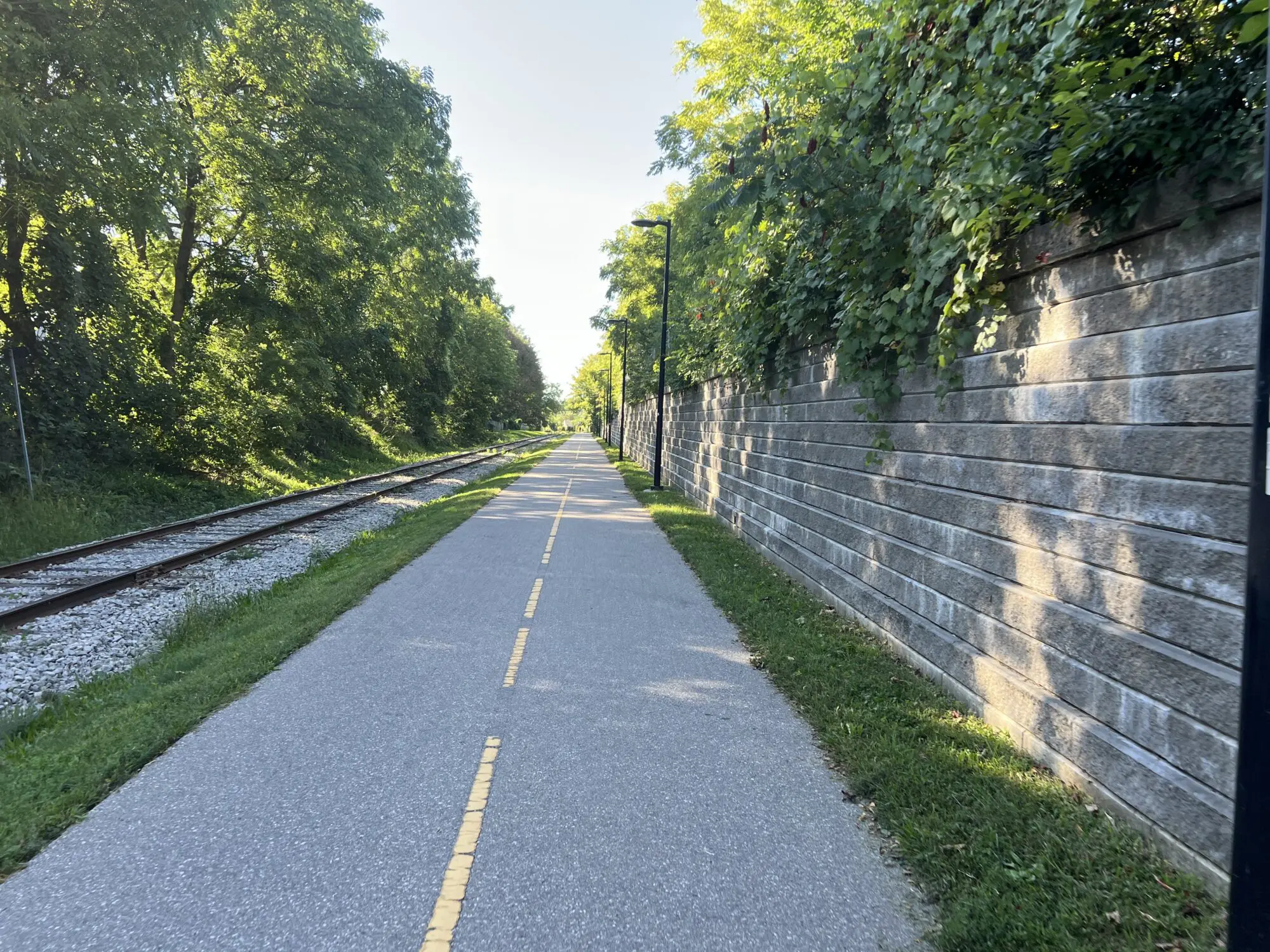
On a Toronto travel day, I start by cycling from home to the Kitchener GO Station.
Happily for me, that ride is almost entirely on the Spurline Trail multi-use path. Depending on the time of day and the train I’m catching, I may use the integrated lights that equip the Electric G Line.
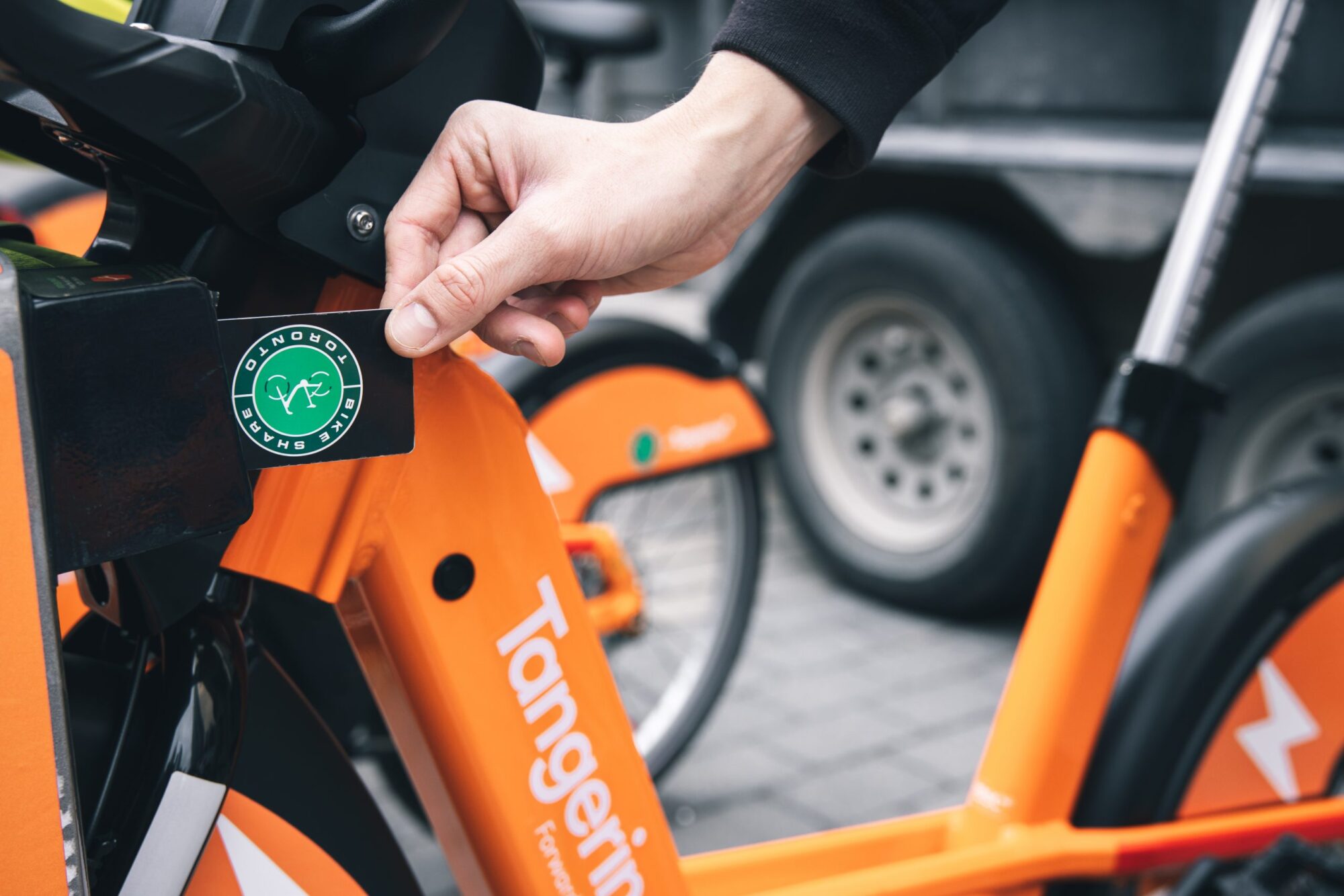
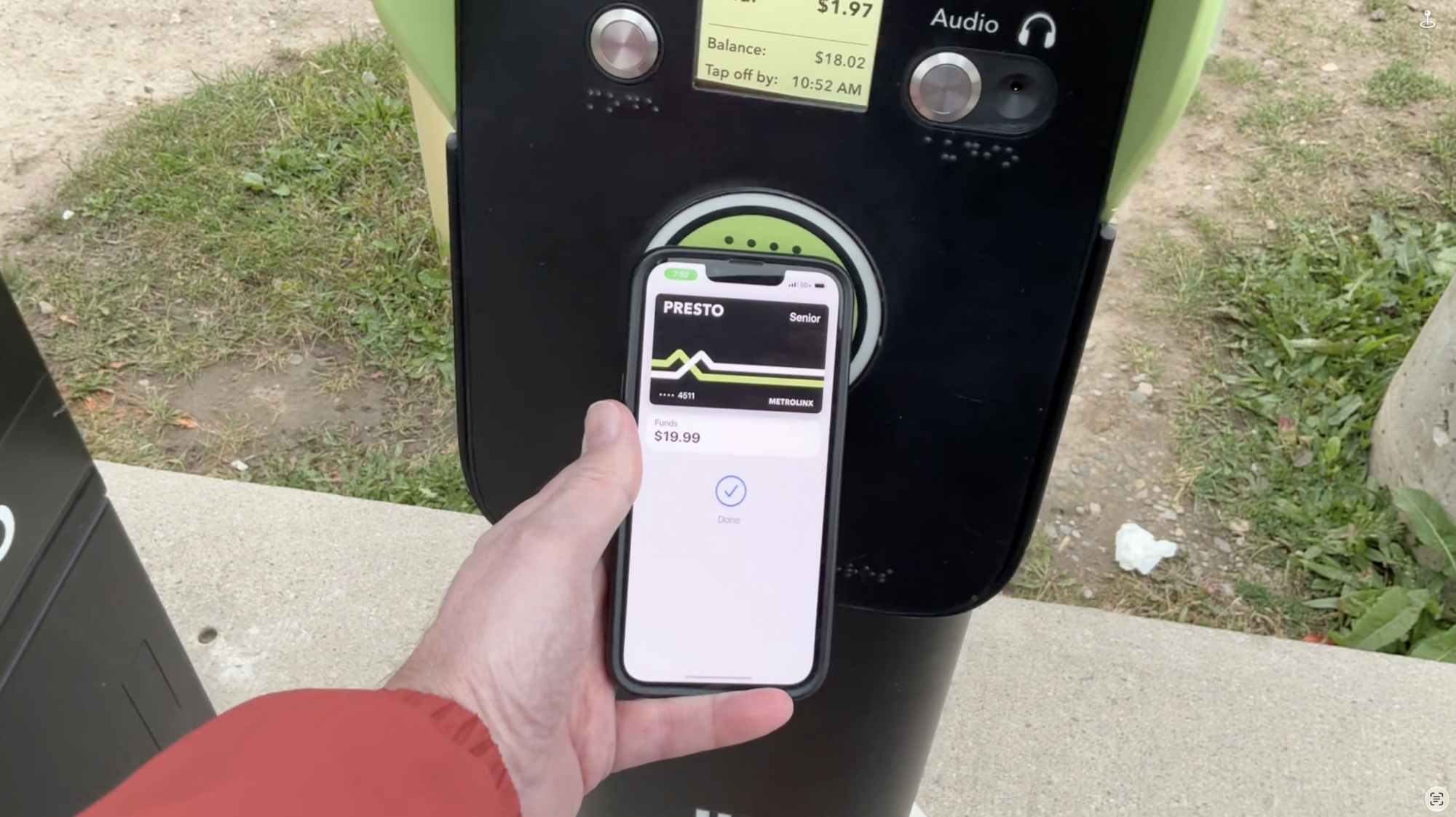
I have Presto set up on my phone, and so paying for my trip is as simple as holding it up to a small payment kiosk on the single Kitchener GO platform. It’s pretty hard to miss, and for people not using Presto, there are other easily accessible payment options available.
Once I’ve paid, I fold my Brompton to take it on the train.
Modern conveniences
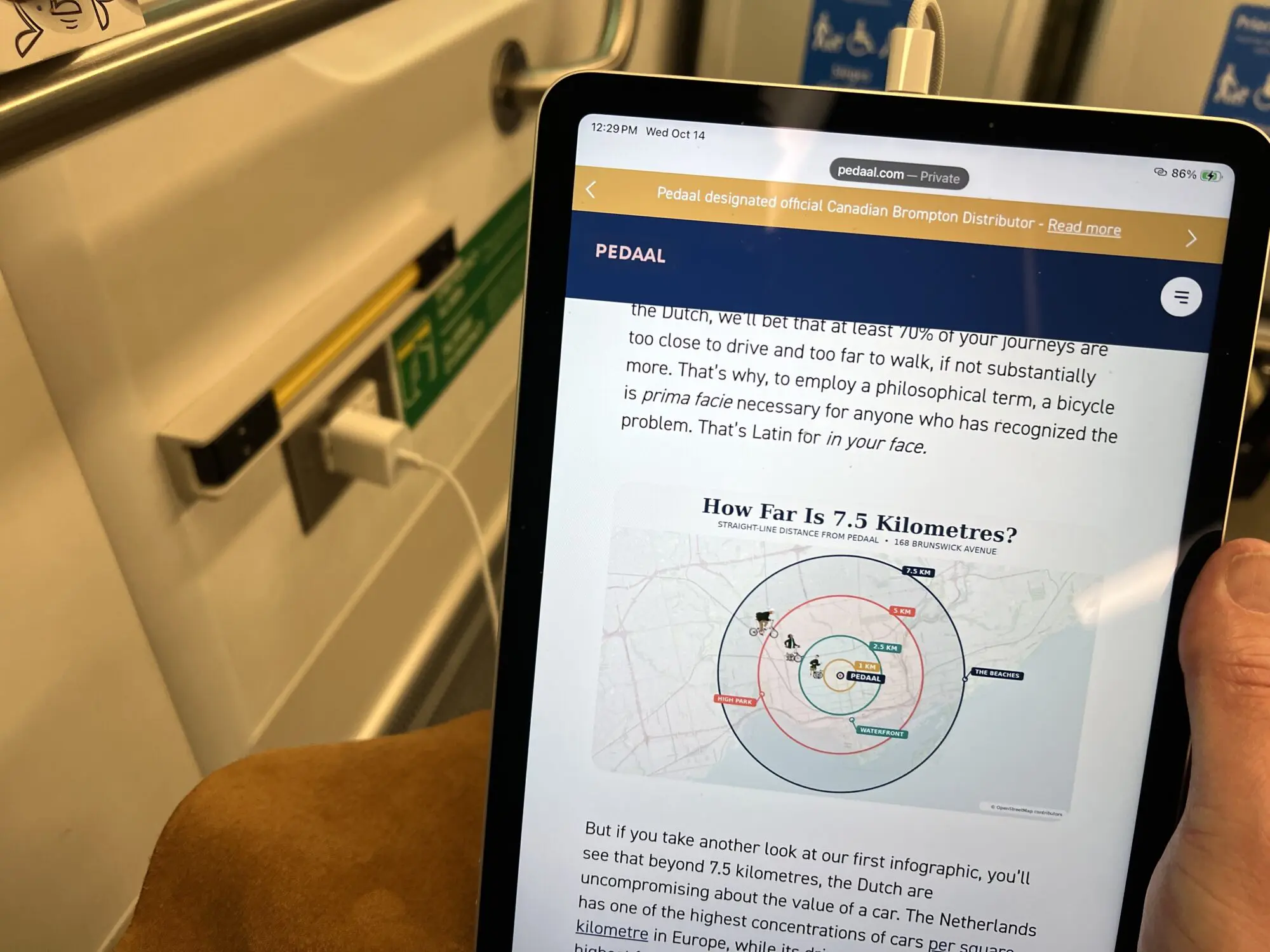
Early on in my cancer journey, I always sat on the upper level in a two-level coach as I love the view from that area. As well, the upper level is typically a designated quiet zone, which can be calming. There are also electrical receptacles for each group of seats on some coaches (on both upper and lower levels), which is obviously handy. And for folks who want it, Wi-Fi is available; I prefer to just use my phone as a Wi-Fi hotspot for my devices, which works well enough for my needs. All of this makes the train quite an appealing travel option.
I’ll note here that a Brompton in its folded state is considered luggage by GO Transit, and can be taken onto any coach on a GO train. More on that later.
Weighing the options
As an aside, I should point out that my Electric G Line is on the heavier side for a Brompton at just under 20 kg with its battery. A more traditional non-electric Brompton with 16-inch wheels will weigh noticeably less. The weight isn’t a big issue for me, though, as I had prioritized capability and capacity when I chose this bike, with weight as a secondary consideration. And when I’m not riding it, I’m typically rolling my Brompton in its folded state rather than carrying it.
Some extra travel support
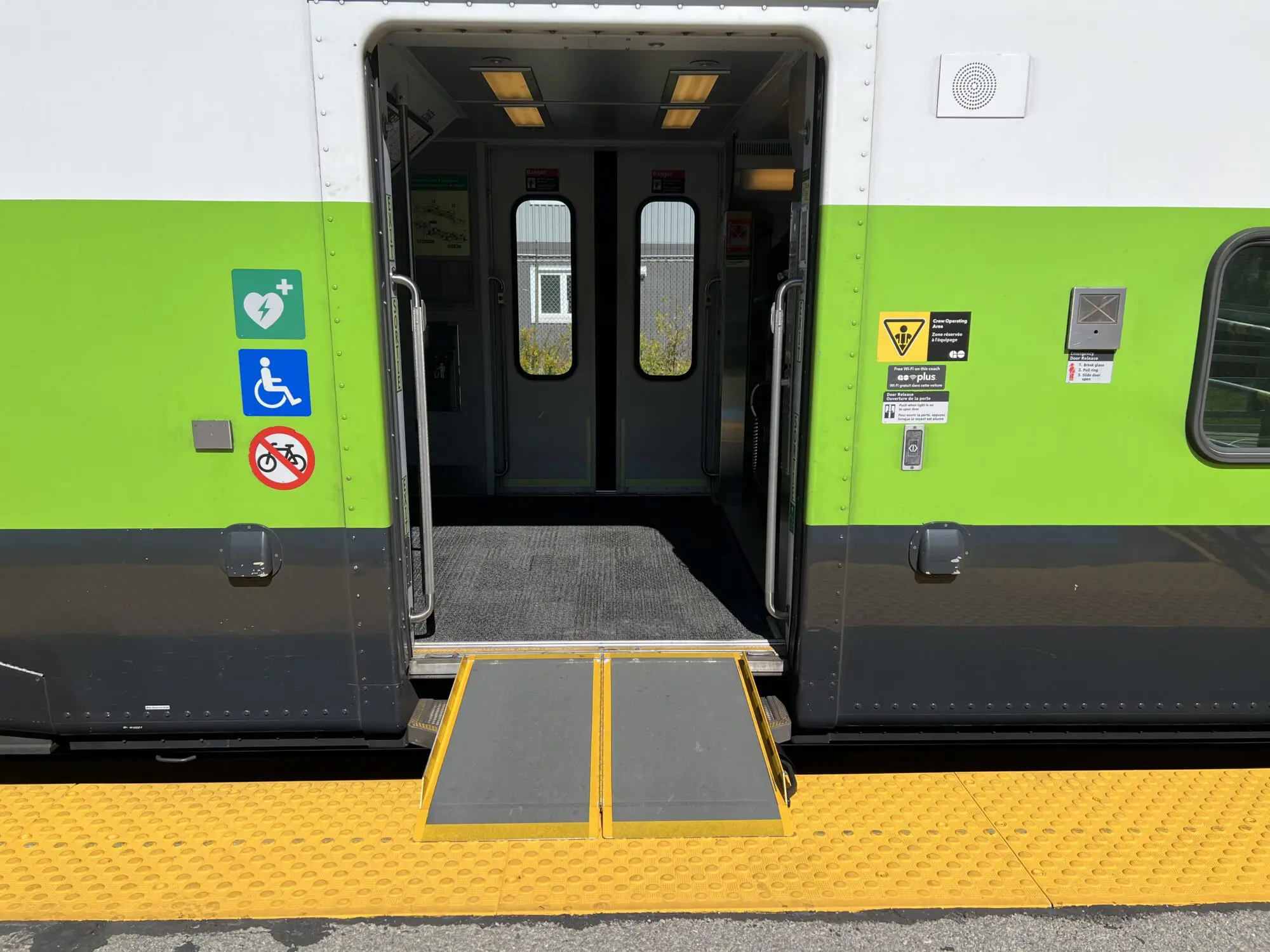
Having said that, as my cancer journey has continued a noticeable travel issue that has emerged for me has been some fatigue and physical weakness as a result of my treatments. Happily, my son alerted me to the accessibility coach that GO Transit incorporates into each of its trains. That’s turned out to be a welcome feature for me. Each accessibility coach provides a ramp that enables people using wheelchairs and other mobility devices to roll aboard easily. The ramp also works great for my folded Brompton to roll aboard too.
On a related note, Metrolinx, the GO Transit parent agency, is a participating organization in the Hidden Disabilities Sunflower program. Not every disability, permanent or temporary, is a visible one. The Sunflower program helps address that with a special pin, wrist band, or lanyard that signifies a disability that isn’t immediately apparent.

Once I’m on the accessibility coach, there’s another helpful feature that’s available for people with mobility aids: plenty of extra space between the facing seats. Obviously that also works well for my folded Brompton, and it fits with leg room to spare.
The kids are alright
There are other features that I like about the accessibility coach. One that might be surprising for some is that parents and caregivers who bring young children aboard can easily find room for a stroller. The lower level of the accessibility coach isn’t a quiet zone, and I personally love the sound of young kids chatting away with parents and siblings, laughing, and otherwise having a good time.
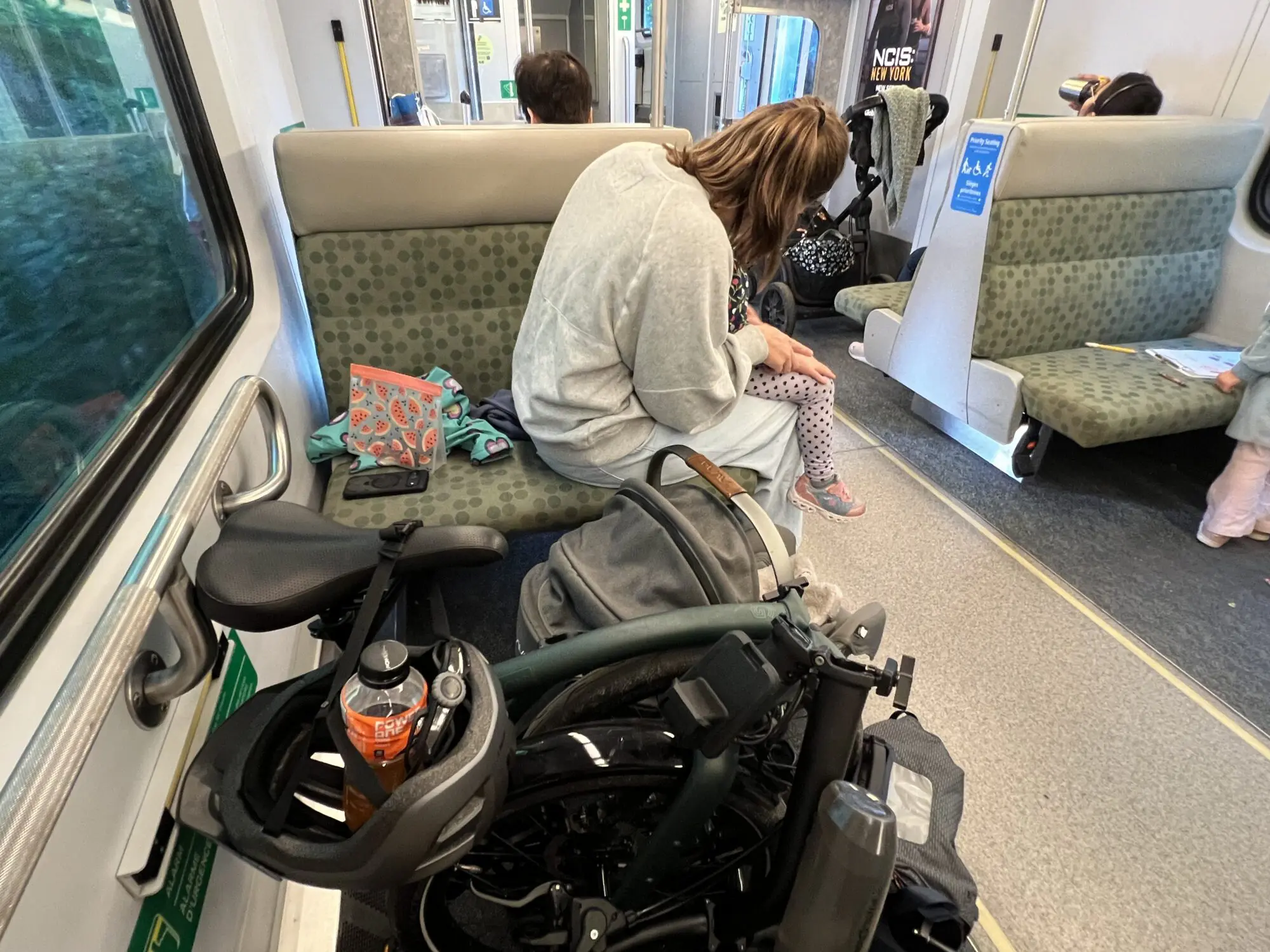
I don’t even mind when they’re fussing or crying, as I recall what it was like when our own boys were small and I have a lot of patience. These sounds are all joyful to my ears!
Commuting to work
During the summer months I also saw plenty of people heading into the city for tourist experiences or ball games. But the majority of passengers are commuting for work. While the coach may be only sparsely filled when starting from Kitchener, it’s often standing-room-only by the time it reaches Union Station.
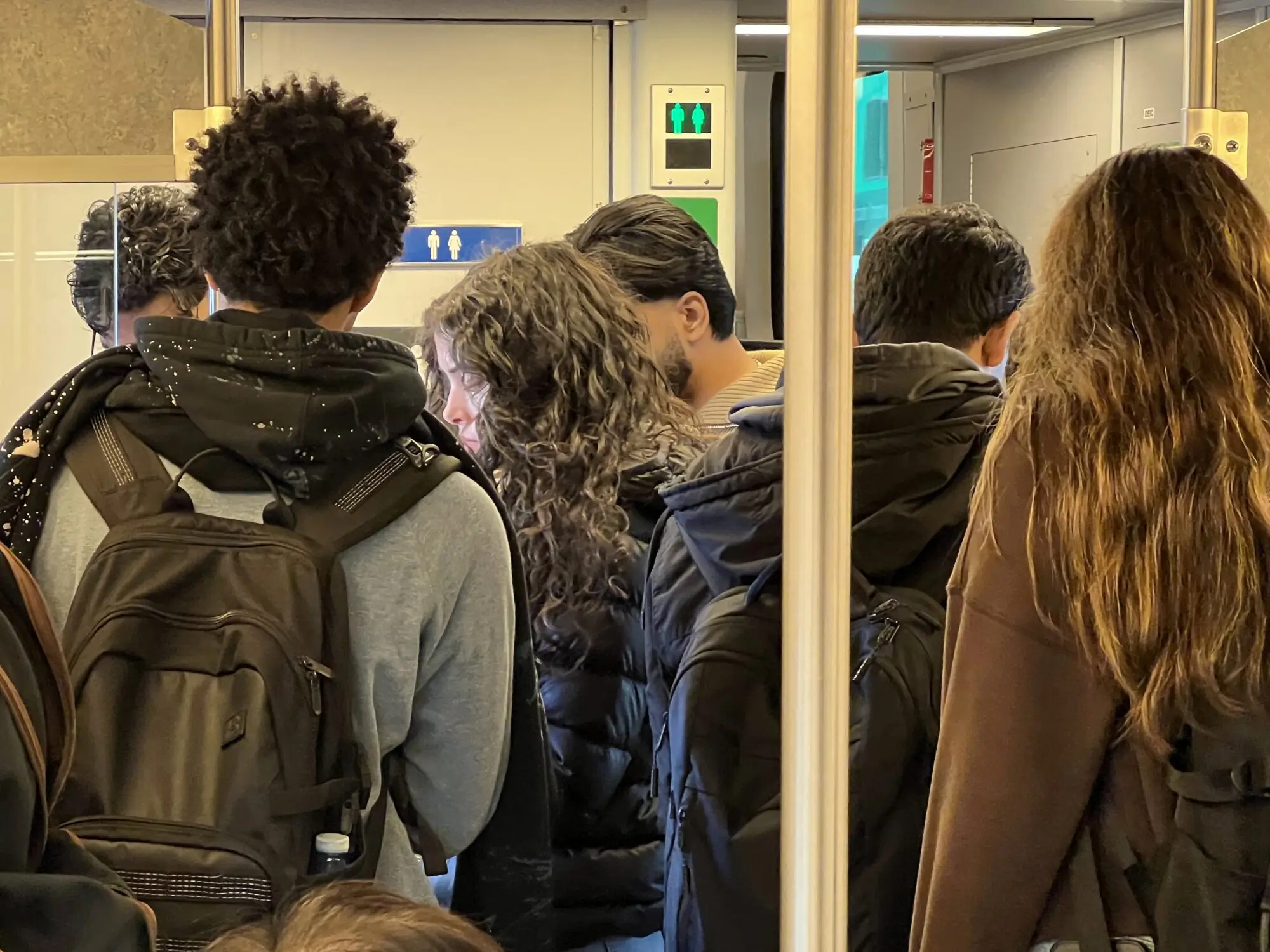
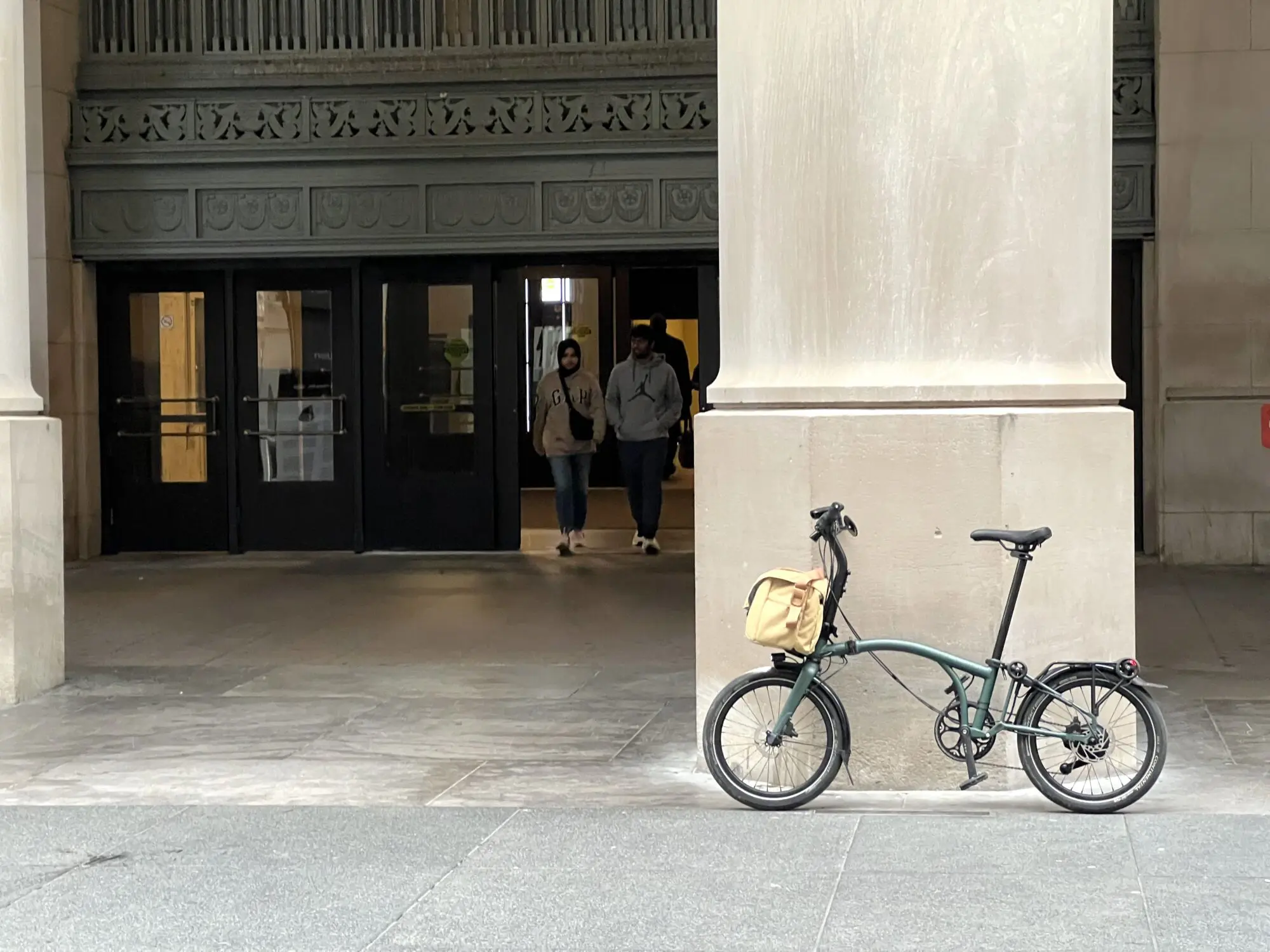
After arriving at Union Station and exiting the train and platform, I then roll through the station and out to Front Street, unfold the Brompton, and cycle to wherever I’m going.
I’m going underground
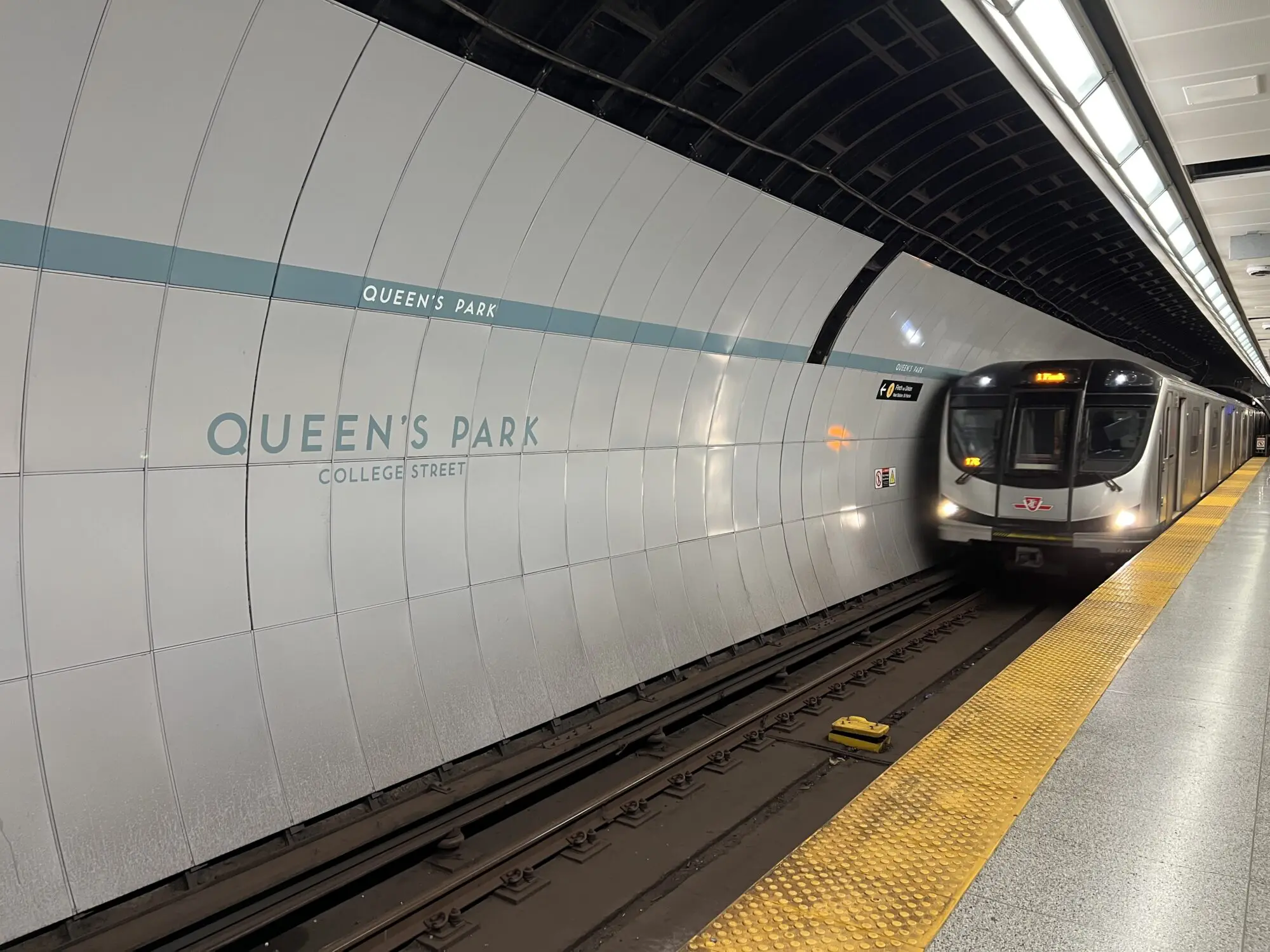
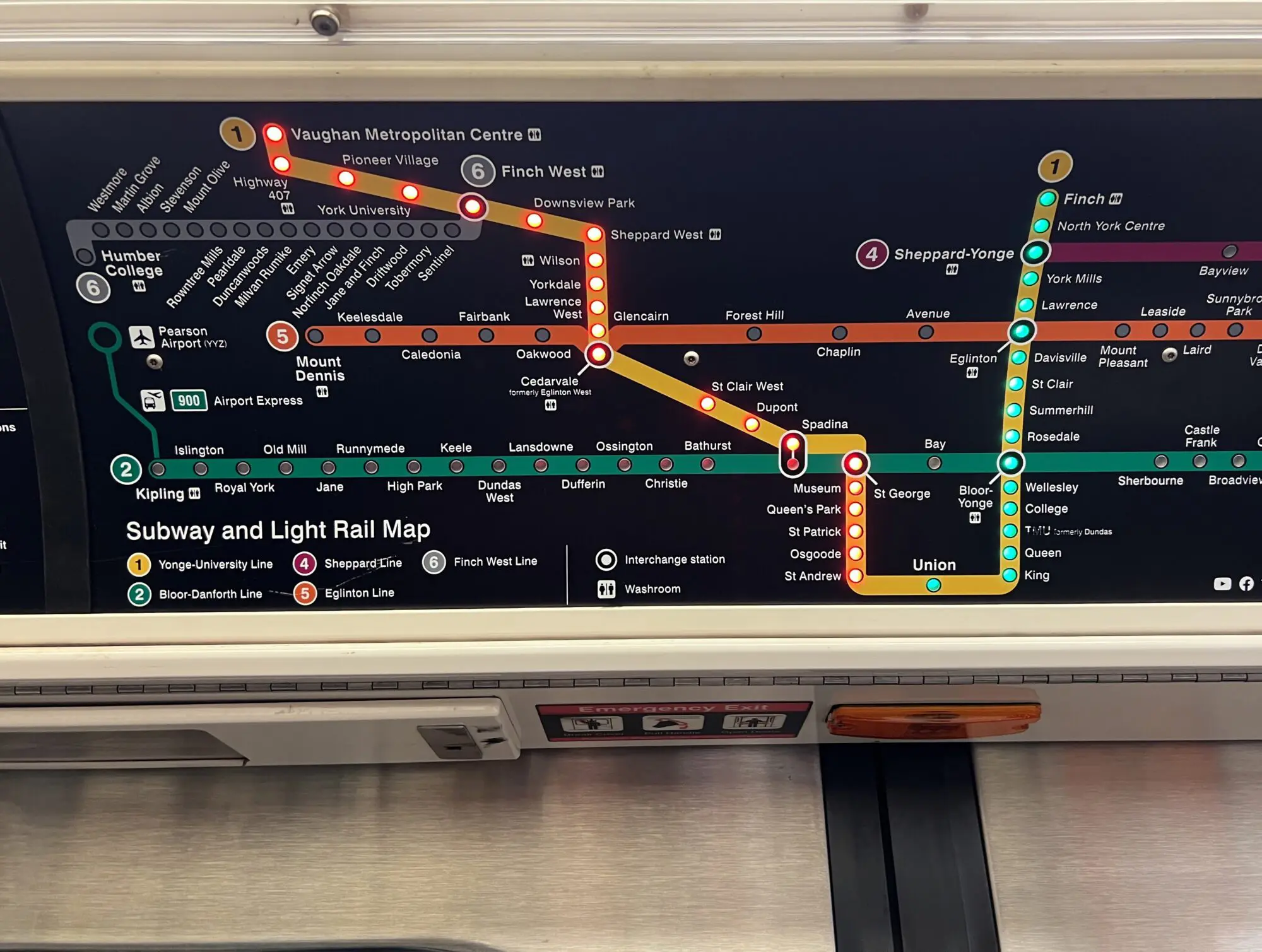
I should mention that there have been some treatment days where I didn’t take the Brompton with me to Toronto, and instead rode the Line 1 Yonge-University TTC subway from Union Station to the hospital. GO Transit and the TTC both use Presto as a payment option, and switching from GO Train to subway on a trip is considered a free transfer. Nice!
Home is where I want to be
While the GO Transit train handles the bike well, there were still a few travel issues for me to sort out.
For example, there was a day that took my Brompton to Toronto and cycled to the hospital, but I wasn’t feeling great in the afternoon. That was easily addressed by taking my folded bike onto the subway to ride back to Union Station where I caught a GO Transit train back to the Kitchener GO Station.
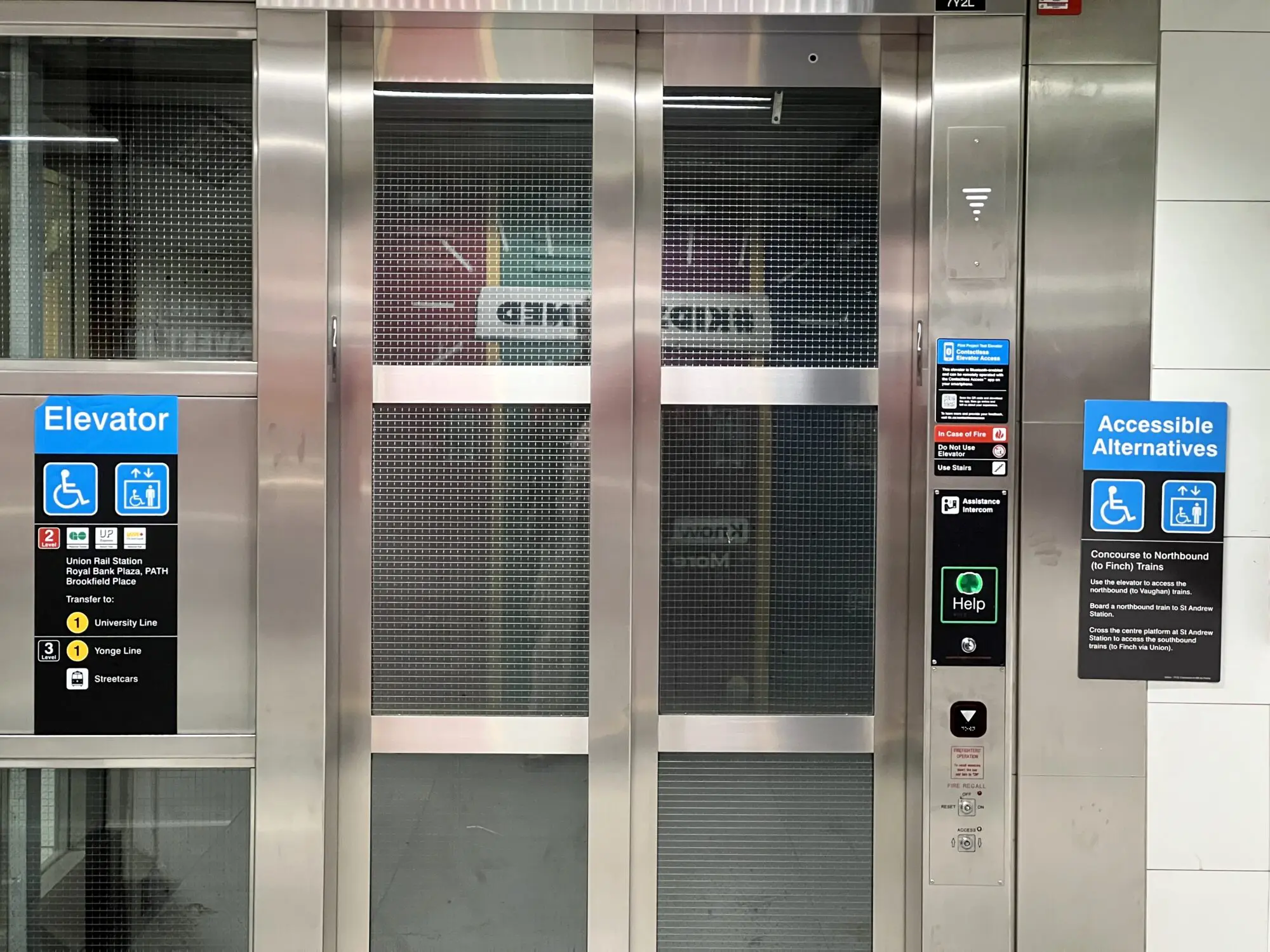
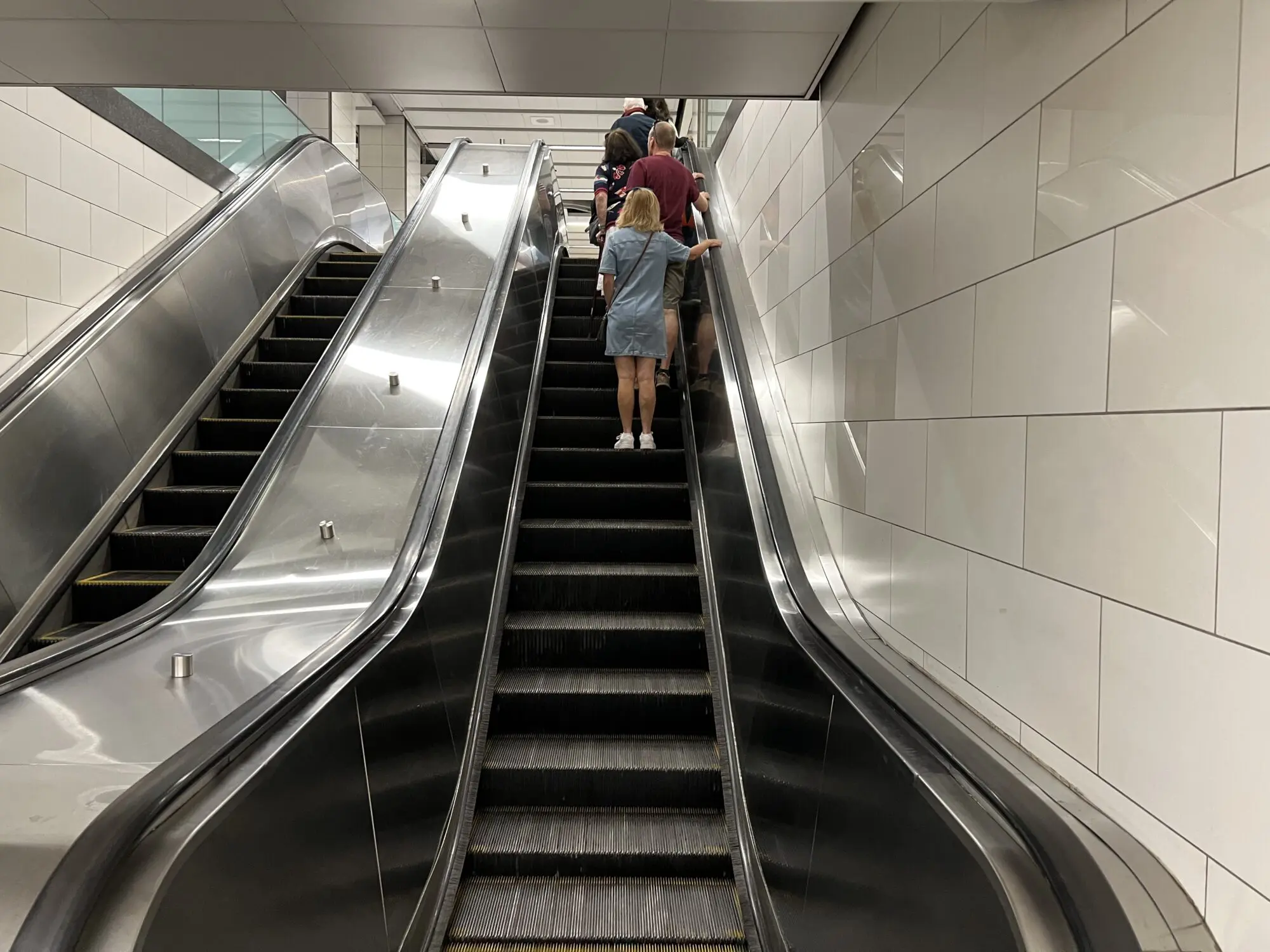
GO Stations generally have elevators, though apparently a few don’t. The ones that I use do and it makes moving between levels pretty straightforward when needed. Similarly, most TTC subway stations have elevators, though not all do and some are currently under construction. I know from experience that when I’m riding with my Brompton it’s not fun to discover after rolling off a subway car that a station lacks an elevator! In either case, escalators can work well enough if present, though they aren’t ideal for handling a rolling folded bike.
When is a bike not a bike?
There were a few times when a Go Transit Customer Service Ambassador told me that I couldn’t take my folded Brompton on the accessibility coach. I would respond by telling them that it’s a mobility device, and all were fine with that and let me bring it on. But I was concerned that this wouldn’t always be the case. I contacted Metrolinx and, long story short, ended up speaking with Steve Weir, Vice President of Customer Protective Services at Metrolinx, who had written the original Go Transit bike policy. The policy includes this:
“Folding Bicycles, when folded and carried as per design, may be transported as hand luggage on GO Transit trains at all times.” (Emphasis added by me.)
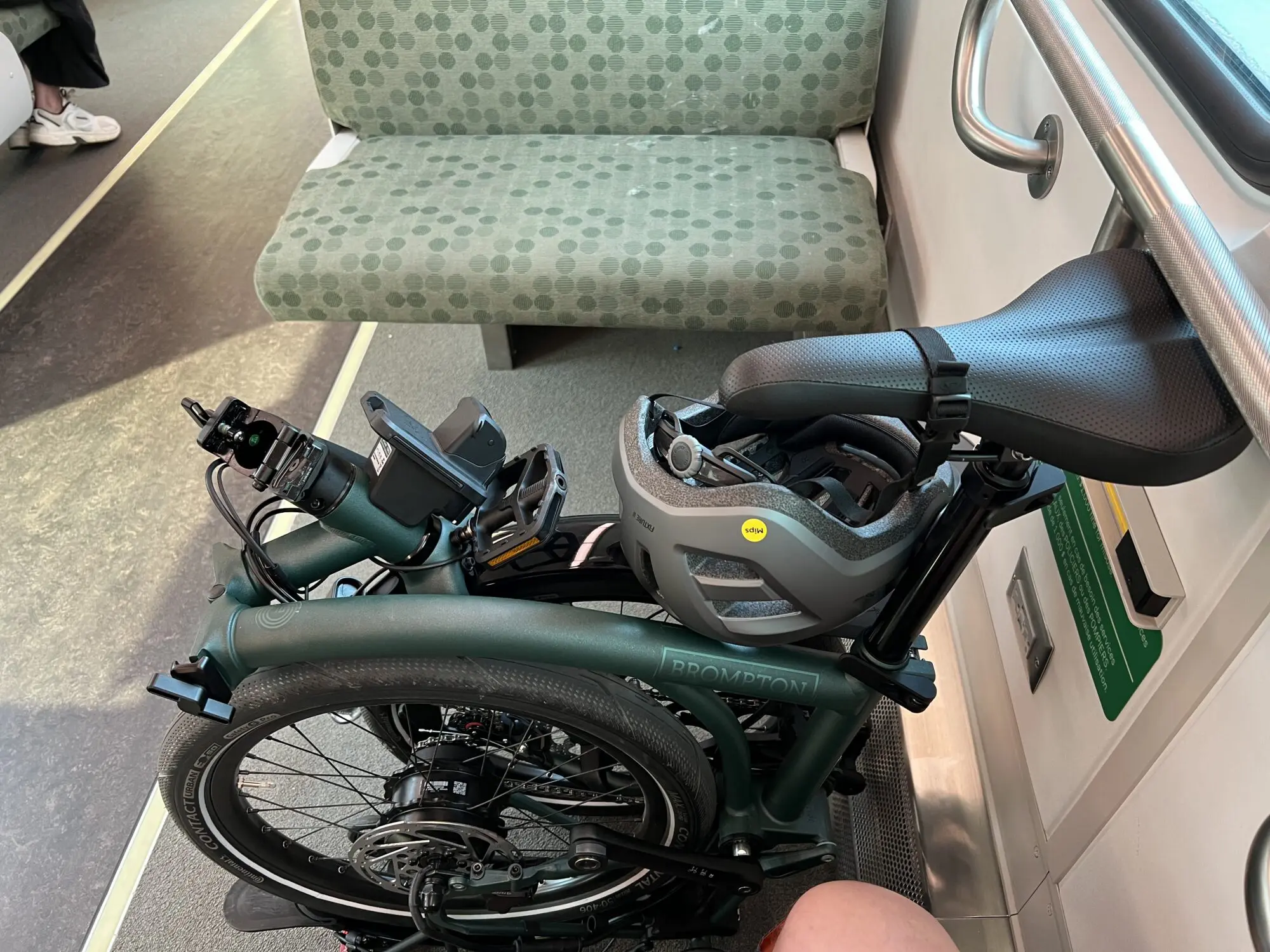
Steve was great, and confirmed for me that a folded Brompton is considered luggage and can go on any coach, including the accessibility coach. He sent me an email to that effect, and got me an official letter confirming it as well. Both of these are on my phone ready to show if needed.
There’s power in a Union Station
Union Station is a more complex environment, with multiple platforms for GO Transit trains, and all at an elevated level. Getting to and from the platforms takes a little more effort. For most people, stairs or an escalator are the way to move. For my folded Brompton, and my somewhat diminished stamina and strength, I roll it onto an elevator. Happily, most platforms do have a functioning elevator though I’ve encountered occasional closures. Arriving at Union Station from Kitchener and exiting the train and the platform is still fairly straightforward, though.
All aboard the bike train
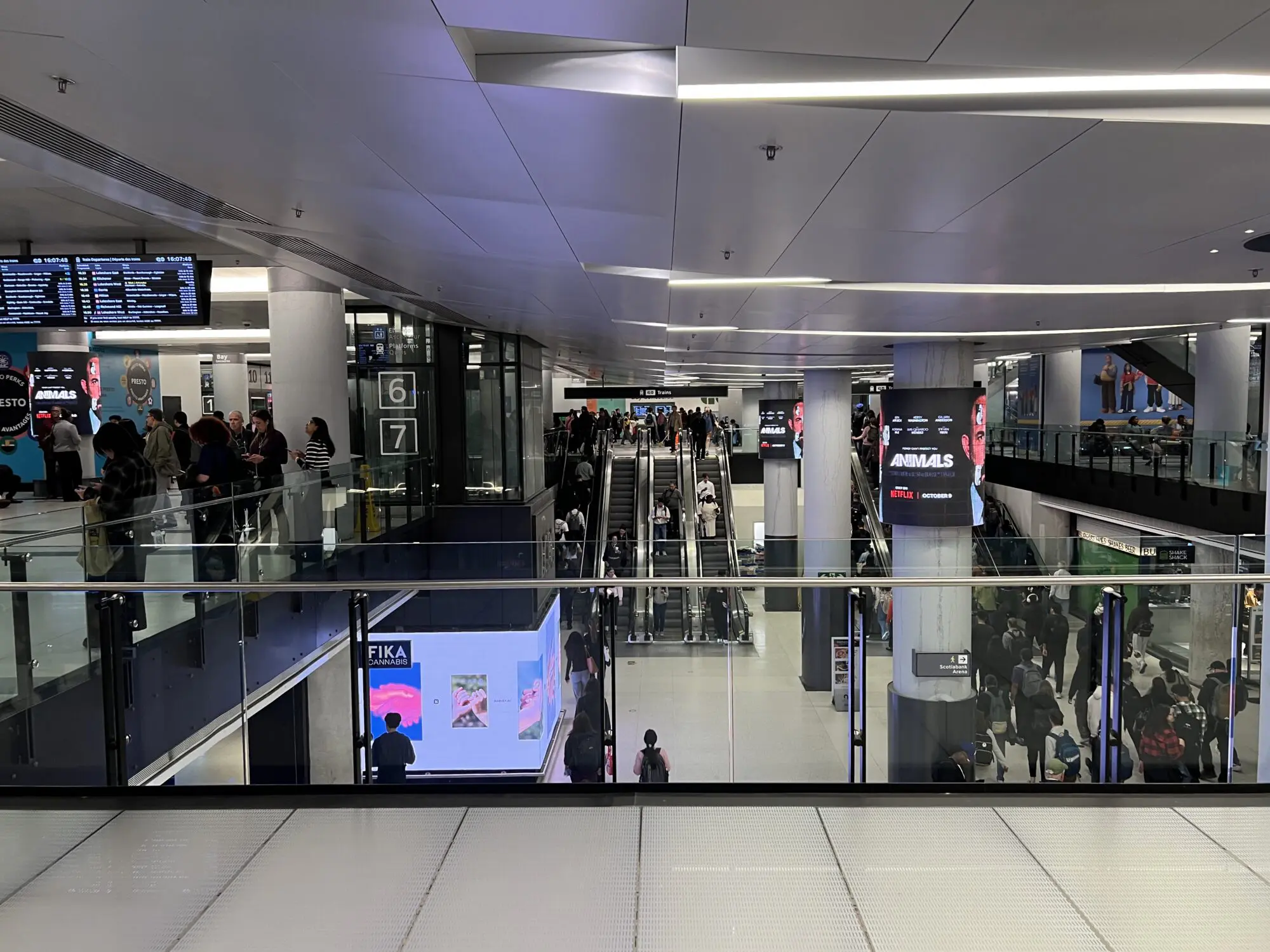
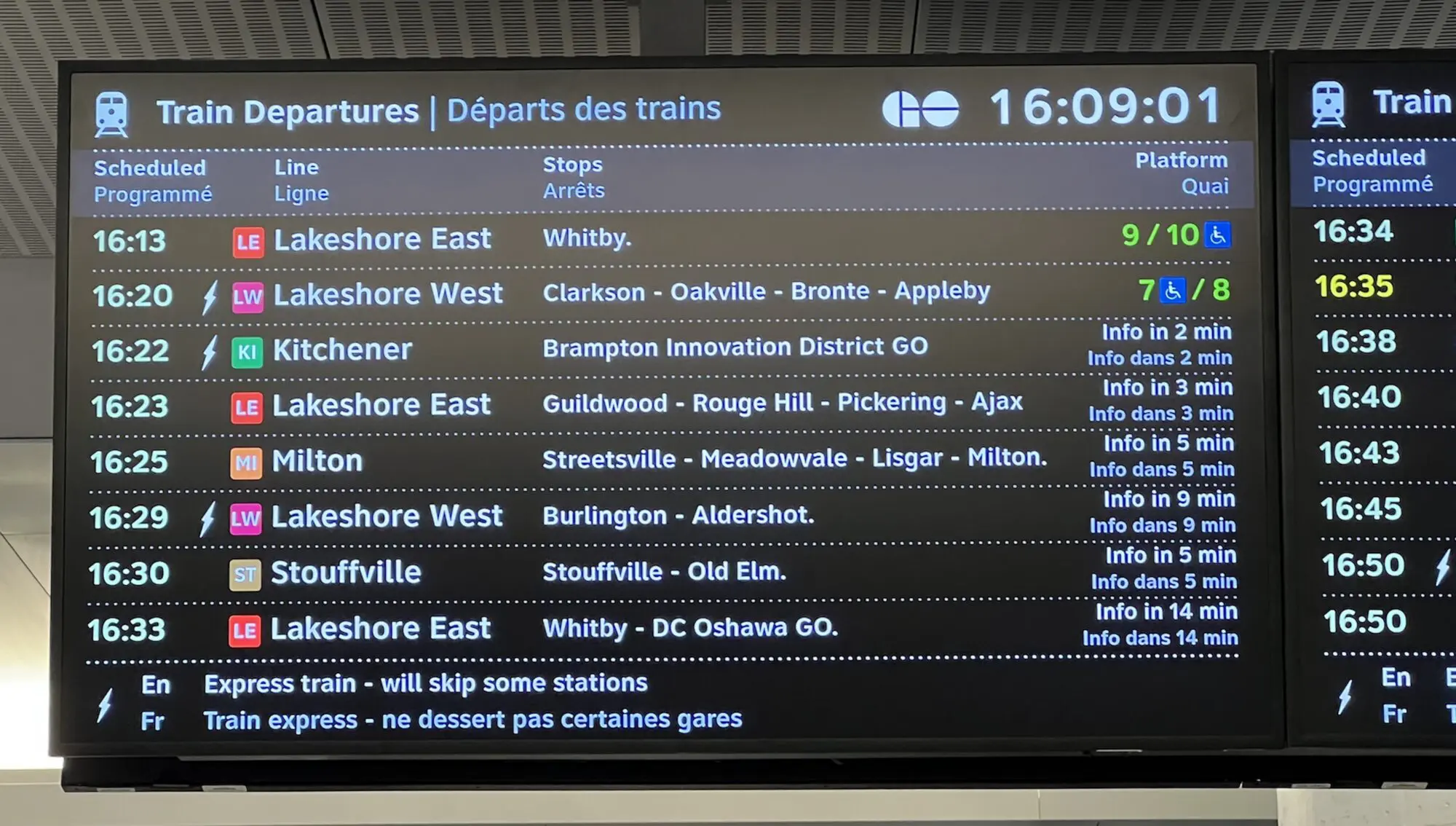
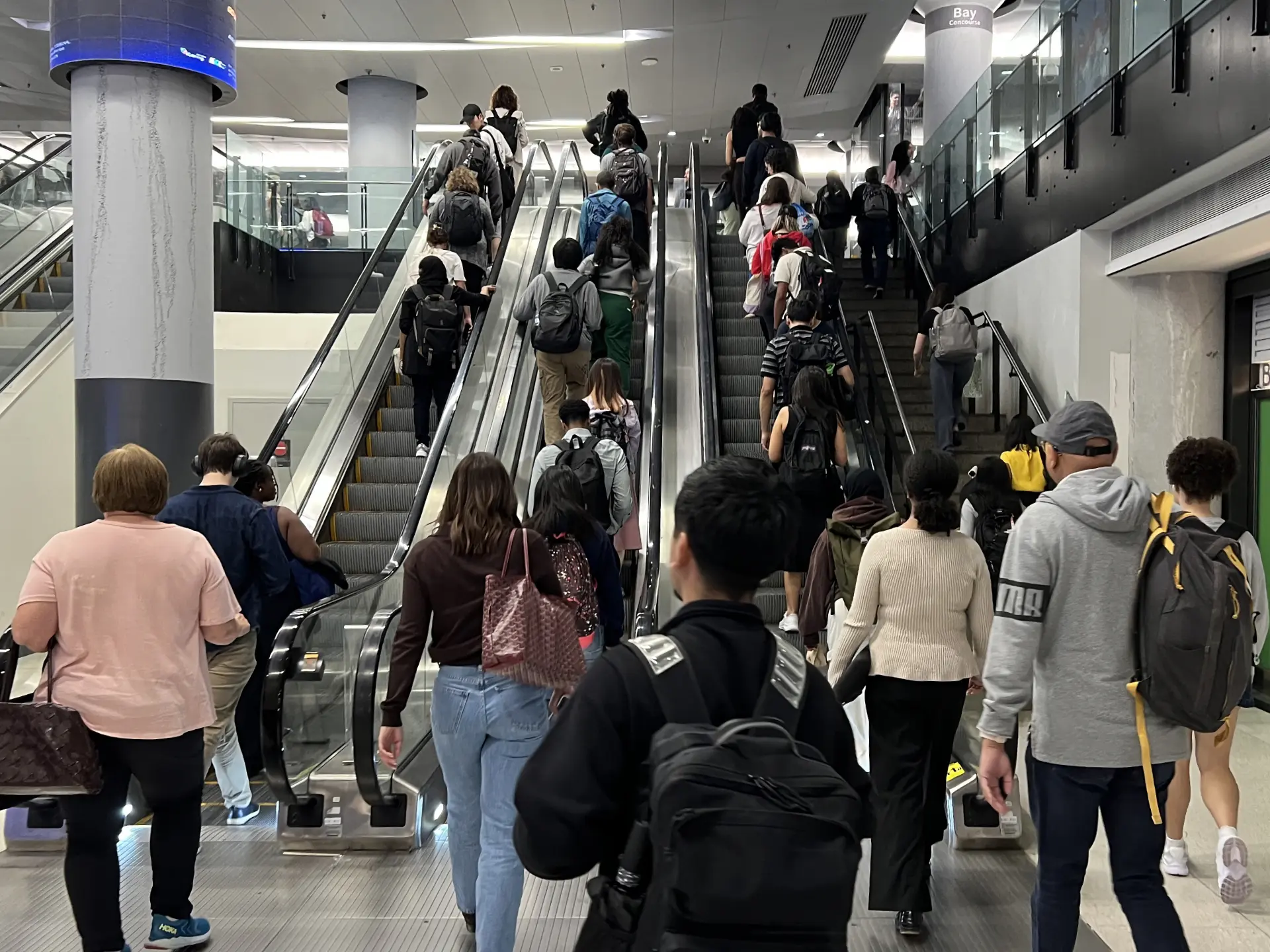
Departures from Union Station are a little tricker. The GO Transit concourses are far busier than any platform outside of Toronto. There’s also the challenge of knowing which platform a given train will board from. The platforms aren’t presented on the departures board until fairly close to departure time, which can result in a crush of people when the platforms are revealed during the busiest times of the day. It’s manageable, and I get why they’ve taken this approach, but I’d be a little more at ease without that late-breaking platform confirmation and hustling my Brompton to the right place. The departures board does indicate which platform has the accessibility coach ramp, though, which is nice to see.
Getting mighty crowded
With seven lines in total, GO Transit commuter train service is certainly a big part of Union Station, and its busiest transportation tenant by far. Returning to numbers for a moment, it’s the second busiest train station in North America, after Penn Station in New York City. And when I’m passing through at the busiest times of the day it absolutely feels like it. But the convenience and flexibility of being able to travel by train with my Brompton far outweighs any minor quibbles about the experience that I’ve mentioned here.
To reiterate, it feels like a huge opportunity for Toronto commuters to consider multimodal travel using Go Transit. And a Brompton folding bicycle is ideally suited to being a key part of that kind of trip.
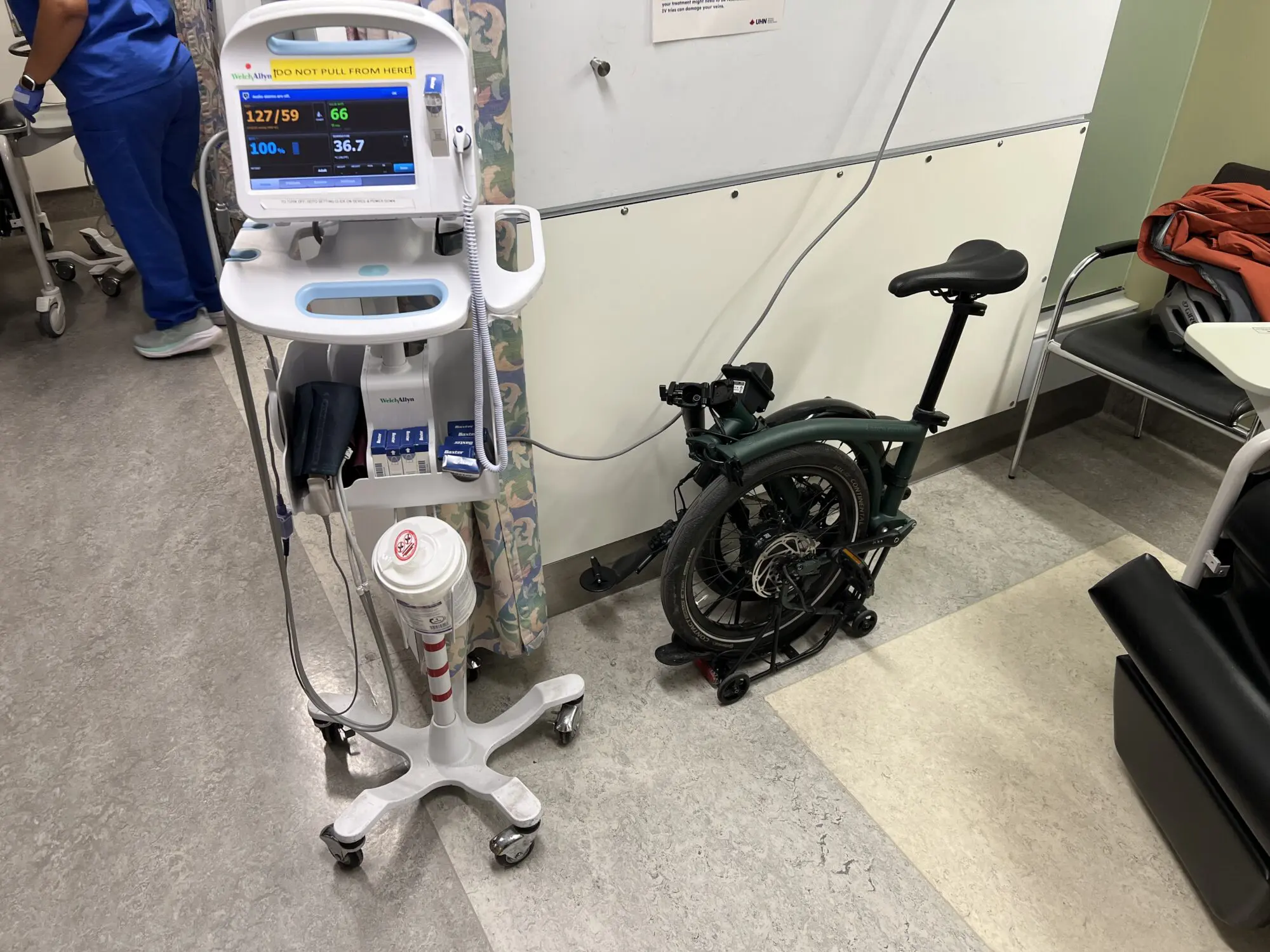
And me? Multimodal travel ably supports my original reason for getting a Brompton: my travel to Toronto for cancer treatment. I’ll confess that I feel kind of badass bringing the Brompton into my hospital room!