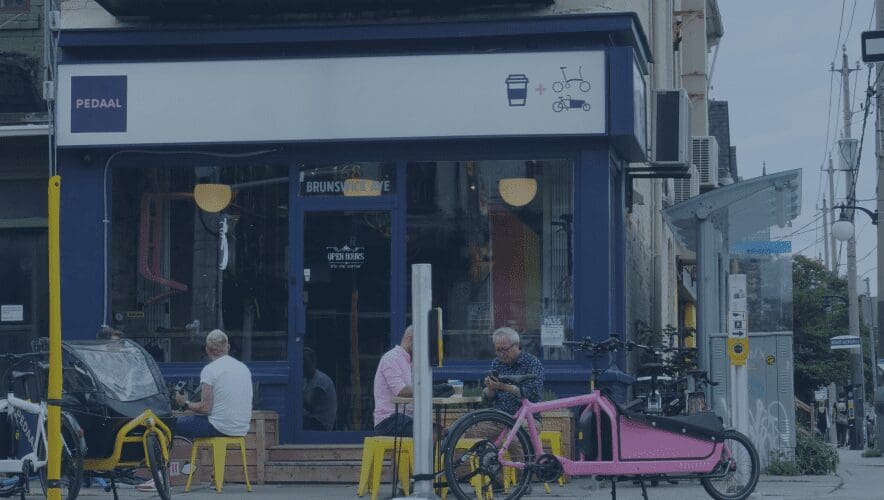
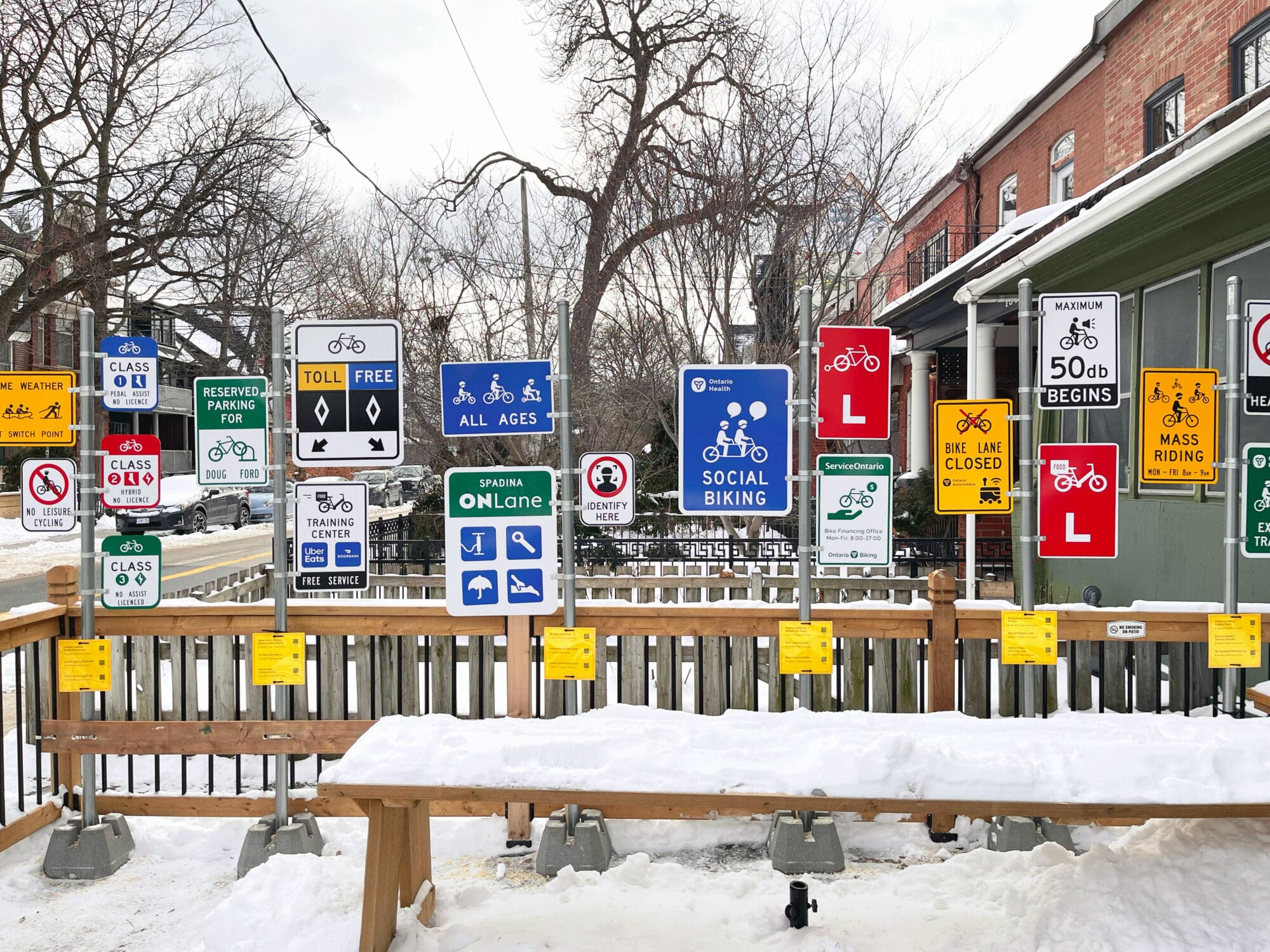
During DesignTO, Pedaal became home to Signs of Change, a speculative street-sign installation developed with Radical Norms and OCAD University Research that invites people to imagine how cycling and city streets might evolve in a changing climate, shaped not only by new technologies and shifting policies, but by the small acts through which people already try to make imperfect streets workable. The project uses fictional signage to turn a familiar language of control and regulation into a language of possibility, asking visitors to consider what kinds of behaviours we choose to normalize, what kinds we choose to discourage, and what kinds we have not yet learned how to see.
When A Street Loses its Grammar
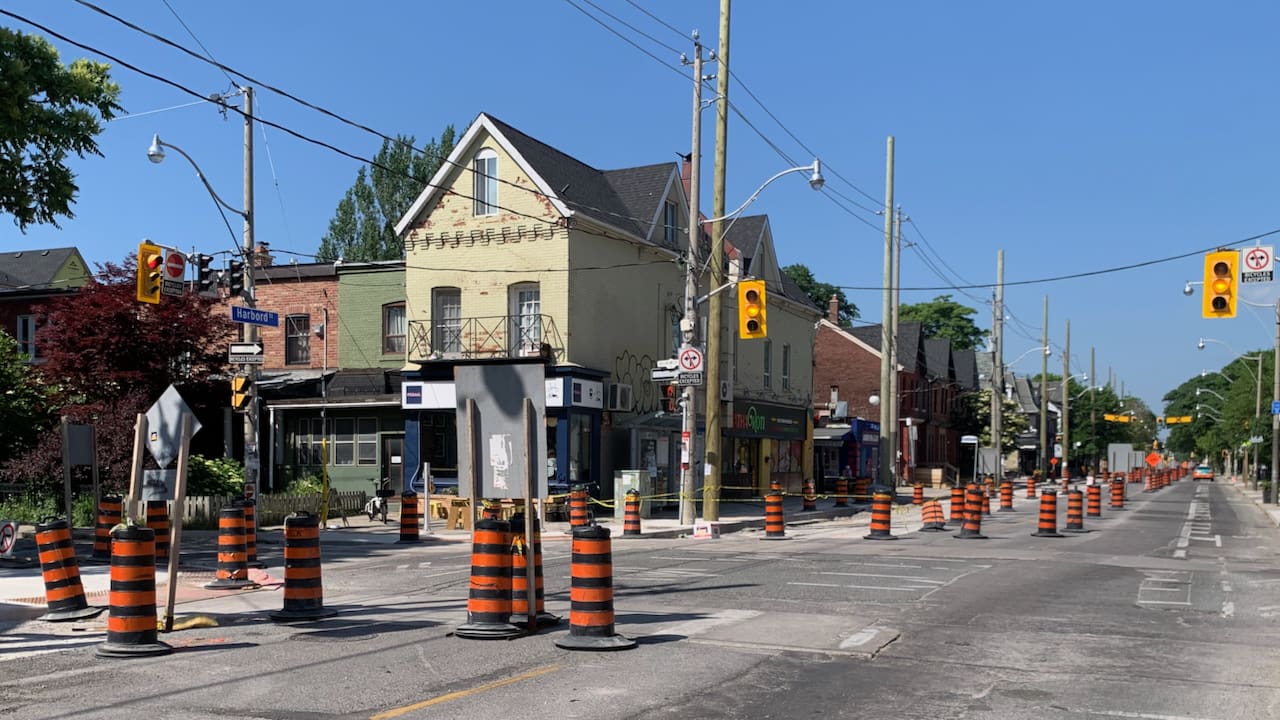
For us, the installation landed at an uncanny moment. Over the past year, Harbord Street effectively ceased to exist. Construction erased the bike lane. Construction erased the curb line. In places, construction erased the idea of a street altogether. Physical infrastructure altogether vanished. But something else vanished too: what urbanist Gil Penalosa, founder of 8-80 Cities, calls legal infrastructure. The signs, markings, and cues that organize behaviour disappeared along with the street itself. When there are no lines and no signs, the street loses its grammar.
In the Netherlands – where cycling infrastructure is at its apex – you’ll also find streets with no signage. For narrow streets in the canal belt, where improvisation is the only rule, Hans Monderman proposed the idea of “shared spaces,” the idea being that safety comes from reading other users cues rather than signage. But shared space still depends on the existence of a street. When construction erases all recognizable form, the conditions that make shared space possible disappear as well. What remains is an ambiguous space, where everyone is present yet no one is quite oriented, and where informal negotiation gives way to low-grade survival.
The Unwritten City
What survives when the street disappears? What remains is what the University of Toronto School of Cities calls normative infrastructure. Cities do not run only on physical infrastructure and legal infrastructure. They also run on what we call normative infrastructure. (It helps answer why so many Torontonians cycle all winter). Normative infrastructure is the web of shared, mostly unspoken expectations that tell us what is normal, acceptable, encouraged, or out of place.
It explains why, if you stop your bike to check your phone in a bike lane in Amsterdam, you will be met with an angry chorus of dinging bells. The response is collective because the culture knows what belongs where. In Toronto, the same kind of event produces very little response – a sign that the norms are still cohering into shape. Normative infrastructure lives in this space, between what is written in law and what is lived in practice.
Before the Law
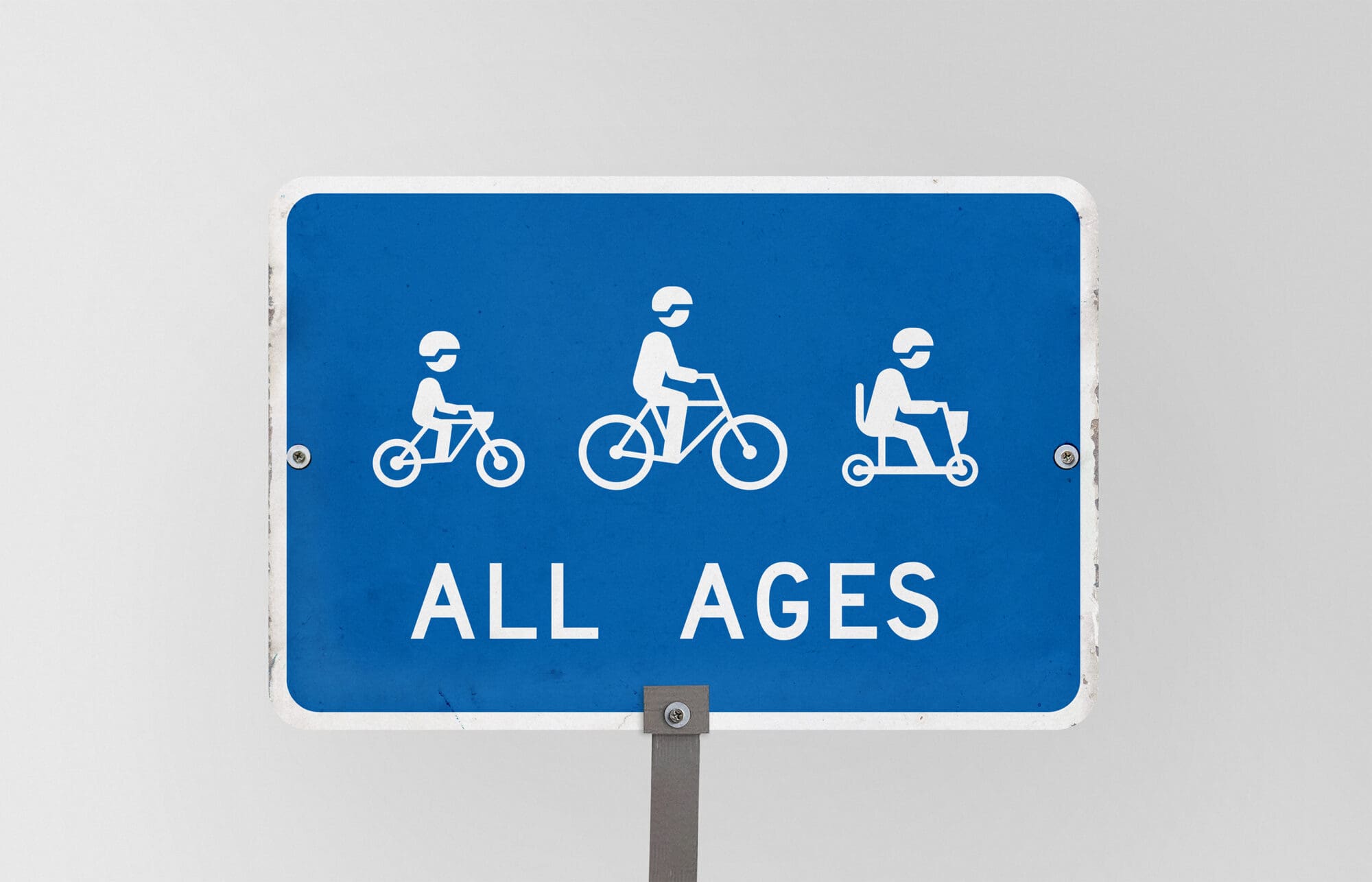
It is at this junction between normative and legal infrastructure that Signs of Change is more than an art installation. The project presents a series of fictional signs such as All Ages Cycle Path, Learner Lane, Social Biking, Autonomous Delivery Priority, Extreme Weather Transit Switch Point, and No Headsets Cycling. None of these signs describe rules that currently exist in Toronto. Instead, they signal narratives about what might remain to be written, whether now or in the future.
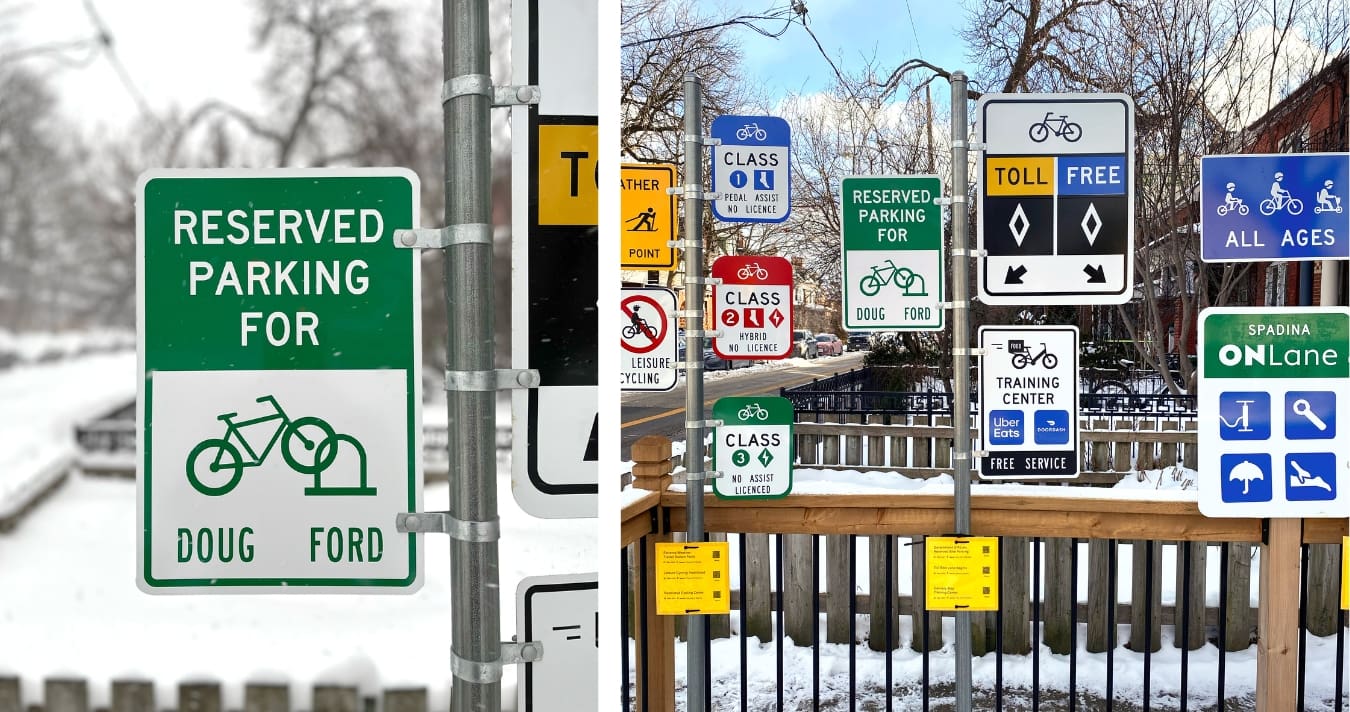
Seen this way, the signs function as prototypes for legal infrastructure. They do not ask what is legal. They ask what would feel ordinary. This distinction matters. Laws can mandate behaviour, but they cannot manufacture culture on their own. Culture forms through repetition, visibility, and shared story. And so, these signs offer a vocabulary for a future common sense. They plant the idea before the policy arrives. Should people ride with headsets? What kind of electric bikes should be allowed? How do we create a city designed for all ages? There have been many signs of change in the last two decades. What are the new signals we need to be attentive to?
Signs of a Permanent Culture
Harbord Street now has a new permanent bike lane. Paint, protection, and physical clarity have returned. Legal infrastructure has returned with it. But normative infrastructure always lags behind. It grows slowly, through everyday exposure and habitual reinforcement.
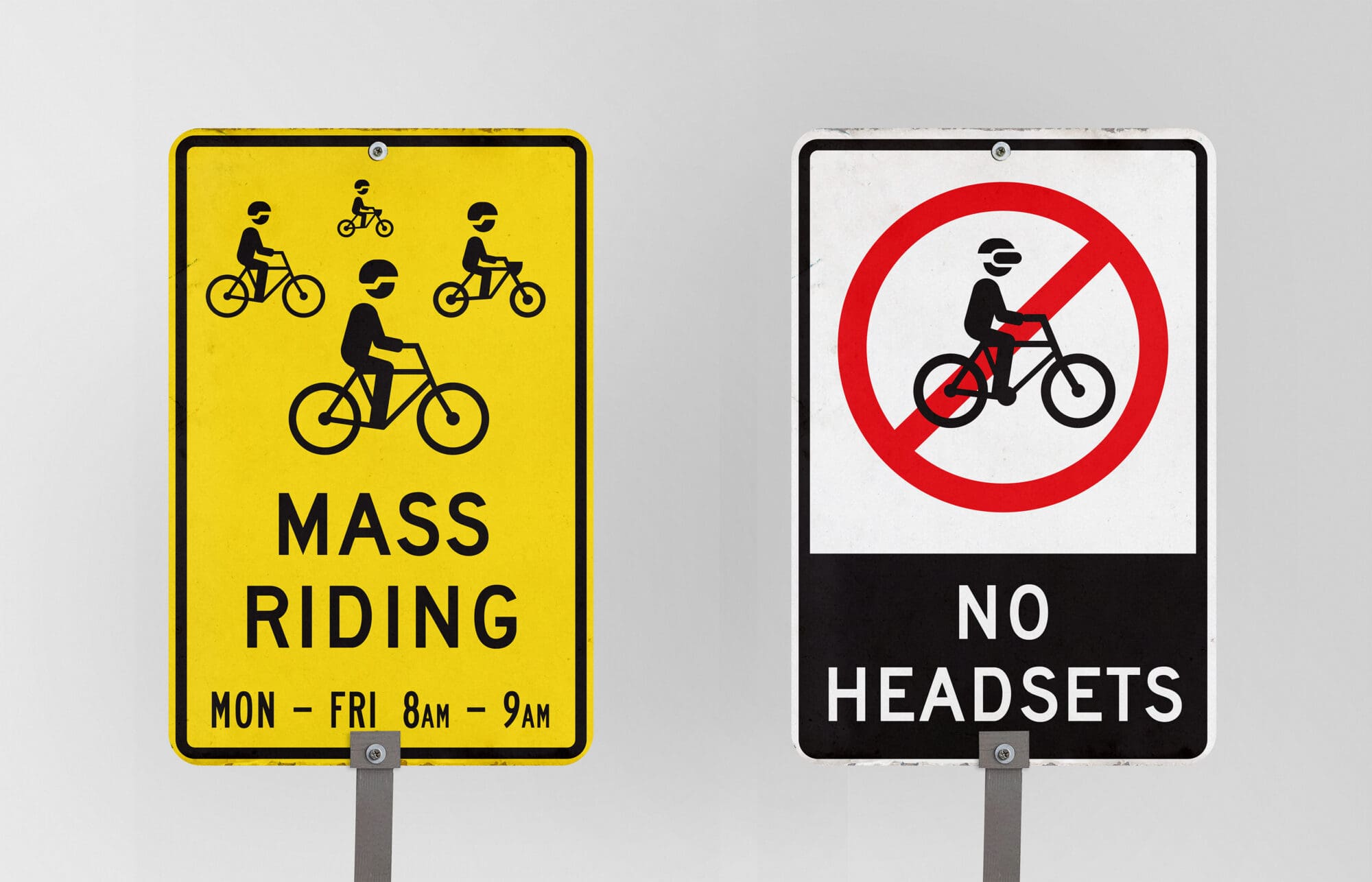
That’s why we’ve decided to make Signs of Change a permanent installation. Planted next to a brand new bike lane it produces a tension between what exists and what could exist next. Like the community of cyclists we grow and support, the signs sketch the near future – a kingdom always present and a kingdom always coming.
A big thanks to Koby Barhard who conceived of this project! This is Koby’s second project for us, the first being a limited edition poster set. Select signs are available as postcard, which you can buy in-store and online. And, if you want a sign these are also available. Cost is $100 for a small sign, $130 for medium, and $180 for a big sign. Shoot info@pedaal.com an email if you’d like one!